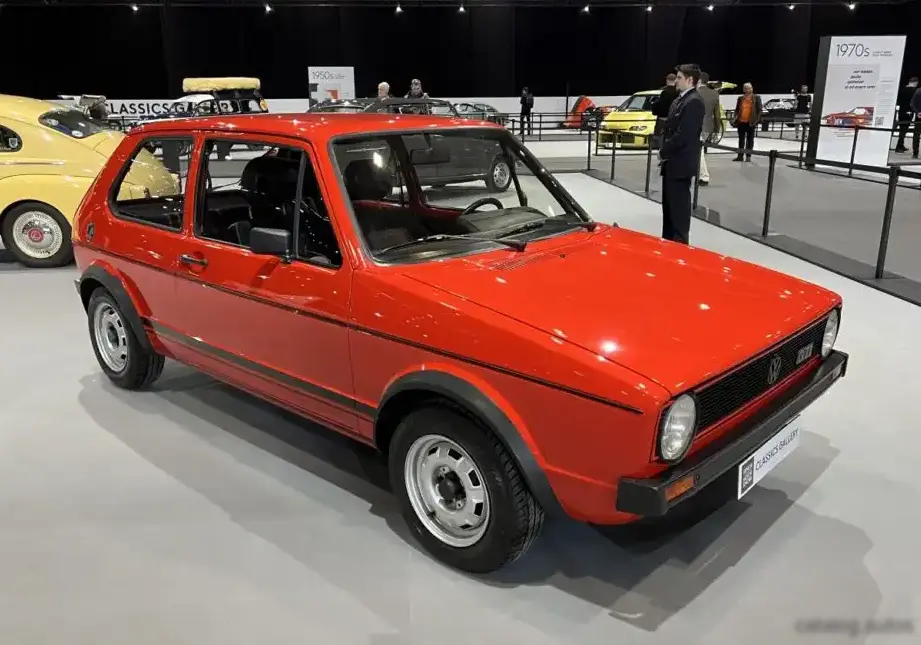
The Volkswagen Golf IV Variant 2.0, producing 116 horsepower, was a station wagon (estate) model produced between April 1999 and April 2001. It represented a key offering within the fourth generation of the Golf, known internally as the 1HX0/A3 platform. This variant aimed to provide a practical and versatile option for families and those requiring increased cargo space, while still retaining the Golf’s reputation for build quality and driving dynamics. It occupied a mid-range position in the Golf IV Variant lineup, slotting between the more economical 1.6-liter models and the performance-oriented GTI and TDI versions.
Technical Specifications
| Brand | Volkswagen |
| Model | Golf |
| Generation | Golf IV Variant |
| Type (Engine) | 2.0 (116 Hp) |
| Start of production | April, 1999 |
| End of production | April, 2001 |
| Powertrain Architecture | Internal Combustion engine |
| Body type | Station wagon (estate) |
| Seats | 5 |
| Doors | 5 |
| Fuel consumption (urban) | 11.3 l/100 km (20.8 US mpg) |
| Fuel consumption (extra urban) | 6.3 l/100 km (37.3 US mpg) |
| Fuel Type | Petrol (Gasoline) |
| Acceleration 0 – 100 km/h | 11.4 sec |
| Acceleration 0 – 62 mph | 11.4 sec |
| Acceleration 0 – 60 mph | 10.8 sec |
| Maximum speed | 195 km/h (121.17 mph) |
| Weight-to-power ratio | 11.1 kg/Hp |
| Weight-to-torque ratio | 7.7 kg/Nm |
| Power | 116 Hp @ 5400 rpm |
| Torque | 166 Nm @ 3600 rpm (122.44 lb.-ft. @ 3600 rpm) |
| Engine layout | Front, Transverse |
| Engine Model/Code | APK, AQY, AZJ |
| Engine displacement | 1984 cm3 (121.07 cu. in.) |
| Number of cylinders | 4 |
| Engine configuration | Inline |
| Cylinder Bore | 82.5 mm (3.25 in.) |
| Piston Stroke | 92.8 mm (3.65 in.) |
| Compression ratio | 10:1 |
| Number of valves per cylinder | 2 |
| Fuel injection system | Multi-port manifold injection |
| Engine aspiration | Naturally aspirated engine |
| Valvetrain | OHC |
| Engine oil capacity | 4 l (4.23 US qt | 3.52 UK qt) |
| Coolant | 5 l (5.28 US qt | 4.4 UK qt) |
| Kerb Weight | 1285 kg (2832.94 lbs.) |
| Max. weight | 1810 kg (3990.37 lbs.) |
| Max load | 525 kg (1157.43 lbs.) |
| Trunk (boot) space – minimum | 460 l (16.24 cu. ft.) |
| Trunk (boot) space – maximum | 1470 l (51.91 cu. ft.) |
| Fuel tank capacity | 55 l (14.53 US gal | 12.1 UK gal) |
| Length | 4397 mm (173.11 in.) |
| Width | 1735 mm (68.31 in.) |
| Height | 1485 mm (58.46 in.) |
| Wheelbase | 2515 mm (99.02 in.) |
| Front track | 1513 mm (59.57 in.) |
| Rear (Back) track | 1494 mm (58.82 in.) |
| Drivetrain Architecture | Front wheel drive |
| Number of gears | 5 gears, manual transmission |
| Front suspension | Coil spring |
| Rear suspension | Suspension with traction connecting levers |
| Front brakes | Disc |
| Rear brakes | Disc |
| Assisting systems | ABS (Anti-lock braking system) |
| Steering type | Steering rack and pinion |
| Power steering | Hydraulic Steering |
| Tires size | 195/65 R15 |
| Wheel rims size | 6J x 15 |
Powertrain & Engine Architecture
The Golf IV Variant 2.0 utilized a naturally aspirated, 1.984-liter (121.07 cubic inches) inline-four cylinder engine. Engine codes for this variant included APK, AQY, and AZJ, with minor variations depending on the specific market and production year. The engine featured a single overhead camshaft (OHC) valvetrain with two valves per cylinder. Fuel delivery was managed by a multi-port fuel injection system, a common setup for the era, providing adequate atomization for efficient combustion. The 2.0-liter engine produced 116 horsepower at 5400 rpm and 166 Nm (122.44 lb-ft) of torque at 3600 rpm. This power was delivered to the front wheels through a five-speed manual transmission, although an optional four-speed automatic transmission was also available. The automatic transmission, while offering convenience, did impact acceleration and fuel economy compared to the manual counterpart.
Driving Characteristics
The 2.0-liter engine with the five-speed manual transmission provided reasonably brisk performance for everyday driving. Acceleration from 0 to 60 mph took approximately 10.8 seconds, and the car had a top speed of 195 km/h (121.17 mph). The automatic transmission version saw a slight decrease in performance, with 0-60 mph times closer to 11.4 seconds. The engine’s torque curve was relatively flat, providing usable power across a wide range of engine speeds. However, it lacked the punch of the turbocharged engines offered in the Golf IV range. The suspension, tuned for comfort, provided a compliant ride, but handling was not as sharp as that of the GTI. The front-wheel-drive configuration offered predictable handling characteristics, but could exhibit torque steer under hard acceleration.
Equipment & Trim Levels
The Golf IV Variant 2.0 typically came equipped with features such as power windows, central locking, and an AM/FM radio. Higher trim levels offered options like alloy wheels, air conditioning, a sunroof, and upgraded interior upholstery. Interior trim generally consisted of cloth seats, with the option for leather upholstery on some models. The dashboard layout was typical of the Golf IV, with a straightforward and functional design. Safety features included dual front airbags and ABS anti-lock brakes as standard equipment.
Chassis & Braking
The Golf IV Variant 2.0 featured a MacPherson strut front suspension and a multi-link rear suspension, providing a good balance of ride comfort and handling. The braking system consisted of disc brakes on all four wheels, offering adequate stopping power for the vehicle’s weight and performance. The ABS system helped to maintain steering control during emergency braking maneuvers. The curb weight of the vehicle was approximately 1285 kg (2832.94 lbs), which contributed to its relatively modest acceleration figures.
Market Reception & Comparison
The Golf IV Variant 2.0 was generally well-received by automotive critics as a practical and versatile family car. It offered a good compromise between performance, fuel economy, and cargo space. However, some reviewers noted that the engine lacked the refinement and power of the turbocharged options. Compared to the 1.6-liter models, the 2.0-liter engine provided noticeably more power and torque, making it a more enjoyable driving experience. Compared to the GTI, it offered less performance but was more affordable and fuel-efficient. Fuel economy was respectable for its class, with combined fuel consumption averaging around 8.5 l/100 km (27.7 US mpg).
Legacy
The Golf IV Variant 2.0 has proven to be a relatively reliable vehicle, with many examples still on the road today. The 2.0-liter engine is known for its durability, although regular maintenance is essential to prevent issues such as oil leaks and timing belt failure. The automatic transmission, while convenient, can be prone to wear and tear if not properly maintained. In the used car market, the Golf IV Variant 2.0 represents a good value proposition for buyers seeking a practical and affordable station wagon. Its simple mechanical design and readily available parts make it relatively easy and inexpensive to maintain. It remains a popular choice for those seeking a classic Volkswagen with a reputation for reliability and versatility.