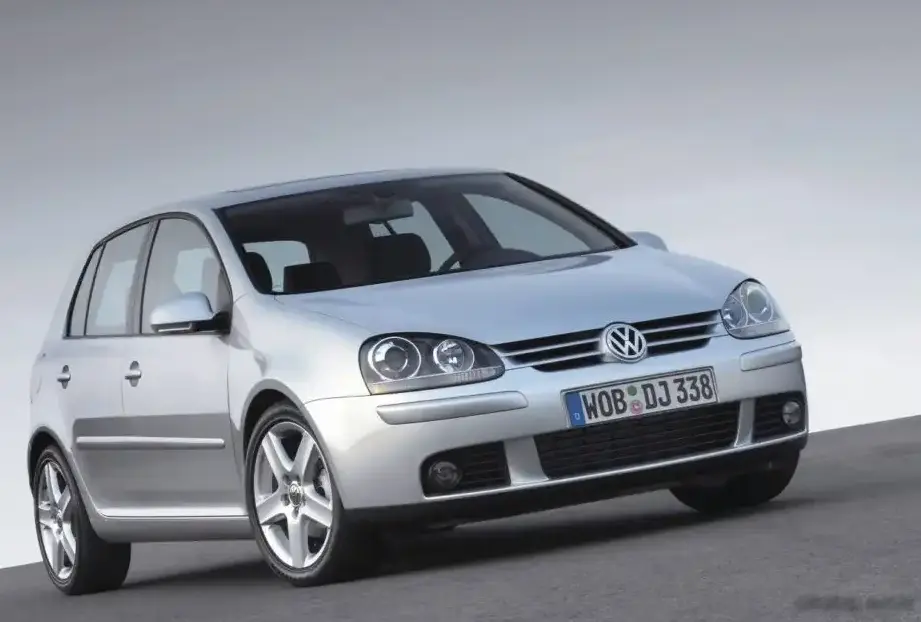
The Volkswagen Golf Mk5, produced from 2003 to 2009, represented a significant leap forward for the iconic hatchback. Among the various engine and transmission combinations offered, the 1.9 TDI with 90 horsepower and a five-speed automatic transmission (typically referred to as the DSG in some markets, though a traditional automatic was also available) occupied a specific niche. Production of this particular variant ran from 2004 to 2008, and it was primarily aimed at European markets where diesel engines were, and continue to be, highly favored for their fuel efficiency and torque characteristics. This model sat as an entry-level diesel option within the Mk5 Golf range, offering a balance between affordability and practicality.
Technical Specifications
| Brand | Volkswagen |
| Model | Golf |
| Generation | Golf V (5-door) |
| Type (Engine) | 1.9 TDI (90 Hp) |
| Start of production | 2004 |
| End of production | 2008 |
| Powertrain Architecture | Internal Combustion engine |
| Body type | Hatchback |
| Seats | 5 |
| Doors | 5 |
| Fuel consumption (urban) | 6.4-6.6 l/100 km (36.8 – 35.6 US mpg, 44.1 – 42.8 UK mpg, 15.6 – 15.2 km/l) |
| Fuel consumption (extra urban) | 4.3-4.7 l/100 km (54.7 – 50 US mpg, 65.7 – 60.1 UK mpg, 23.3 – 21.3 km/l) |
| Fuel consumption (combined) | 5-5.3 l/100 km (47 – 44.4 US mpg, 56.5 – 53.3 UK mpg, 20 – 18.9 km/l) |
| CO2 emissions | 135-143 g/km |
| Fuel Type | Diesel |
| Acceleration 0 – 100 km/h | 12.9 sec |
| Acceleration 0 – 62 mph | 12.9 sec |
| Acceleration 0 – 60 mph | 12.3 sec |
| Maximum speed | 176 km/h (109.36 mph) |
| Emission standard | Euro 4 |
| Weight-to-power ratio | 14.3 kg/Hp, 69.9 Hp/tonne |
| Weight-to-torque ratio | 6.1 kg/Nm, 163.2 Nm/tonne |
| Power | 90 Hp @ 4000 rpm |
| Power per litre | 47.5 Hp/l |
| Torque | 210 Nm @ 1800 rpm (154.89 lb.-ft. @ 1800 rpm) |
| Engine layout | Front, Transverse |
| Engine Model/Code | EA188 / BRU, BXF |
| Engine displacement | 1896 cm3 (115.7 cu. in.) |
| Number of cylinders | 4 |
| Engine configuration | Inline |
| Cylinder Bore | 79.5 mm (3.13 in.) |
| Piston Stroke | 95.5 mm (3.76 in.) |
| Compression ratio | 19.5:1 |
| Number of valves per cylinder | 2 |
| Fuel injection system | Pump-nozzle (Unit Injector) |
| Engine aspiration | Turbocharger, Intercooler |
| Valvetrain | SOHC |
| Engine oil capacity | 3.8 l (4.02 US qt | 3.34 UK qt) |
| Coolant | 8 l (8.45 US qt | 7.04 UK qt) |
| Kerb Weight | 1287 kg (2837.35 lbs.) |
| Max. weight | 1850 kg (4078.55 lbs.) |
| Max load | 563 kg (1241.2 lbs.) |
| Trunk (boot) space – minimum | 350 l (12.36 cu. ft.) |
| Trunk (boot) space – maximum | 1305 l (46.09 cu. ft.) |
| Fuel tank capacity | 55 l (14.53 US gal | 12.1 UK gal) |
| Max. roof load | 75 kg (165.35 lbs.) |
| Permitted trailer load with brakes (8%) | 1700 kg (3747.86 lbs.) |
| Permitted trailer load with brakes (12%) | 1400 kg (3086.47 lbs.) |
| Permitted trailer load without brakes | 660 kg (1455.05 lbs.) |
| Permitted towbar download | 75 kg (165.35 lbs.) |
| Length | 4204 mm (165.51 in.) |
| Width | 1759 mm (69.25 in.) |
| Width including mirrors | 2010 mm (79.13 in.) |
| Height | 1485 mm (58.46 in.) |
| Wheelbase | 2578 mm (101.5 in.) |
| Front track | 1539 mm (60.59 in.) |
| Rear (Back) track | 1528 mm (60.16 in.) |
| Front overhang | 880 mm (34.65 in.) |
| Rear overhang | 746 mm (29.37 in.) |
| Minimum turning circle | 10.9 m (35.76 ft.) |
| Front suspension | Independent, type McPherson with coil spring and anti-roll bar |
| Rear suspension | Independent multi-link spring suspension with stabilizer |
| Front brakes | Ventilated discs |
| Rear brakes | Disc |
| Steering type | Steering rack and pinion |
| Power steering | Electric |
| Tires size | 195/65 R15; 205/55 R16 |
| Wheel rims size | 6J x 15; 6.5J x 15; 6.5J x 16 |
INTRODUCTION
The Golf Mk5, launched in 2003, represented a significant step up in quality and refinement for Volkswagen’s best-selling model. Built on the A5 platform (also known as the 1HX0 platform), it offered improved interior space, a more sophisticated chassis, and a wider range of engines compared to its predecessor. The 1.9 TDI 90 hp automatic variant was a popular choice, particularly in Europe, where fuel economy and low running costs were paramount. It provided a practical and economical option for everyday driving, appealing to a broad customer base.
Powertrain & Engine Architecture
The heart of this Golf variant is the 1.9-liter inline-four cylinder diesel engine, specifically the EA188 engine family, often identified by engine codes BRU or BXF. This engine utilizes a pump-nozzle (unit injector) fuel injection system, a technology known for its precise fuel delivery and efficiency. The engine features a single overhead camshaft (SOHC) operating two valves per cylinder. A turbocharger with an intercooler is employed to boost power and torque, providing a noticeable increase in performance over naturally aspirated diesel engines. The automatic transmission, typically a traditional four-speed automatic, was designed to complement the engine’s torque curve, offering smooth shifts and reasonable responsiveness. While a DSG (Direct-Shift Gearbox) was available on other Golf models, it was less common with this specific engine and power output.
Driving Characteristics
The 1.9 TDI 90 hp automatic Golf offered a comfortable and relaxed driving experience. While not particularly quick – acceleration from 0 to 60 mph took around 12.3 seconds – the engine delivered a healthy dose of torque from low RPMs, making it well-suited for everyday driving and overtaking maneuvers. The automatic transmission, while not as sporty as a manual or DSG, provided smooth gear changes and reduced driver fatigue. The gear ratios were optimized for fuel efficiency, prioritizing economy over outright performance. Compared to the more powerful TDI variants (like the 130 hp or 170 hp versions), this model felt noticeably slower, but it compensated with significantly better fuel economy.
Equipment & Trim Levels
The 1.9 TDI 90 hp automatic typically came equipped with a reasonable level of standard features. These generally included central locking, electric front windows, power steering, an ABS anti-lock braking system, and a basic audio system. Interior upholstery was usually cloth, and the dashboard featured a functional, if somewhat understated, design. Optional extras included alloy wheels, air conditioning, a CD player, and upgraded interior trim. Trim levels varied depending on the market, but generally followed a progression from base ‘Trendline’ to mid-range ‘Comfortline’ and higher-spec ‘Highline’ models, with each step adding more features and refinements.
Chassis & Braking
The Golf Mk5 featured an independent suspension system on both the front and rear axles. The front suspension utilized a McPherson strut setup with coil springs and an anti-roll bar, while the rear employed a more sophisticated multi-link arrangement, also with a stabilizer bar. This configuration provided a good balance between ride comfort and handling. Brakes consisted of ventilated discs on the front wheels and solid discs on the rear. The ABS system helped to maintain control during emergency braking situations. The chassis was designed to accommodate the weight of the diesel engine and the automatic transmission, providing a stable and predictable driving experience.
Market Reception & Comparison
The 1.9 TDI 90 hp automatic Golf was generally well-received by critics and consumers alike. It was praised for its fuel efficiency, low running costs, and comfortable ride. However, some reviewers noted its relatively slow acceleration and the lack of a sporty driving experience. Compared to the higher-output TDI variants, this model offered a more affordable entry point into the Golf range, but at the expense of performance. Against competitors like the Ford Focus and Opel/Vauxhall Astra, the Golf offered a more refined interior and a generally more sophisticated driving experience.
Legacy
The 1.9 TDI engine, in various iterations, proved to be remarkably durable and reliable. The 90 hp version, while not the most powerful, is known for its longevity and relatively low maintenance costs. Today, these Golfs can be found in the used car market at affordable prices. While age and mileage are factors to consider, well-maintained examples can still provide years of reliable service. The combination of fuel efficiency, practicality, and Volkswagen’s reputation for build quality ensures that the 1.9 TDI 90 hp automatic Golf remains a popular choice for budget-conscious buyers.