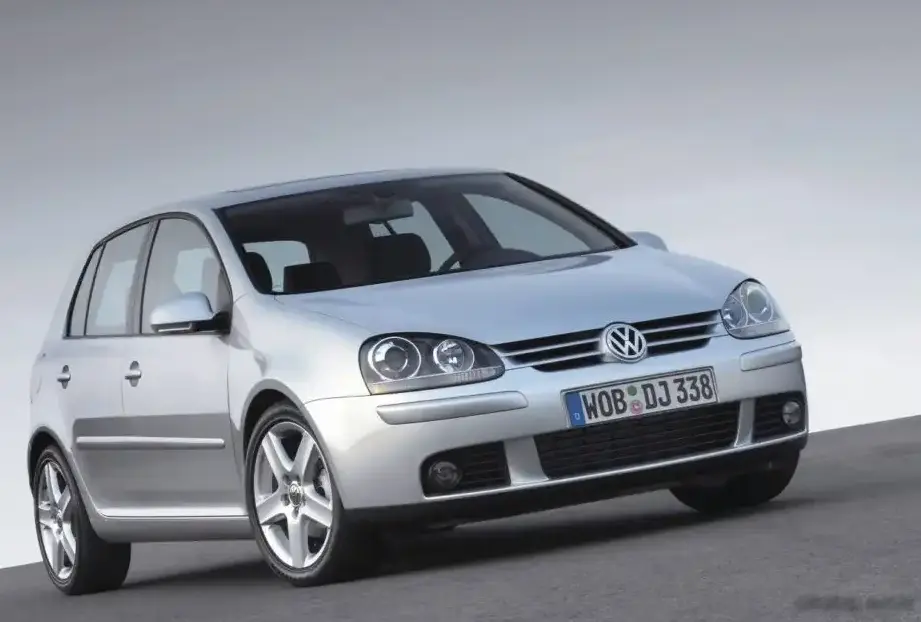
The Volkswagen Golf Mk V, produced from 2003 to 2009, represented a significant leap forward for the iconic hatchback. Within the Mk V range, the 2.0 TDI 16V 140 hp 4MOTION variant, manufactured from 2004 to 2008, occupied a compelling position as a practical, efficient, and all-weather capable option. This model combined the fuel economy benefits of a modern direct-injection diesel engine with the added security of Volkswagen’s 4MOTION all-wheel-drive system. It aimed to appeal to drivers needing year-round usability and occasional long-distance comfort, bridging the gap between the more basic trims and the performance-oriented GTI.
Technical Specifications
| Brand | Volkswagen |
| Model | Golf |
| Generation | Golf V (5-door) |
| Type (Engine) | 2.0 TDI 16V (140 Hp) 4MOTION |
| Start of production | 2004 |
| End of production | 2008 |
| Powertrain Architecture | Internal Combustion engine |
| Body type | Hatchback |
| Seats | 5 |
| Doors | 5 |
| Fuel consumption (urban) | 7.7-7.9 l/100 km (30.5 – 29.8 US mpg, 36.7 – 35.8 UK mpg, 13 – 12.7 km/l) |
| Fuel consumption (extra urban) | 4.9-5.1 l/100 km (48 – 46.1 US mpg, 57.6 – 55.4 UK mpg, 20.4 – 19.6 km/l) |
| Fuel consumption (combined) | 5.9-6.1 l/100 km (39.9 – 38.6 US mpg, 47.9 – 46.3 UK mpg, 16.9 – 16.4 km/l) |
| CO2 emissions | 159-165 g/km |
| Fuel Type | Diesel |
| Acceleration 0 – 100 km/h | 9.5 sec |
| Acceleration 0 – 62 mph | 9.5 sec |
| Acceleration 0 – 60 mph | 9 sec |
| Maximum speed | 203 km/h (126.14 mph) |
| Emission standard | Euro 4 |
| Weight-to-power ratio | 10.4 kg/Hp, 96.6 Hp/tonne |
| Weight-to-torque ratio | 4.5 kg/Nm, 220.7 Nm/tonne |
| Power | 140 Hp @ 4000 rpm |
| Torque | 320 Nm @ 1750-2500 rpm (236.02 lb.-ft. @ 1750-2500 rpm) |
| Engine layout | Front, Transverse |
| Engine Model/Code | EA188 / BKD |
| Engine displacement | 1968 cm3 (120.09 cu. in.) |
| Number of cylinders | 4 |
| Engine configuration | Inline |
| Cylinder Bore | 81 mm (3.19 in.) |
| Piston Stroke | 95.5 mm (3.76 in.) |
| Compression ratio | 18.5:1 |
| Number of valves per cylinder | 4 |
| Fuel injection system | Pump-nozzle (Unit Injector) |
| Engine aspiration | Turbocharger, Intercooler |
| Valvetrain | DOHC |
| Engine oil capacity | 3.8 l (4.02 US qt | 3.34 UK qt) |
| Coolant | 8 l (8.45 US qt | 7.04 UK qt) |
| Kerb Weight | 1450 kg (3196.7 lbs.) |
| Max. weight | 1980 kg (4365.15 lbs.) |
| Max load | 530 kg (1168.45 lbs.) |
| Trunk (boot) space – minimum | 350 l (12.36 cu. ft.) |
| Trunk (boot) space – maximum | 1305 l (46.09 cu. ft.) |
| Fuel tank capacity | 60 l (15.85 US gal | 13.2 UK gal) |
| Max. roof load | 75 kg (165.35 lbs.) |
| Permitted trailer load with brakes (8%) | 1800 kg (3968.32 lbs.) |
| Permitted trailer load with brakes (12%) | 1600 kg (3527.4 lbs.) |
| Permitted trailer load without brakes | 740 kg (1631.42 lbs.) |
| Permitted towbar download | 75 kg (165.35 lbs.) |
| Length | 4204 mm (165.51 in.) |
| Width | 1759 mm (69.25 in.) |
| Width including mirrors | 2010 mm (79.13 in.) |
| Height | 1485 mm (58.46 in.) |
| Wheelbase | 2578 mm (101.5 in.) |
| Front track | 1539 mm (60.59 in.) |
| Rear track | 1528 mm (60.16 in.) |
| Front overhang | 880 mm (34.65 in.) |
| Rear overhang | 746 mm (29.37 in.) |
| Minimum turning circle | 10.9 m (35.76 ft.) |
| Drivetrain Architecture | All wheel drive (4×4). ICE drives front wheels, rear wheels engaged via clutch. |
| Number of gears | 6 |
| Type of gearbox | Manual |
INTRODUCTION
The Golf Mk V, launched in 2003, represented a significant step up in quality and refinement for Volkswagen’s best-selling model. Built on the A5 platform (internally designated 1HX0), it offered improved interior space, more sophisticated suspension designs, and a wider range of engines compared to its predecessor. The 2.0 TDI 16V 4MOTION variant, introduced mid-way through the Mk V’s production run, catered to buyers seeking a blend of economy, performance, and all-weather capability. It was positioned as a mid-range offering, above the entry-level 1.4 and 1.6 petrol models, but below the sporty GTI and the more luxurious trims.
Powertrain & Engine Architecture
At the heart of the Golf 2.0 TDI 4MOTION lies the EA188 engine family, specifically the BKD code. This 1968cc, inline-four cylinder diesel engine utilizes common-rail direct injection and a variable geometry turbocharger (VGT) to deliver a robust 140 horsepower at 4000 rpm and 320 Nm (236 lb-ft) of torque between 1750 and 2500 rpm. The BKD engine employs a pump-nozzle (unit injector) fuel system, known for its durability and precise fuel delivery. The engine features a double overhead camshaft (DOHC) valvetrain with four valves per cylinder, optimizing gas flow for improved performance. The 4MOTION system is a viscous coupling-based all-wheel-drive system, providing full-time all-wheel drive without driver intervention. The standard transmission for this variant was a six-speed manual gearbox, offering precise shifts and contributing to the car’s overall efficiency.
Driving Characteristics
The 2.0 TDI 4MOTION Golf offered a compelling driving experience. While not as overtly sporty as the GTI, the 140 hp engine provided ample power for everyday driving and confident overtaking. The broad torque curve meant strong acceleration from low engine speeds, making it particularly well-suited to cruising on motorways. The six-speed manual transmission allowed drivers to keep the engine in its optimal power band. Compared to the front-wheel-drive 2.0 TDI, the 4MOTION version offered significantly improved traction, especially in wet or slippery conditions. The added weight of the 4MOTION system did slightly impact acceleration, but the enhanced stability and grip were generally considered a worthwhile trade-off. The gear ratios were tuned for a balance between fuel efficiency and responsiveness, with a relatively long sixth gear for relaxed highway cruising.
Equipment & Trim Levels
The 2.0 TDI 4MOTION typically came equipped with a respectable level of standard features. These included air conditioning, electric front windows, central locking, an RDS radio, and alloy wheels. Safety features such as ABS, traction control, and front airbags were also standard. Higher trim levels offered options such as automatic climate control, a CD changer, parking sensors, and upgraded upholstery. Interior trim generally featured cloth upholstery, with the option of leather upgrades. The dashboard layout was functional and well-designed, typical of Volkswagen’s approach at the time.
Chassis & Braking
The Golf Mk V utilized an independent suspension setup on both the front and rear axles. The front suspension employed a McPherson strut design with a stabilizer bar, while the rear featured a multi-link setup, also with a stabilizer bar. This configuration provided a good balance between ride comfort and handling precision. Braking duties were handled by ventilated discs on the front wheels and solid discs on the rear. ABS (Anti-lock Braking System) was standard, enhancing braking performance and stability. The 4MOTION system added to the car’s stability, particularly during braking on uneven surfaces.
Market Reception & Comparison
The Golf 2.0 TDI 4MOTION was generally well-received by automotive critics. It was praised for its fuel efficiency, strong performance, and all-weather capability. Compared to the front-wheel-drive 2.0 TDI, the 4MOTION version was seen as a more versatile and confidence-inspiring option, particularly for drivers in regions with harsh winters. However, the 4MOTION system added to the car’s price and slightly increased fuel consumption. Compared to the petrol-powered GTI, the 2.0 TDI 4MOTION offered better fuel economy but lacked the GTI’s outright performance and sporty character. The 1.9 TDI models were often seen as a more economical choice, but the 2.0 TDI offered a noticeable power upgrade.
Legacy
The EA188 engine family, including the BKD code found in the 2.0 TDI 4MOTION, proved to be remarkably durable. With regular maintenance, these engines can reliably exceed 200,000 miles. However, potential issues include injector failure, turbocharger wear, and dual-mass flywheel degradation. On the used car market, the Golf Mk V 2.0 TDI 4MOTION remains a popular choice, particularly for those seeking a practical, reliable, and all-weather capable hatchback. Its combination of fuel efficiency, performance, and all-wheel-drive capability continues to appeal to a wide range of buyers. Values tend to be higher for well-maintained examples with lower mileage and a full service history.