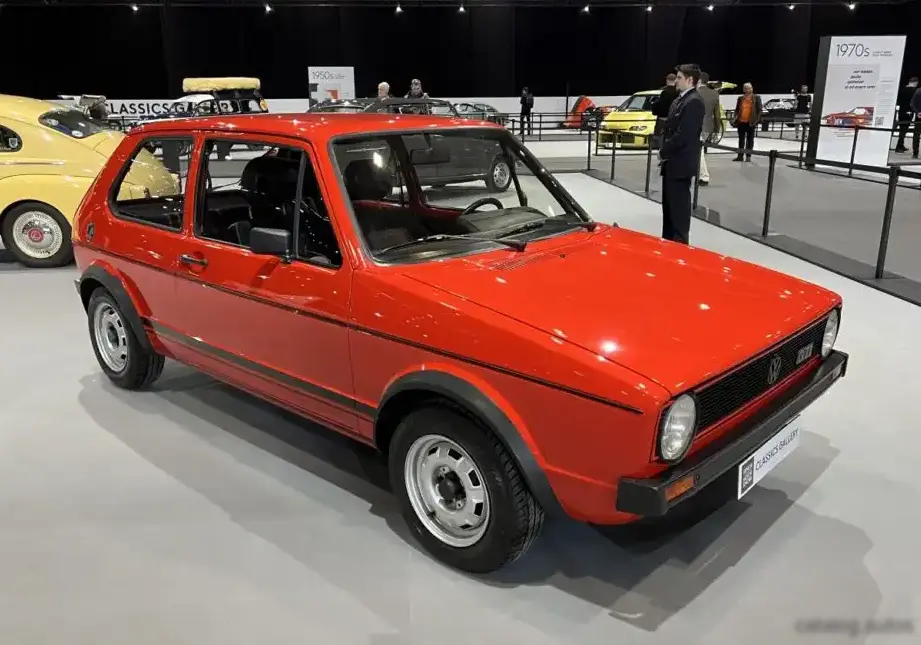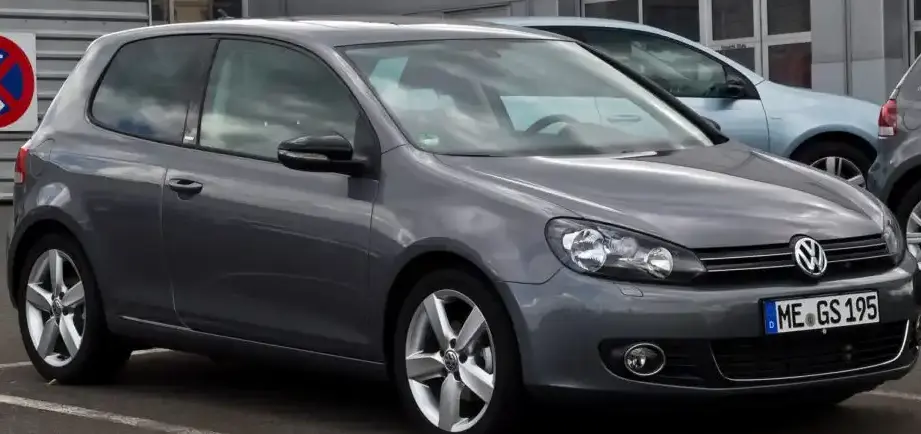
The Volkswagen Golf VI 2.5, produced from 2009 to 2013, represented a significant iteration of Volkswagen’s iconic hatchback. This particular 3-door variant, equipped with the 2.5-liter inline-five cylinder engine producing 170 horsepower, occupied a middle ground within the Golf VI lineup, offering a balance between performance and affordability. It was positioned above the base 1.6-liter models and below the more potent GTI and diesel variants. The Golf VI, built on the A5 platform (internally designated as the 1K chassis), continued Volkswagen’s tradition of a practical, well-engineered, and versatile compact car, appealing to a broad range of drivers in the European and North American markets.
Technical Specifications
| Brand | Volkswagen |
| Model | Golf |
| Generation | Golf VI (3-door) |
| Type (Engine) | 2.5 (170 Hp) |
| Start of production | 2009 |
| End of production | 2013 |
| Powertrain Architecture | Internal Combustion engine |
| Body type | Hatchback |
| Seats | 5 |
| Doors | 3 |
| Fuel consumption (economy) – urban (EPA) | 10.2 l/100 km (23.1 US mpg) |
| Fuel consumption (economy) – extra urban (EPA) | 7.1 l/100 km (33.1 US mpg) |
| Fuel Type | Petrol (Gasoline) |
| Weight-to-power ratio | 7.9 kg/Hp, 126.3 Hp/tonne |
| Weight-to-torque ratio | 5.6 kg/Nm, 178.3 Nm/tonne |
| Power | 170 Hp @ 5700 rpm |
| Power per litre | 68.5 Hp/l |
| Torque | 240 Nm @ 4250 rpm (177.01 lb.-ft. @ 4250 rpm) |
| Engine layout | Front, Transverse |
| Engine Model/Code | CBTA, CBUA |
| Engine displacement | 2480 cm3 (151.34 cu. in.) |
| Number of cylinders | 5 |
| Engine configuration | Inline |
| Cylinder Bore | 82.5 mm (3.25 in.) |
| Piston Stroke | 92.8 mm (3.65 in.) |
| Compression ratio | 9.5:1 |
| Number of valves per cylinder | 4 |
| Fuel injection system | Multi-port manifold injection |
| Engine aspiration | Naturally aspirated engine |
| Valvetrain | DOHC |
| Engine oil capacity | 5.5 l (5.81 US qt | 4.84 UK qt) |
| Coolant | 9 l (9.51 US qt | 7.92 UK qt) |
| Kerb Weight | 1346 kg (2967.42 lbs.) |
| Max. weight | 1921 kg (4235.08 lbs.) |
| Max load | 575 kg (1267.66 lbs.) |
| Trunk (boot) space – minimum | 350 l (12.36 cu. ft.) |
| Trunk (boot) space – maximum | 1305 l (46.09 cu. ft.) |
| Fuel tank capacity | 55 l (14.53 US gal | 12.1 UK gal) |
| Length | 4210 mm (165.75 in.) |
| Width | 1786 mm (70.31 in.) |
| Width including mirrors | 2048 mm (80.63 in.) |
| Height | 1479 mm (58.23 in.) |
| Wheelbase | 2578 mm (101.5 in.) |
| Front track | 1541 mm (60.67 in.) |
| Rear (Back) track | 1514 mm (59.61 in.) |
| Ride height (ground clearance) | 137 mm (5.39 in.) |
| Drag coefficient (Cd) | 0.32 |
| Minimum turning circle (turning diameter) | 10.9 m (35.76 ft.) |
| Drivetrain Architecture | The Internal combustion engine (ICE) drives the front wheels of the vehicle. |
| Drive wheel | Front wheel drive |
| Number of gears and type of gearbox | 5 gears, manual transmission |
| Front suspension | Independent, type McPherson with coil spring and anti-roll bar |
| Rear suspension | Independent multi-link spring suspension with stabilizer |
| Front brakes | Ventilated discs, 287×25 mm |
| Rear brakes | Disc, 272×10 mm |
| Assisting systems | ABS (Anti-lock braking system) |
| Steering type | Steering rack and pinion |
| Power steering | Electric Steering |
| Tires size | 195/65 R15 |
| Wheel rims size | 6J x 15 |
Powertrain & Engine Architecture
The heart of the Golf VI 2.5 was the CBTA or CBUA engine code, a 2.5-liter inline-five cylinder gasoline engine. This engine was a departure from the more common four-cylinder configurations found in the Golf range. It featured a cast iron block and an aluminum cylinder head, employing a dual overhead camshaft (DOHC) valvetrain with four valves per cylinder. Fuel delivery was managed by a multi-port fuel injection system, providing a balance between efficiency and performance. The engine’s 9.5:1 compression ratio contributed to its respectable power output. The five-cylinder configuration offered a unique engine note and smoother power delivery compared to a typical four-cylinder. The engine was paired with a standard five-speed manual transmission, providing direct control over the powerband. While an automatic transmission was available, it was not as common and often resulted in slightly reduced fuel economy.
Driving Characteristics
The 170 horsepower and 177 lb-ft of torque offered by the 2.5-liter engine provided adequate performance for everyday driving. Acceleration from 0 to 60 mph was typically in the 8-9 second range, making it competitive with other compact hatchbacks of the era. The five-speed manual transmission allowed drivers to effectively utilize the engine’s powerband, providing responsive acceleration. Compared to the higher-performance GTI, the 2.5-liter model offered a more relaxed driving experience, prioritizing comfort and fuel efficiency over outright speed. The manual gearbox had relatively short throws, making for an engaging driving experience. The suspension, tuned for comfort, provided a compliant ride, absorbing bumps and imperfections in the road surface effectively.
Equipment & Trim Levels
The Golf VI 2.5 typically came standard with features such as air conditioning, power windows and locks, a CD stereo system, and alloy wheels. Safety features included ABS brakes, front and side airbags, and electronic stability control. Higher trim levels offered options such as a sunroof, upgraded audio system, leather upholstery, and automatic climate control. The interior was generally well-appointed, with a focus on practicality and ergonomics. The 3-door configuration prioritized a sporty aesthetic, while the rear seats offered sufficient space for passengers. The dashboard layout was clean and functional, with easy-to-read gauges and intuitive controls.
Chassis & Braking
The Golf VI 2.5 utilized an independent McPherson strut suspension in the front and an independent multi-link suspension in the rear. This setup provided a good balance between ride comfort and handling. The front brakes were ventilated discs, while the rear brakes were solid discs, providing adequate stopping power for the vehicle’s weight. The electric power steering offered light and precise steering feel. The chassis was designed to be rigid and durable, contributing to the car’s overall stability and handling characteristics. Stabilizer bars were included both front and rear to reduce body roll during cornering.
Market Reception & Comparison
The Golf VI 2.5 was generally well-received by automotive critics, who praised its comfortable ride, practical interior, and decent performance. However, some critics noted that the engine lacked the refinement and excitement of the GTI or the fuel efficiency of the diesel models. Compared to the 1.6-liter base models, the 2.5-liter offered a significant performance upgrade, making it a more appealing option for drivers who prioritized power and responsiveness. Fuel economy was respectable, averaging around 23 mpg in the city and 33 mpg on the highway. Reliability was generally good, with few major issues reported.
Legacy
The Volkswagen Golf VI 2.5 has proven to be a relatively reliable and durable vehicle, with many examples still on the road today. The 2.5-liter inline-five engine, while not as common as other Volkswagen engines, has a reputation for being robust and long-lasting. The Golf VI generation as a whole is considered a well-engineered and practical car, and the 2.5-liter variant offers a good balance of performance, comfort, and affordability in the used car market. Parts availability is generally good, and maintenance costs are reasonable, making it a popular choice for budget-conscious buyers seeking a reliable and versatile compact hatchback.