Technical Specifications
| Brand | Volkswagen |
| Model | Golf |
| Generation | Golf VI (3-door) |
| Type (Engine) | GTD 2.0 TDI (170 Hp) DSG |
| Start of production | 2009 |
| End of production | 2012 |
| Powertrain Architecture | Internal Combustion engine |
| Body type | Hatchback |
| Seats | 5 |
| Doors | 3 |
| Fuel consumption (urban) | 6.9 l/100 km (34.1 US mpg, 40.9 UK mpg, 14.5 km/l) |
| Fuel consumption (extra urban) | 4.6 l/100 km (51.1 US mpg, 61.4 UK mpg, 21.7 km/l) |
| Fuel consumption (combined) | 5.4 l/100 km (43.6 US mpg, 52.3 UK mpg, 18.5 km/l) |
| CO2 emissions | 142 g/km |
| Fuel Type | Diesel |
| Acceleration 0 – 100 km/h | 8.1 sec |
| Acceleration 0 – 62 mph | 8.1 sec |
| Acceleration 0 – 60 mph | 7.7 sec |
| Maximum speed | 220 km/h (136.7 mph) |
| Emission standard | Euro 5 |
| Weight-to-power ratio | 8 kg/Hp, 125.4 Hp/tonne |
| Weight-to-torque ratio | 3.9 kg/Nm, 258.1 Nm/tonne |
| Power | 170 Hp @ 4200 rpm |
| Power per litre | 86.4 Hp/l |
| Torque | 350 Nm @ 1750-2500 rpm (258.15 lb.-ft. @ 1750-2500 rpm) |
| Engine layout | Front, Transverse |
| Engine Model/Code | CBBB, CFGB |
| Engine displacement | 1968 cm3 (120.09 cu. in.) |
| Number of cylinders | 4 |
| Engine configuration | Inline |
| Cylinder Bore | 81 mm (3.19 in.) |
| Piston Stroke | 95.5 mm (3.76 in.) |
| Compression ratio | 16.5:1 |
| Number of valves per cylinder | 4 |
| Fuel injection system | Diesel Commonrail |
| Engine aspiration | Turbocharger, Intercooler |
| Engine oil capacity | 4 l (4.23 US qt | 3.52 UK qt) |
| Kerb Weight | 1356 kg (2989.47 lbs.) |
| Max. weight | 1910 kg (4210.83 lbs.) |
| Max load | 554 kg (1221.36 lbs.) |
| Trunk (boot) space – minimum | 350 l (12.36 cu. ft.) |
| Trunk (boot) space – maximum | 1305 l (46.09 cu. ft.) |
| Fuel tank capacity | 55 l (14.53 US gal | 12.1 UK gal) |
| Max. roof load | 100 kg (220.46 lbs.) |
| Permitted trailer load with brakes (12%) | 1500 kg (3306.93 lbs.) |
| Permitted trailer load without brakes | 700 kg (1543.24 lbs.) |
| Length | 4213 mm (165.87 in.) |
| Width | 1779 mm (70.04 in.) |
| Width with mirrors folded | 1786 mm (70.31 in.) |
| Width including mirrors | 2048 mm (80.63 in.) |
| Height | 1469 mm (57.83 in.) |
| Wheelbase | 2578 mm (101.5 in.) |
| Front track | 1533 mm (60.35 in.) |
| Rear (Back) track | 1514 mm (59.61 in.) |
| Drivetrain Architecture | The Internal combustion engine (ICE) drives the front wheels of the vehicle. |
| Drive wheel | Front wheel drive |
| Number of gears and type of gearbox | 7 gears, automatic transmission DSG |
| Front suspension | Independent type McPherson |
| Rear suspension | Independent multi-link suspension |
| Front brakes | Disc |
| Rear brakes | Disc |
| Assisting systems | ABS (Anti-lock braking system) |
| Steering type | Steering rack and pinion |
| Power steering | Electric Steering |
| Tires size | 225/45 R17 |
| Wheel rims size | 7J x 17 |
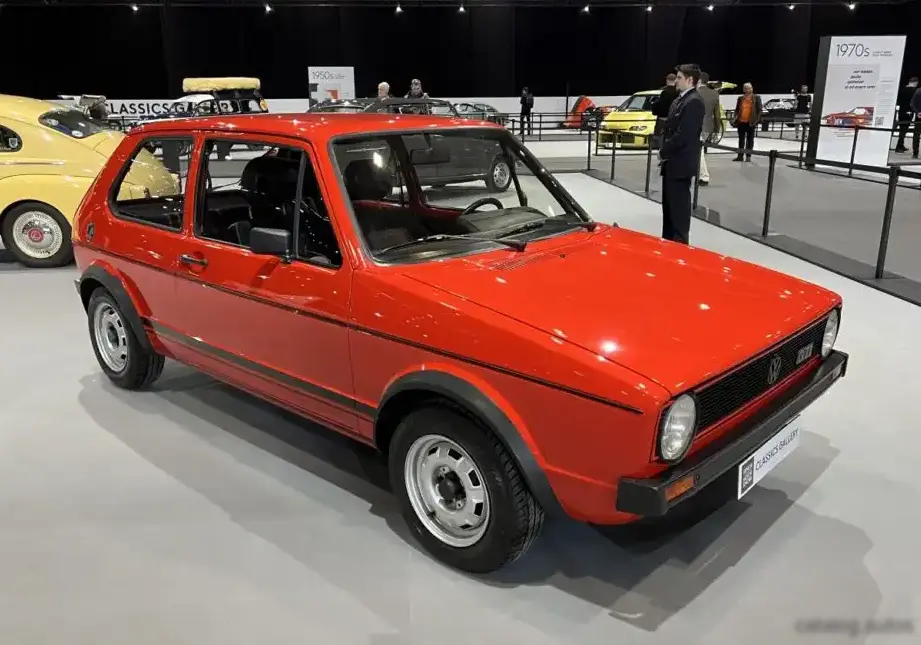
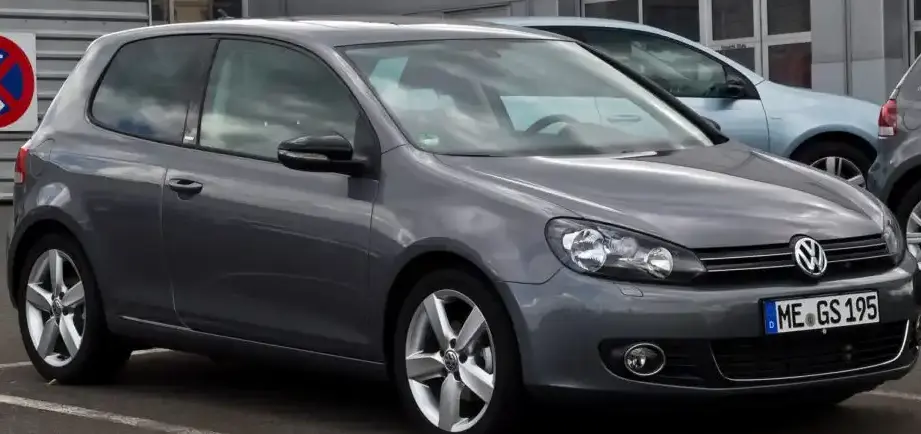
The Volkswagen Golf VI GTD 2.0 TDI DSG, launched in 2009, was Volkswagen’s attempt to bridge the gap between the fuel-efficient TDI models and the performance-oriented GTI. It offered a sportier aesthetic and enhanced driving dynamics compared to the standard Golf TDI, while remaining more economical than the GTI. The “GTD” badge, revived from the Golf Mk1 era, signified a diesel-powered performance model. This variant utilized the common rail diesel injection technology and a twin-mass flywheel to deliver a refined and responsive driving experience. The three-door body style further emphasized its sporty intentions, appealing to a younger demographic or those prioritizing a more compact footprint.
Powertrain & Engine Architecture
At the heart of the GTD was the 2.0-liter four-cylinder diesel engine, available with either the CBBB or CFGB engine code depending on the specific year and market. This engine featured common rail direct injection, delivering fuel at extremely high pressure for improved combustion efficiency and reduced emissions. A turbocharger with an intercooler boosted power output to 170 horsepower at 4200 rpm and 350 Nm (258 lb-ft) of torque between 1750 and 2500 rpm. The engine employed four valves per cylinder and a compression ratio of 16.5:1. The dual-clutch gearbox (DSG) was a crucial component, offering quick and seamless gear changes. This 7-speed DSG transmission allowed for both automatic operation and manual gear selection via steering wheel-mounted paddles or the gear lever. The DSG’s programming was tuned for a balance of performance and fuel economy.
Driving Characteristics
The GTD 2.0 TDI DSG provided a noticeably more engaging driving experience than the standard Golf TDI. The 170 hp output and readily available torque resulted in brisk acceleration, with 0-60 mph times around 7.7 to 8.1 seconds. The DSG transmission contributed to this performance, providing rapid shifts and minimizing power interruption. While not as overtly sporty as the GTI, the GTD offered a comfortable and refined ride, thanks to its well-tuned suspension. The steering was precise and responsive, providing good feedback to the driver. The DSG transmission’s gear ratios were optimized for both acceleration and highway cruising, making it a versatile vehicle for various driving conditions. Compared to the manual transmission versions, the DSG offered convenience and ease of use, particularly in urban traffic.
Equipment & Trim Levels
The GTD trim level came standard with a number of features designed to enhance both comfort and style. These typically included sport seats upholstered in a unique cloth pattern, a leather-wrapped steering wheel, and aluminum pedal caps. Exterior features included a distinctive front bumper with integrated fog lights, side skirts, and a rear spoiler. Optional extras included features like a sunroof, upgraded audio system, navigation system, and parking sensors. The interior typically featured a dark color scheme with subtle GTD badging. The GTD was positioned as a premium trim level, offering a more comprehensive equipment list than the base models.
Chassis & Braking
The Golf VI GTD featured independent suspension on all four wheels, with a McPherson strut setup at the front and a multi-link setup at the rear. This configuration provided a good balance of ride comfort and handling precision. The GTD typically came equipped with disc brakes on all four wheels, providing ample stopping power. Anti-lock braking system (ABS) was standard, enhancing safety and control during emergency braking situations. The suspension was slightly stiffer than that of the standard Golf TDI, contributing to its more sporty handling characteristics. Stabilizer bars were fitted to both the front and rear axles to reduce body roll during cornering.
Market Reception & Comparison
The Golf VI GTD was generally well-received by automotive critics, who praised its blend of performance, efficiency, and practicality. It was often seen as a compelling alternative to the GTI for drivers who prioritized fuel economy. Compared to the GTI, the GTD offered similar levels of equipment and refinement, but with a more economical diesel engine. The GTD also offered a more mature and understated aesthetic compared to the GTI’s more aggressive styling. Fuel economy was a key selling point, with the GTD achieving combined fuel consumption figures of around 5.4 l/100 km (43.6 US mpg). Reliability was generally good, although some owners reported issues with the DSG transmission, particularly early units.
Legacy
The Golf VI GTD 2.0 TDI DSG remains a popular choice in the used car market, particularly in Europe. The 2.0 TDI engine, in its various iterations, has proven to be relatively durable and reliable, although regular maintenance is essential. The DSG transmission, while offering performance benefits, requires more frequent servicing than a traditional manual gearbox. The GTD’s combination of sporty styling, efficient diesel power, and practical hatchback design continues to appeal to a wide range of buyers. It represents a significant step forward in diesel performance and refinement, and helped to establish the GTD as a desirable model in its own right.