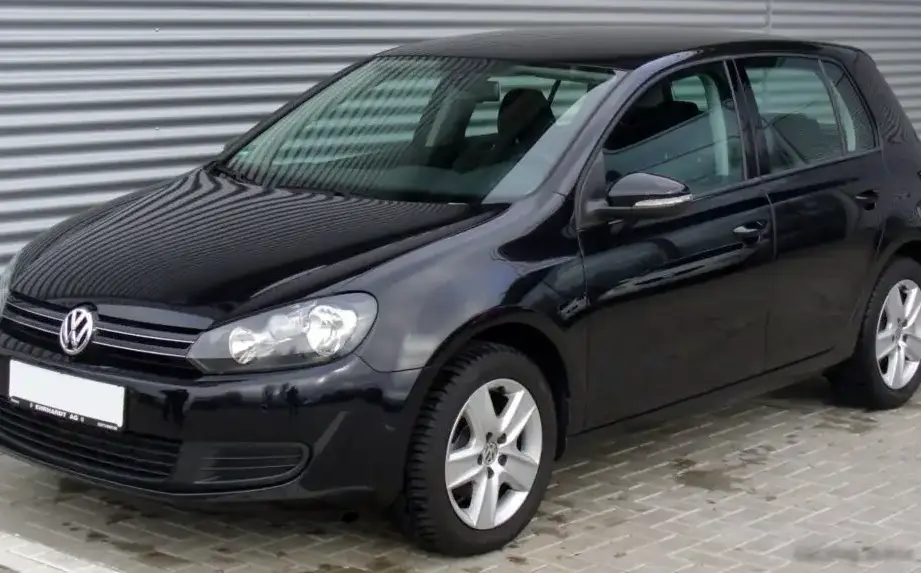
The Volkswagen Golf VI 1.2 TSI (105 hp) represents a significant entry point into the sixth generation of Volkswagen’s iconic hatchback, produced between 2009 and 2012. Positioned as a fuel-efficient and accessible option within the Golf VI range, this variant aimed to broaden the model’s appeal to cost-conscious buyers and those prioritizing economy. It was a key component of Volkswagen’s strategy to offer a diverse lineup catering to various needs and budgets, leveraging the modular A5 (PQ35) platform also used by other VW Group vehicles like the SEAT Leon and Škoda Octavia. This particular configuration, pairing the 1.2-liter turbocharged petrol engine with a six-speed automatic transmission, offered a blend of practicality and convenience, though it differed substantially in performance and driving experience from its more powerful siblings.
Technical Specifications
| Brand | Volkswagen |
| Model | Golf |
| Generation | Golf VI (5-door) |
| Type (Engine) | 1.2 TSI (105 Hp) |
| Start of production | 2009 |
| End of production | 2012 |
| Powertrain Architecture | Internal Combustion engine |
| Body type | Hatchback |
| Seats | 5 |
| Doors | 5 |
| Fuel consumption (urban) | 7.1 l/100 km (33.1 US mpg, 39.8 UK mpg, 14.1 km/l) |
| Fuel consumption (extra urban) | 4.9 l/100 km (48 US mpg, 57.6 UK mpg, 20.4 km/l) |
| Fuel consumption (combined) | 5.7 l/100 km (41.3 US mpg, 49.6 UK mpg, 17.5 km/l) |
| CO2 emissions | 134 g/km |
| Fuel Type | Petrol (Gasoline) |
| Acceleration 0 – 100 km/h | 10.6 sec |
| Acceleration 0 – 62 mph | 10.6 sec |
| Acceleration 0 – 60 mph | 10.1 sec |
| Maximum speed | 190 km/h (118.06 mph) |
| Emission standard | Euro 5 |
| Weight-to-power ratio | 11 kg/Hp, 90.7 Hp/tonne |
| Weight-to-torque ratio | 6.6 kg/Nm, 151.1 Nm/tonne |
| Power | 105 Hp @ 5000 rpm |
| Power per litre | 87.7 Hp/l |
| Torque | 175 Nm @ 1550-4100 rpm (129.07 lb.-ft. @ 1550-4100 rpm) |
| Engine layout | Front, Transverse |
| Engine Model/Code | CBZB |
| Engine displacement | 1197 cm3 (73.05 cu. in.) |
| Number of cylinders | 4 |
| Engine configuration | Inline |
| Cylinder Bore | 71 mm (2.8 in.) |
| Piston Stroke | 75.6 mm (2.98 in.) |
| Compression ratio | 10:1 |
| Number of valves per cylinder | 2 |
| Fuel injection system | Direct injection |
| Engine aspiration | Turbocharger, Intercooler |
| Valvetrain | SOHC |
| Engine oil capacity | 3.6 l (3.8 US qt | 3.17 UK qt) |
| Kerb Weight | 1158 kg (2552.95 lbs.) |
| Max. weight | 1790 kg (3946.27 lbs.) |
| Max load | 632 kg (1393.32 lbs.) |
| Trunk (boot) space – minimum | 350 l (12.36 cu. ft.) |
| Trunk (boot) space – maximum | 1305 l (46.09 cu. ft.) |
| Fuel tank capacity | 55 l (14.53 US gal | 12.1 UK gal) |
| Max. roof load | 75 kg (165.35 lbs.) |
| Permitted trailer load with brakes (12%) | 1200 kg (2645.55 lbs.) |
| Permitted trailer load without brakes | 610 kg (1344.82 lbs.) |
| Permitted towbar download | 75 kg (165.35 lbs.) |
| Length | 4199 mm (165.31 in.) |
| Width | 1786 mm (70.31 in.) |
| Width including mirrors | 2048 mm (80.63 in.) |
| Height | 1480 mm (58.27 in.) |
| Wheelbase | 2578 mm (101.5 in.) |
| Front track | 1541 mm (60.67 in.) |
| Rear (Back) track | 1514 mm (59.61 in.) |
| Ride height (ground clearance) | 150 mm (5.91 in.) |
| Minimum turning circle | 10.9 m (35.76 ft.) |
| Front suspension | Independent type McPherson, Transverse stabilizer |
| Rear suspension | Independent multi-link suspension, Transverse stabilizer |
| Front brakes | Ventilated discs |
| Rear brakes | Disc |
| Assisting systems | ABS (Anti-lock braking system) |
| Steering type | Steering rack and pinion |
| Power steering | Electric Steering |
| Tires size | 195/65 R 15 |
| Wheel rims size | 6 J x 15 |
Powertrain & Engine Architecture
The heart of the Golf VI 1.2 TSI is the CBZB engine code, a 1.2-liter inline-four cylinder petrol engine featuring direct fuel injection and a turbocharger with an intercooler. This engine is part of Volkswagen’s TSI (Turbocharged Stratified Injection) family, designed to deliver a balance of power and fuel efficiency. The direct injection system precisely meters fuel into the combustion chamber, optimizing combustion and reducing emissions. The turbocharger, coupled with the intercooler, forces more air into the engine, boosting power output. The engine utilizes a single overhead camshaft (SOHC) valvetrain, operating with two valves per cylinder. The six-speed automatic transmission, typically a conventional torque converter automatic, was chosen for its ease of use and comfort, appealing to a broader range of drivers. While not known for its sportiness, this transmission was programmed for smooth shifts and reasonable responsiveness.
Driving Characteristics
The 105 hp and 175 Nm (129 lb-ft) of torque produced by the 1.2 TSI engine, when paired with the automatic transmission, resulted in a driving experience focused on practicality rather than performance. Acceleration from 0-60 mph took around 10.1 seconds, and top speed was limited to 190 km/h (118 mph). The automatic transmission, while convenient, did detract from the engine’s responsiveness, and gear changes weren’t particularly quick or sporty. Compared to the more powerful 1.4 TSI or the diesel variants, the 1.2 TSI automatic felt noticeably slower, especially during overtaking maneuvers. However, the engine provided adequate power for everyday driving, and the automatic transmission made it a comfortable choice for urban commutes and long journeys.
Equipment & Trim Levels
The Golf VI 1.2 TSI typically came equipped with a reasonable level of standard features. These generally included air conditioning, electric front windows, central locking, a basic audio system, and ABS brakes. Depending on the market and optional packages selected, additional features could include alloy wheels, a multi-function steering wheel, cruise control, and parking sensors. Interior upholstery was typically cloth, with a functional and durable design. Trim levels varied by country, but generally, this variant occupied the lower to mid-range of the Golf VI lineup, offering a good balance of features for the price.
Chassis & Braking
The Golf VI 1.2 TSI utilized a McPherson strut front suspension and a multi-link rear suspension, providing a comfortable and controlled ride. The suspension was tuned for everyday driving, prioritizing comfort over outright handling performance. Front brakes were ventilated discs, while rear brakes were solid discs. ABS (Anti-lock Braking System) was standard, enhancing safety during emergency braking. The chassis was designed to accommodate the lower power output and weight of the 1.2 TSI engine, providing a stable and predictable driving experience.
Market Reception & Comparison
The Golf VI 1.2 TSI automatic was generally well-received as a sensible and economical option. Critics praised its fuel efficiency and comfortable ride, but noted its lack of outright performance. Compared to the more powerful Golf variants, it offered a lower price point but sacrificed some driving excitement. The 1.4 TSI offered a significant performance upgrade, while the diesel models provided even better fuel economy. However, the 1.2 TSI appealed to buyers who prioritized affordability and ease of use over sporty driving dynamics.
Legacy
The 1.2 TSI engine, while not without its issues (early versions were prone to timing chain wear), proved to be a relatively reliable powertrain when properly maintained. The six-speed automatic transmission is also generally considered durable. In the used car market, the Golf VI 1.2 TSI automatic remains a popular choice for budget-conscious buyers seeking a practical and reliable hatchback. Its fuel efficiency and relatively low running costs continue to make it an attractive option, although potential buyers should be aware of the potential for timing chain issues and ensure a thorough inspection before purchase.