Technical Specifications
| Brand | Volkswagen |
| Model | Golf |
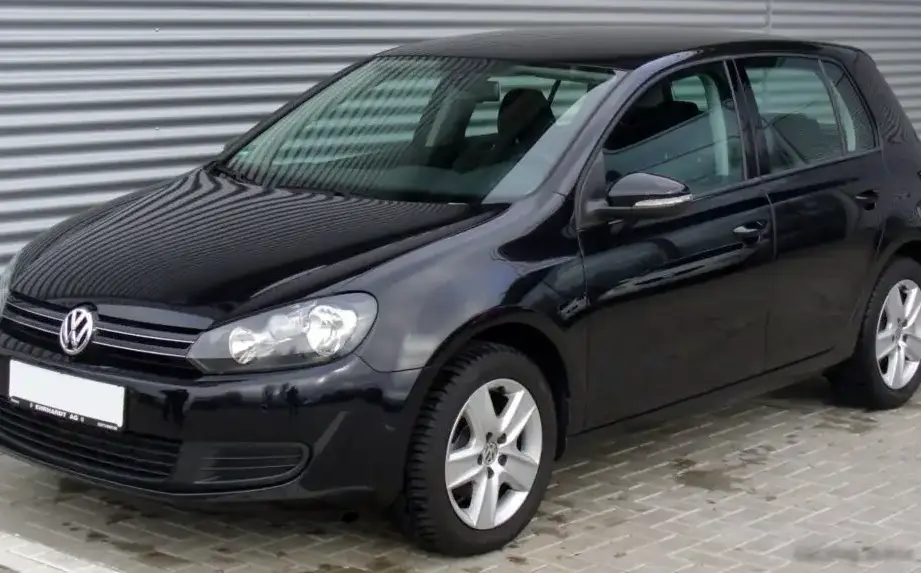
| Generation | Golf VI (5-door) |
| Type (Engine) | 1.2 TSI (105 Hp) BMT |
| Start of production | 2009 |
| End of production | 2012 |
| Powertrain Architecture | Internal Combustion engine |
| Body type | Hatchback |
| Seats | 5 |
| Doors | 5 |
| Fuel consumption (urban) | 6.5 l/100 km (36.2 US mpg, 43.5 UK mpg, 15.4 km/l) |
| Fuel consumption (extra urban) | 4.5 l/100 km (52.3 US mpg, 62.8 UK mpg, 22.2 km/l) |
| Fuel consumption (combined) | 5.2 l/100 km (45.2 US mpg, 54.3 UK mpg, 19.2 km/l) |
| CO2 emissions | 121 g/km |
| Fuel Type | Petrol (Gasoline) |
| Acceleration 0 – 100 km/h | 10.5 sec |
| Acceleration 0 – 62 mph | 10.5 sec |
| Acceleration 0 – 60 mph | 10 sec |
| Maximum speed | 190 km/h (118.06 mph) |
| Emission standard | Euro 5 |
| Weight-to-power ratio | 11 kg/Hp, 90.6 Hp/tonne |
| Weight-to-torque ratio | 6.6 kg/Nm, 151 Nm/tonne |
| Power | 105 Hp @ 5000 rpm |
| Power per litre | 87.7 Hp/l |
| Torque | 175 Nm @ 1550-4100 rpm (129.07 lb.-ft. @ 1550-4100 rpm) |
| Engine layout | Front, Transverse |
| Engine Model/Code | CBZB |
| Engine displacement | 1197 cm3 (73.05 cu. in.) |
| Number of cylinders | 4 |
| Engine configuration | Inline |
| Cylinder Bore | 71 mm (2.8 in.) |
| Piston Stroke | 75.6 mm (2.98 in.) |
| Number of valves per cylinder | 2 |
| Fuel injection system | Direct injection |
| Engine aspiration | Turbocharger, Intercooler |
| Valvetrain | SOHC |
| Engine oil capacity | 3.6 l (3.8 US qt | 3.17 UK qt) |
| Kerb Weight | 1159 kg (2555.16 lbs.) |
| Max. weight | 1750 kg (3858.09 lbs.) |
| Max load | 591 kg (1302.93 lbs.) |
| Trunk (boot) space – minimum | 350 l (12.36 cu. ft.) |
| Trunk (boot) space – maximum | 1305 l (46.09 cu. ft.) |
| Fuel tank capacity | 55 l (14.53 US gal | 12.1 UK gal) |
| Max. roof load | 75 kg (165.35 lbs.) |
| Permitted trailer load with brakes (12%) | 1200 kg (2645.55 lbs.) |
| Permitted trailer load without brakes | 610 kg (1344.82 lbs.) |
| Permitted towbar download | 75 kg (165.35 lbs.) |
| Length | 4199 mm (165.31 in.) |
| Width | 1786 mm (70.31 in.) |
| Width including mirrors | 2048 mm (80.63 in.) |
| Height | 1480 mm (58.27 in.) |
| Wheelbase | 2578 mm (101.5 in.) |
| Front track | 1541 mm (60.67 in.) |
| Rear track | 1514 mm (59.61 in.) |
| Ride height (ground clearance) | 150 mm (5.91 in.) |
| Minimum turning circle | 10.9 m (35.76 ft.) |
| Front suspension | Independent type McPherson, Transverse stabilizer |
| Rear suspension | Independent multi-link suspension, Transverse stabilizer |
| Front brakes | Ventilated discs |
| Rear brakes | Disc |
| Assisting systems | ABS (Anti-lock braking system) |
| Steering type | Steering rack and pinion |
| Power steering | Electric Steering |
| Tires size | 195/65 R 15 |
| Wheel rims size | 6 J x 15 |
The Golf VI, launched in 2008, continued Volkswagen’s tradition of a practical and well-engineered compact hatchback. The 1.2 TSI BMT variant, introduced shortly after the VI’s launch, aimed to broaden the Golf’s appeal by offering a more economical engine option. This model was built on the A5 (or 1HX) platform, shared with other VW Group vehicles like the SEAT Leon, Skoda Octavia, and Audi A3. The BMT designation signified the inclusion of Volkswagen’s BlueMotion Technology, a suite of fuel-saving measures. This trim level was designed to be an affordable and efficient choice for everyday commuting and urban driving.
Powertrain & Engine Architecture
At the heart of the Golf VI 1.2 TSI BMT lies the CBZB engine code, a 1.2-liter turbocharged inline-four cylinder petrol engine. This engine utilizes direct fuel injection (FSI) and a single overhead camshaft (SOHC) valvetrain. The turbocharger, coupled with an intercooler, provides a boost in power and torque despite the relatively small displacement. The engine’s control unit carefully manages fuel injection and ignition timing to optimize efficiency and reduce emissions. The 1.2 TSI engine is known for its responsiveness and relatively quiet operation. The BMT package included features like regenerative braking and optimized aerodynamics to further reduce fuel consumption. This variant was typically paired with a 6-speed manual transmission, although a 7-speed DSG (Direct-Shift Gearbox) dual-clutch automatic was also available as an option. The automatic transmission offered smoother shifts and improved fuel economy in certain driving conditions.
Driving Characteristics
The 105 hp output of the 1.2 TSI engine, combined with the weight of the Golf VI, resulted in a 0-60 mph acceleration time of around 10.5 seconds. While not particularly sporty, the engine provided adequate power for everyday driving situations. The turbocharger delivered a noticeable boost in torque at lower engine speeds, making it easy to navigate city traffic and overtake slower vehicles. The manual transmission offered precise gear changes, while the optional DSG automatic provided a more relaxed driving experience. Compared to the more powerful 1.4 TSI or 2.0 TDI variants, the 1.2 TSI BMT felt less refined and had a narrower power band. However, its fuel economy was significantly better, making it a more attractive option for drivers prioritizing efficiency.
Equipment & Trim Levels
The Golf VI 1.2 TSI BMT typically came equipped with a reasonable level of standard features. These included air conditioning, power windows, central locking, and an audio system with CD player. Safety features such as ABS, airbags, and electronic stability control were also standard. Higher trim levels offered additional features like alloy wheels, a multi-function steering wheel, and upgraded upholstery. Optional extras included a sunroof, navigation system, and parking sensors. Interior upholstery was typically cloth, with a focus on durability and practicality. The dashboard layout was functional and well-designed, with clear instrumentation and intuitive controls.
Chassis & Braking
The Golf VI 1.2 TSI BMT utilized an independent McPherson strut suspension at the front and an independent multi-link suspension at the rear. This suspension setup provided a comfortable ride and good handling characteristics. The front brakes were ventilated discs, while the rear brakes were solid discs. ABS (Anti-lock Braking System) was standard, providing enhanced braking performance in emergency situations. The suspension was tuned to prioritize comfort over sporty handling, making it well-suited for everyday driving. Stabilizer bars were fitted to both the front and rear axles to reduce body roll during cornering.
Market Reception & Comparison
The Golf VI 1.2 TSI BMT was generally well-received by automotive critics for its fuel efficiency and affordability. However, some reviewers noted that the engine lacked the punch of the more powerful Golf variants. Compared to the 1.4 TSI, the 1.2 TSI offered lower running costs but less performance. The 2.0 TDI diesel variant provided even better fuel economy but came with a higher purchase price and potential maintenance costs associated with diesel particulate filters. The 1.2 TSI BMT appealed to buyers who prioritized economy and practicality over outright performance, making it a popular choice for fleet operators and private drivers alike.
Legacy
The 1.2 TSI engine, while generally reliable, has been known to exhibit some issues with carbon buildup on the intake valves, particularly in vehicles that are primarily used for short trips. Regular servicing and the use of high-quality fuel can help to mitigate this issue. The Golf VI 1.2 TSI BMT remains a popular choice in the used car market due to its affordability and fuel efficiency. Its relatively simple engine design and readily available parts make it a relatively easy vehicle to maintain. Despite its age, the Golf VI continues to be a well-regarded compact hatchback, known for its build quality, practicality, and overall reliability.