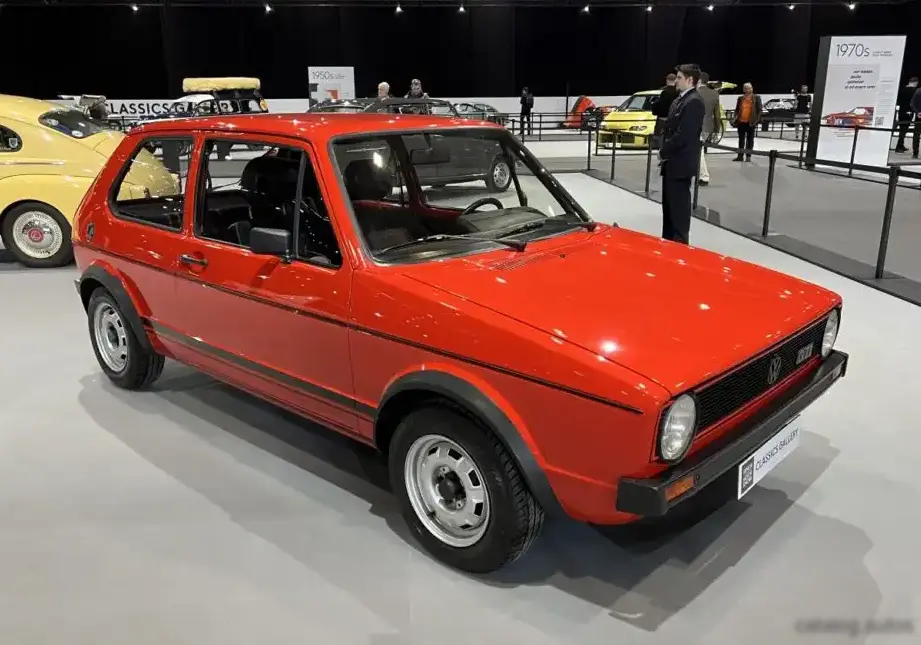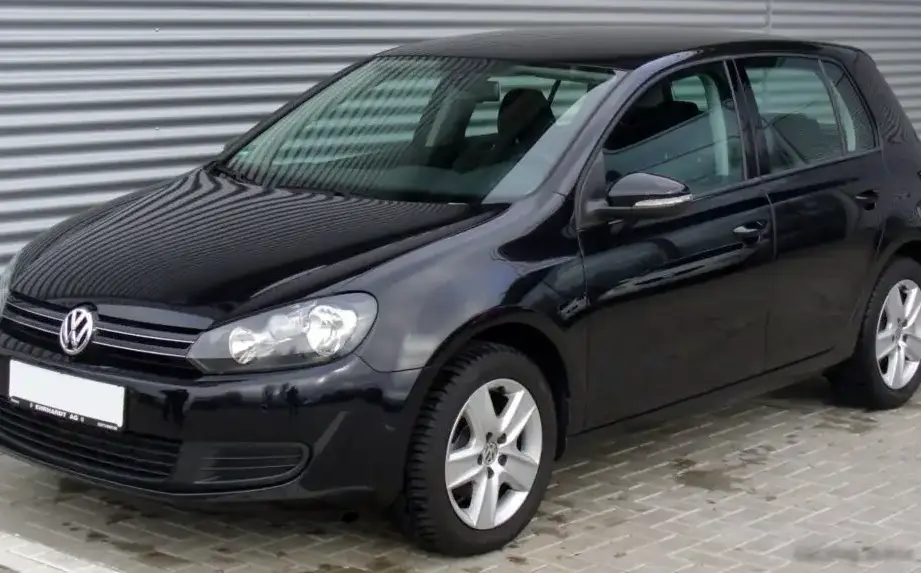
The Volkswagen Golf VI, produced from 2008 to 2012, represented a significant evolution of the iconic Golf lineage. Within the sixth generation, the 1.4 TSI 160 horsepower variant (often found in 5-door configurations) occupied a crucial mid-range position, offering a blend of performance and fuel efficiency. This model was particularly popular in European markets, where it appealed to buyers seeking a refined and practical hatchback with a bit more punch than the base engine options. It sat within the A6 platform family, sharing components with other Volkswagen Group vehicles like the Scirocco, Jetta, and Audi A3.
Technical Specifications
| Brand | Volkswagen |
| Model | Golf |
| Generation | Golf VI (5-door) |
| Type (Engine) | 1.4 TSI (160 Hp) |
| Start of production | 2008 |
| End of production | 2012 |
| Powertrain Architecture | Internal Combustion engine |
| Body type | Hatchback |
| Seats | 5 |
| Doors | 5 |
| Fuel consumption (urban) | 8.1 l/100 km (29 US mpg, 34.9 UK mpg) |
| Fuel consumption (extra urban) | 5.2 l/100 km (45.2 US mpg, 54.3 UK mpg) |
| Fuel consumption (combined) | 6.3 l/100 km (37.3 US mpg, 44.8 UK mpg) |
| CO2 emissions | 145 g/km |
| Fuel Type | Petrol (Gasoline) |
| Acceleration 0 – 100 km/h | 8 sec |
| Acceleration 0 – 62 mph | 8 sec |
| Acceleration 0 – 60 mph | 7.6 sec |
| Maximum speed | 220 km/h (136.7 mph) |
| Emission standard | Euro 5 |
| Weight-to-power ratio | 7.9 kg/Hp, 125.9 Hp/tonne |
| Weight-to-torque ratio | 5.3 kg/Nm, 188.8 Nm/tonne |
| Power | 160 Hp @ 5800 rpm |
| Power per litre | 115.1 Hp/l |
| Torque | 240 Nm @ 1500-4500 rpm (177.01 lb.-ft. @ 1500-4500 rpm) |
| Engine layout | Front, Transverse |
| Engine Model/Code | CAVD, CTHD, CTKA |
| Engine displacement | 1390 cm3 (84.82 cu. in.) |
| Number of cylinders | 4 |
| Engine configuration | Inline |
| Cylinder Bore | 76.5 mm (3.01 in.) |
| Piston Stroke | 75.6 mm (2.98 in.) |
| Compression ratio | 10:1 |
| Number of valves per cylinder | 4 |
| Fuel injection system | Direct injection |
| Engine aspiration | Turbocharging and Supercharger, Intercooler |
| Valvetrain | DOHC |
| Engine oil capacity | 3.6 l (3.8 US qt | 3.17 UK qt) |
| Kerb Weight | 1271 kg (2802.08 lbs.) |
| Max. weight | 1840 kg (4056.51 lbs.) |
| Max load | 569 kg (1254.43 lbs.) |
| Trunk (boot) space – minimum | 350 l (12.36 cu. ft.) |
| Trunk (boot) space – maximum | 1305 l (46.09 cu. ft.) |
| Fuel tank capacity | 55 l (14.53 US gal | 12.1 UK gal) |
| Max. roof load | 75 kg (165.35 lbs.) |
| Permitted trailer load with brakes (12%) | 1400 kg (3086.47 lbs.) |
| Permitted trailer load without brakes | 670 kg (1477.1 lbs.) |
| Permitted towbar download | 75 kg (165.35 lbs.) |
| Length | 4199 mm (165.31 in.) |
| Width | 1786 mm (70.31 in.) |
| Width including mirrors | 2048 mm (80.63 in.) |
| Height | 1480 mm (58.27 in.) |
| Wheelbase | 2578 mm (101.5 in.) |
| Front track | 1541 mm (60.67 in.) |
| Rear track | 1514 mm (59.61 in.) |
| Ride height (ground clearance) | 150 mm (5.91 in.) |
| Minimum turning circle | 10.9 m (35.76 ft.) |
| Front suspension | Independent type McPherson, Transverse stabilizer |
| Rear suspension | Independent multi-link suspension, Transverse stabilizer |
| Front brakes | Ventilated discs |
| Rear brakes | Disc |
| Assisting systems | ABS (Anti-lock braking system) |
| Steering type | Steering rack and pinion |
| Power steering | Electric Steering |
| Tires size | 205/55 R 16 |
| Wheel rims size | 6.5J x 16 |
INTRODUCTION
The Golf VI 1.4 TSI 160 hp represented a sweet spot in the lineup for many buyers. Introduced in 2008, it combined the practicality and refinement expected of the Golf with a relatively potent turbocharged engine. This variant was aimed at drivers who wanted a comfortable and efficient daily driver with enough power for overtaking and occasional spirited driving. It was positioned above the base 1.6-liter petrol and diesel options, and below the more performance-oriented GTI and diesel variants.
Powertrain & Engine Architecture
The heart of this Golf variant is the 1.4-liter TSI (Turbocharged Stratified Injection) engine, specifically the CAVD, CTHD, or CTKA engine codes depending on the specific year and market. This engine is notable for its combination of a turbocharger *and* a supercharger – a relatively uncommon setup. The supercharger provides instant boost at low engine speeds, eliminating turbo lag, while the turbocharger takes over at higher RPMs for sustained power. This dual-charging system delivers a broad torque curve and responsive acceleration. The engine utilizes direct fuel injection, further enhancing efficiency and performance. The 1.4 TSI engine features a DOHC (Double Overhead Camshaft) valvetrain with four valves per cylinder. The engine is transversely mounted at the front of the vehicle. The transmission is a six-speed automatic, offering smooth shifts and convenience, though it does slightly impact fuel economy compared to the manual version.
Driving Characteristics
The 1.4 TSI 160 hp automatic Golf VI offers a surprisingly engaging driving experience. The dual-charged engine provides ample torque from low RPMs, making it easy to navigate city traffic and execute overtaking maneuvers. While not as overtly sporty as the GTI, the 160 hp version feels adequately powered for most driving situations. The automatic transmission is generally smooth and responsive, although it can sometimes feel a bit hesitant during quick downshifts. Compared to the 1.6-liter base engine, the 1.4 TSI offers a significant performance boost. However, the manual transmission version of the 1.4 TSI delivers slightly quicker acceleration and better fuel economy due to the reduced weight and drivetrain losses. The gear ratios in the automatic are tuned for a balance of fuel efficiency and usability, rather than outright performance.
Equipment & Trim Levels
The Golf VI 1.4 TSI 160 hp typically came equipped with a reasonable level of standard features. These generally included air conditioning, power windows, power mirrors, a CD stereo system, and alloy wheels. Higher trim levels, such as Trendline and Comfortline, added features like automatic climate control, a multi-function steering wheel, and upgraded upholstery. Optional extras included a sunroof, navigation system, parking sensors, and a premium sound system. Interior upholstery was typically cloth, with leather options available as an upgrade. The dashboard layout was clean and functional, typical of Volkswagen’s design philosophy at the time.
Chassis & Braking
The Golf VI utilizes an independent McPherson strut suspension at the front and an independent multi-link suspension at the rear, providing a comfortable and controlled ride. A transverse stabilizer bar is fitted to both the front and rear axles to reduce body roll during cornering. Braking duties are handled by ventilated discs at the front and solid discs at the rear. ABS (Anti-lock Braking System) is standard, enhancing safety and stability. The suspension setup is tuned for a balance of comfort and handling, making the Golf VI a pleasant car to drive on a variety of road surfaces.
Market Reception & Comparison
The Golf VI 1.4 TSI 160 hp was generally well-received by automotive critics. It was praised for its refined engine, comfortable ride, and practical interior. Fuel economy was considered good for a car of its class, and the dual-charging system was lauded for its responsiveness. Compared to the 1.6-liter Golf, the 1.4 TSI offered a noticeable performance improvement, while remaining relatively affordable. The 2.0 TDI diesel variant offered even better fuel economy, but at the expense of some refinement and with a higher initial purchase price. Reliability was generally good, although some owners reported issues with the turbocharger and supercharger systems over the long term.
Legacy
The 1.4 TSI engine, in its various iterations, became a mainstay in the Volkswagen Group lineup for many years. The Golf VI 1.4 TSI 160 hp remains a popular choice in the used car market today, offering a good balance of performance, efficiency, and practicality. While the dual-charging system can require more specialized maintenance than a conventional turbocharged engine, the overall reliability of the powertrain is generally considered to be good. Parts availability is generally good, and the Golf VI’s widespread popularity means that there is a large network of mechanics familiar with the vehicle. The Golf VI 1.4 TSI 160 hp represents a significant step forward in engine technology, showcasing Volkswagen’s commitment to innovation and refinement.