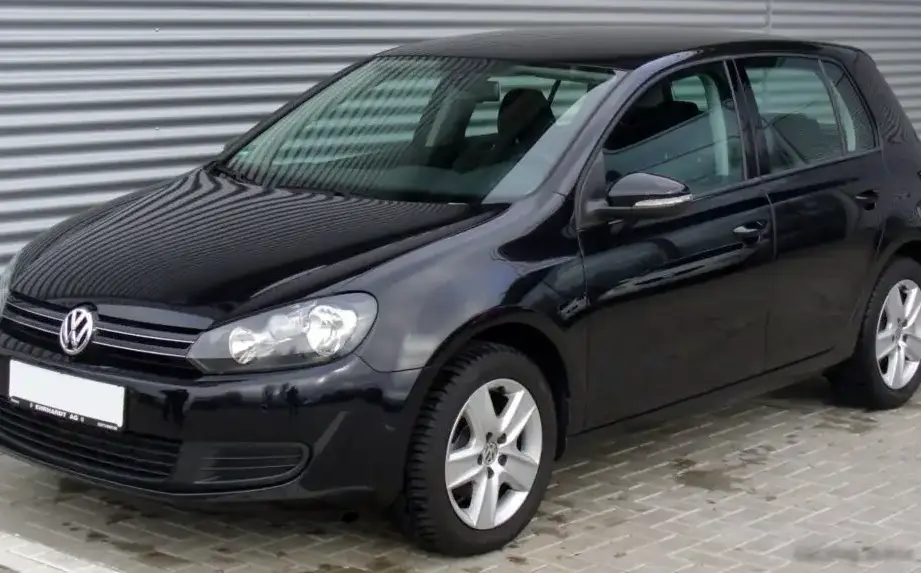
The Volkswagen Golf VI 1.6 (102 hp) DSG, produced from 2008 to 2010, represented an entry-level offering within the sixth generation of Volkswagen’s iconic Golf hatchback. Positioned as a fuel-efficient and accessible option, this variant aimed to broaden the Golf’s appeal to a wider customer base. It utilized a 1.6-liter naturally aspirated engine paired with Volkswagen’s Direct-Shift Gearbox (DSG), a 7-speed dual-clutch automatic transmission. This combination offered a balance between affordability, usability, and the modern convenience of an automatic gearbox, making it a popular choice in many European markets.
Technical Specifications
| Brand | Volkswagen |
| Model | Golf |
| Generation | Golf VI (5-door) |
| Type (Engine) | 1.6 (102 Hp) DSG |
| Start of production | 2008 |
| End of production | 2010 |
| Powertrain Architecture | Internal Combustion engine |
| Body type | Hatchback |
| Seats | 5 |
| Doors | 5 |
| Fuel consumption (urban) | 8.8 l/100 km (26.7 US mpg, 32.1 UK mpg, 11.4 km/l) |
| Fuel consumption (extra urban) | 5.5 l/100 km (42.8 US mpg, 51.4 UK mpg, 18.2 km/l) |
| Fuel consumption (combined) | 6.7 l/100 km (35.1 US mpg, 42.2 UK mpg, 14.9 km/l) |
| CO2 emissions | 157 g/km |
| Fuel Type | Petrol (Gasoline) |
| Acceleration 0 – 100 km/h | 11.3 sec |
| Acceleration 0 – 62 mph | 11.3 sec |
| Acceleration 0 – 60 mph | 10.7 sec |
| Maximum speed | 188 km/h (116.82 mph) |
| Emission standard | Euro 5 |
| Weight-to-power ratio | 11.7 kg/Hp, 85.7 Hp/tonne |
| Weight-to-torque ratio | 8 kg/Nm, 124.4 Nm/tonne |
| Power | 102 Hp @ 5600 rpm |
| Power per litre | 63.9 Hp/l |
| Torque | 148 Nm @ 3800 rpm (109.16 lb.-ft. @ 3800 rpm) |
| Engine layout | Front, Transverse |
| Engine Model/Code | BSE, BSF |
| Engine displacement | 1595 cm3 (97.33 cu. in.) |
| Number of cylinders | 4 |
| Engine configuration | Inline |
| Number of valves per cylinder | 2 |
| Fuel injection system | Multi-port manifold injection |
| Engine aspiration | Naturally aspirated engine |
| Valvetrain | SOHC |
| Engine oil capacity | 4.5 l (4.76 US qt | 3.96 UK qt) |
| Kerb Weight | 1190 kg (2623.5 lbs.) |
| Max. weight | 1810 kg (3990.37 lbs.) |
| Max load | 620 kg (1366.87 lbs.) |
| Trunk (boot) space – minimum | 350 l (12.36 cu. ft.) |
| Trunk (boot) space – maximum | 1305 l (46.09 cu. ft.) |
| Fuel tank capacity | 55 l (14.53 US gal | 12.1 UK gal) |
| Max. roof load | 75 kg (165.35 lbs.) |
| Permitted trailer load with brakes (12%) | 1200 kg (2645.55 lbs.) |
| Permitted trailer load without brakes | 630 kg (1388.91 lbs.) |
| Permitted towbar download | 75 kg (165.35 lbs.) |
| Length | 4199 mm (165.31 in.) |
| Width | 1786 mm (70.31 in.) |
| Width including mirrors | 2048 mm (80.63 in.) |
| Height | 1480 mm (58.27 in.) |
| Wheelbase | 2578 mm (101.5 in.) |
| Front track | 1541 mm (60.67 in.) |
| Rear track | 1514 mm (59.61 in.) |
| Ride height (ground clearance) | 150 mm (5.91 in.) |
| Minimum turning circle | 10.9 m (35.76 ft.) |
| Front suspension | Independent type McPherson, Transverse stabilizer |
| Rear suspension | Independent multi-link suspension, Transverse stabilizer |
| Front brakes | Ventilated discs |
| Rear brakes | Disc |
| Gearbox | 7 gears, automatic transmission DSG |
| Tires size | 195/65 R 15 |
| Wheel rims size | 6 J x 15 |
Powertrain & Engine Architecture
The Golf VI 1.6 DSG was powered by the BSE or BSF engine code, a 1.6-liter inline-four cylinder gasoline engine. This engine featured a single overhead camshaft (SOHC) valvetrain with two valves per cylinder. Fuel delivery was managed by a multi-port fuel injection system, a common setup for engines of this era. The engine’s relatively simple design prioritized reliability and fuel efficiency over outright performance. The 102 horsepower output was achieved at 5600 rpm, while peak torque of 148 Nm (109 lb-ft) arrived at 3800 rpm. The engine’s architecture was designed for transverse mounting, common in front-wheel-drive vehicles like the Golf. Crucially, this variant was paired with Volkswagen’s 7-speed Direct-Shift Gearbox (DSG). The DSG is a dual-clutch transmission that offers the efficiency of a manual gearbox with the convenience of an automatic. It utilizes two separate clutches for odd and even gears, allowing for incredibly fast and smooth gear changes.
Driving Characteristics
The 1.6-liter engine and DSG combination provided adequate, but not exhilarating, performance. Acceleration from 0 to 60 mph took approximately 10.7 seconds, and the top speed was around 116 mph. The DSG transmission helped to maximize the available power, providing quick shifts and keeping the engine within its optimal operating range. Compared to the more powerful Golf variants, such as those equipped with the 1.4 TSI or 2.0 TDI engines, the 1.6 DSG felt noticeably slower, particularly during overtaking maneuvers. However, the DSG’s responsiveness mitigated some of the engine’s limitations. The gear ratios were tuned for fuel economy, resulting in a comfortable and relaxed driving experience, especially on the highway. The automatic transmission also made it a more accessible option for drivers unfamiliar or uncomfortable with manual gearboxes.
Equipment & Trim Levels
The Golf VI 1.6 DSG typically came with a reasonable level of standard equipment. This included power windows, central locking, air conditioning, and an audio system. Safety features such as ABS brakes, front airbags, and side airbags were also standard. Interior upholstery was typically cloth, and the dashboard featured a functional, if somewhat understated, design. Optional extras included alloy wheels, a sunroof, parking sensors, and upgraded audio systems. Trim levels varied depending on the market, but generally, this variant occupied the lower to mid-range of the Golf VI lineup. It was positioned above the base-level models but below the more luxurious and performance-oriented trims.
Chassis & Braking
The Golf VI 1.6 DSG utilized an independent McPherson strut suspension at the front and an independent multi-link suspension at the rear. This suspension setup provided a good balance between ride comfort and handling. Stabilizer bars were fitted to both axles to reduce body roll during cornering. The braking system consisted of ventilated discs at the front and solid discs at the rear. ABS (Anti-lock Braking System) was standard, enhancing braking performance and stability. The chassis was designed to accommodate the lower power output and weight of the 1.6-liter engine, providing a stable and predictable driving experience.
Market Reception & Comparison
The Golf VI 1.6 DSG was generally well-received as a practical and economical option. Critics praised its fuel efficiency and the convenience of the DSG transmission. However, some reviewers noted that the engine lacked the punch of more powerful alternatives. Compared to the 1.4 TSI, the 1.6 offered less power but was often considered more reliable due to its simpler engine design. The 2.0 TDI, while offering more torque, was more expensive to purchase and maintain. The 1.6 DSG appealed to buyers who prioritized fuel economy and ease of use over outright performance.
Legacy
The Volkswagen Golf VI 1.6 DSG has proven to be a relatively reliable powertrain. The 1.6-liter engine is known for its durability, and the DSG transmission, while requiring occasional maintenance, is generally robust. In the used car market, these models represent an affordable entry point into Golf ownership. They are often sought after by drivers looking for a practical and economical hatchback. While not the most exciting Golf variant, the 1.6 DSG remains a popular choice for those seeking a dependable and fuel-efficient vehicle.