Technical Specifications
| Brand | Volkswagen |
| Model | Golf |
| Generation | Golf VI (5-door) |
| Type (Engine) | 1.6 TDI (105 Hp) BlueMotion |
| Start of production | 2009 |
| End of production | 2012 |
| Powertrain Architecture | Internal Combustion engine |
| Body type | Hatchback |
| Seats | 5 |
| Doors | 5 |
| Fuel consumption (urban) | 4.7 l/100 km (50 US mpg, 60.1 UK mpg, 21.3 km/l) |
| Fuel consumption (extra urban) | 3.4 l/100 km (69.2 US mpg, 83.1 UK mpg, 29.4 km/l) |
| Fuel consumption (combined) | 3.8 l/100 km (61.9 US mpg, 74.3 UK mpg, 26.3 km/l) |
| CO2 emissions | 99 g/km |
| Fuel Type | Diesel |
| Acceleration 0 – 100 km/h | 11.3 sec |
| Acceleration 0 – 62 mph | 11.3 sec |
| Acceleration 0 – 60 mph | 10.7 sec |
| Maximum speed | 190 km/h (118.06 mph) |
| Emission standard | Euro 5 |
| Weight-to-power ratio | 11.8 kg/Hp, 84.7 Hp/tonne |
| Weight-to-torque ratio | 5 kg/Nm, 201.8 Nm/tonne |
| Power | 105 Hp @ 4400 rpm |
| Power per litre | 65.7 Hp/l |
| Torque | 250 Nm @ 1500-2500 rpm (184.39 lb.-ft. @ 1500-2500 rpm) |
| Engine layout | Front, Transverse |
| Engine Model/Code | CAYC |
| Engine displacement | 1598 cm3 (97.52 cu. in.) |
| Number of cylinders | 4 |
| Engine configuration | Inline |
| Number of valves per cylinder | 4 |
| Fuel injection system | Diesel Commonrail |
| Engine aspiration | Turbocharger, Intercooler |
| Valvetrain | DOHC |
| Engine oil capacity | 4.3 l (4.54 US qt | 3.78 UK qt) |
| Kerb Weight | 1239 kg (2731.53 lbs.) |
| Max. weight | 1750 kg (3858.09 lbs.) |
| Max load | 511 kg (1126.56 lbs.) |
| Trunk (boot) space – minimum | 350 l (12.36 cu. ft.) |
| Trunk (boot) space – maximum | 1305 l (46.09 cu. ft.) |
| Fuel tank capacity | 55 l (14.53 US gal | 12.1 UK gal) |
| Max. roof load | 75 kg (165.35 lbs.) |
| Permitted trailer load with brakes (12%) | 1400 kg (3086.47 lbs.) |
| Permitted trailer load without brakes | 650 kg (1433 lbs.) |
| Permitted towbar download | 75 kg (165.35 lbs.) |
| Length | 4199 mm (165.31 in.) |
| Width | 1786 mm (70.31 in.) |
| Width including mirrors | 2048 mm (80.63 in.) |
| Height | 1480 mm (58.27 in.) |
| Wheelbase | 2578 mm (101.5 in.) |
| Front track | 1541 mm (60.67 in.) |
| Rear track | 1514 mm (59.61 in.) |
| Ride height (ground clearance) | 150 mm (5.91 in.) |
| Minimum turning circle | 10.9 m (35.76 ft.) |
| Front suspension | Independent type McPherson, Transverse stabilizer |
| Rear suspension | Independent multi-link suspension, Transverse stabilizer |
| Front brakes | Ventilated discs |
| Rear brakes | Disc |
| Assisting systems | ABS (Anti-lock braking system) |
| Steering type | Steering rack and pinion |
| Power steering | Electric Steering |
| Tires size | 195/65 R 15 |
| Wheel rims size | 6 J x 15 |
| Number of gears | 5 |
| Gearbox type | Manual transmission |
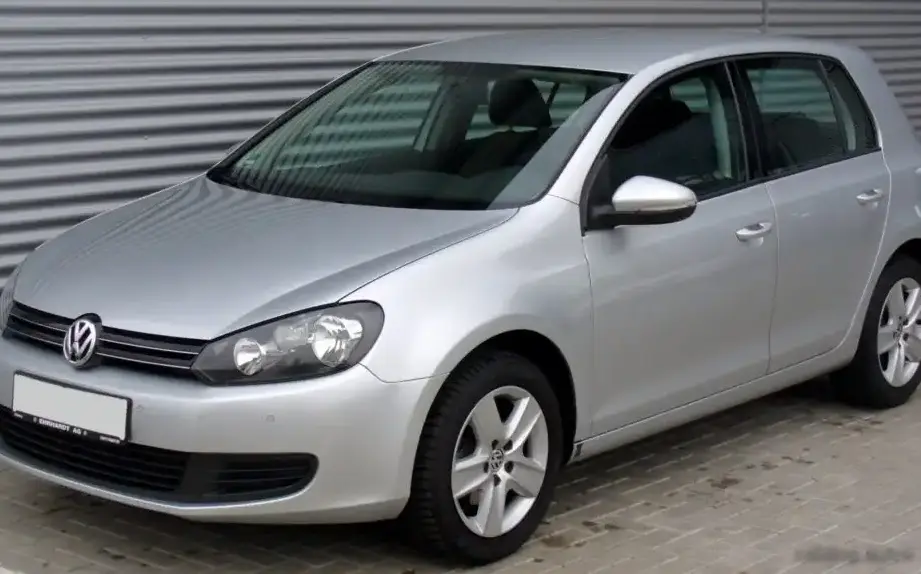
The Volkswagen Golf VI 1.6 TDI BlueMotion, produced from 2009 to 2012, was a significant variant within the sixth generation of Volkswagen’s iconic Golf model. Positioned as an economy-focused option, this 5-door hatchback aimed to deliver fuel efficiency and lower running costs without entirely sacrificing practicality. It was a key offering in the European market, where diesel engines and fuel economy were highly valued, and served as an accessible entry point into the Golf range for budget-conscious buyers. The Golf VI chassis (designated 1K) represented a refinement of the previous generation, offering improved build quality and a more sophisticated driving experience.
Powertrain & Engine Architecture
The heart of the Golf VI 1.6 TDI BlueMotion is the CAYC engine code, a 1.6-liter inline-four cylinder diesel engine. This engine utilizes a common rail direct injection system, delivering fuel directly into the combustion chamber at extremely high pressure. This technology, coupled with a turbocharger and intercooler, allows for a good balance of power and efficiency. The engine features a Double Overhead Camshaft (DOHC) valvetrain with four valves per cylinder, optimizing gas flow and contributing to improved performance. The 1.6 TDI engine was known for its relatively quiet operation compared to some earlier diesel designs. A five-speed manual transmission was the standard offering, chosen for its simplicity and contribution to fuel economy. The transmission’s gear ratios were optimized for maximizing fuel efficiency at highway speeds, while still providing adequate acceleration in urban environments.
Driving Characteristics
The 105 horsepower and 250 Nm (184 lb-ft) of torque produced by the 1.6 TDI engine provided adequate, though not exhilarating, performance. Acceleration from 0-60 mph took around 10.7 seconds, and top speed was approximately 118 mph. The engine’s torque curve was relatively flat, meaning that usable power was available across a wide range of engine speeds. This made the car feel responsive in everyday driving situations, such as overtaking on the highway or merging into traffic. Compared to the more powerful Golf variants, such as the 1.4 TSI or the GTI, the 1.6 TDI felt noticeably slower. However, it offered a more relaxed and economical driving experience. The manual transmission, while not particularly sporty, was precise and easy to use.
Equipment & Trim Levels
The Golf VI 1.6 TDI BlueMotion typically came with a reasonable level of standard equipment. This included air conditioning, power windows, central locking, and an audio system with CD player. Safety features such as ABS, airbags, and electronic stability control were also standard. The “BlueMotion” designation indicated the inclusion of specific fuel-saving technologies, such as start-stop functionality and optimized aerodynamics. Optional extras included alloy wheels, a multi-function steering wheel, and a more advanced audio system. Interior upholstery was typically cloth, with a functional and durable design. Trim levels varied slightly depending on the market, but generally, the 1.6 TDI BlueMotion occupied the entry-level to mid-range position in the Golf VI lineup.
Chassis & Braking
The Golf VI utilized an independent suspension system, with McPherson struts at the front and a multi-link setup at the rear. This provided a comfortable ride and good handling characteristics. The front brakes were ventilated discs, while the rear brakes were solid discs. The steering was electrically assisted, providing a light and precise feel. The chassis was designed to balance comfort and handling, making the Golf VI a pleasant car to drive on a variety of road surfaces. The relatively low weight of the 1.6 TDI variant contributed to its agility and fuel efficiency.
Market Reception & Comparison
The Golf VI 1.6 TDI BlueMotion was generally well-received by critics for its fuel efficiency and practicality. It was praised for its comfortable ride and decent handling. However, some reviewers noted that the engine lacked outright power, particularly when fully loaded or driving uphill. Compared to other trims in the Golf VI lineup, the 1.6 TDI offered the best fuel economy but the lowest performance. The 1.4 TSI, for example, provided more power and a more engaging driving experience, but at the cost of slightly higher fuel consumption. The 1.6 TDI was often seen as a sensible and economical choice for drivers who prioritized fuel efficiency and low running costs.
Legacy
The 1.6 TDI engine, particularly the CAYC variant, proved to be a relatively reliable powertrain. While diesel engines are inherently more complex than gasoline engines, the CAYC engine was generally robust and capable of covering high mileages with proper maintenance. Common issues included problems with the diesel particulate filter (DPF) and the turbocharger, but these were not widespread. Today, the Golf VI 1.6 TDI BlueMotion remains a popular choice in the used car market, particularly for those seeking an economical and practical hatchback. Its reputation for reliability and fuel efficiency continues to make it a desirable option for budget-conscious buyers.