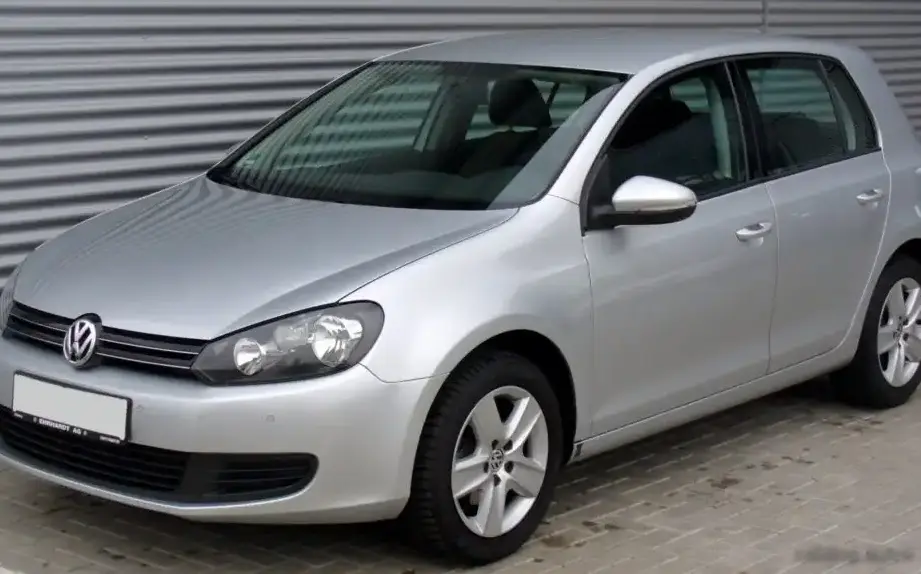
The Volkswagen Golf VI, produced from 2008 to 2013, represented a significant evolution of the iconic Golf lineage. While offering a range of engines and transmissions, the 2.0 TDI (110 hp) variant equipped with the Direct-Shift Gearbox (DSG) held a specific position within the lineup. This configuration, available primarily in Europe, aimed to balance fuel efficiency with acceptable performance for everyday driving. Production of this specific combination spanned from 2008 to 2009, falling within the early stages of the Golf VI’s lifecycle (Typ 1K). It was positioned as a mid-range offering, appealing to buyers seeking the benefits of diesel technology and an automatic transmission without the higher cost of more powerful engine options.
Technical Specifications
| Brand | Volkswagen |
| Model | Golf |
| Generation | Golf VI (5-door) |
| Type (Engine) | 2.0 TDI (110 Hp) DSG |
| Start of production | 2008 |
| End of production | 2009 |
| Powertrain Architecture | Internal Combustion engine |
| Body type | Hatchback |
| Seats | 5 |
| Doors | 5 |
| Fuel consumption (urban) | 6.9 l/100 km (34.1 US mpg, 40.9 UK mpg, 14.5 km/l) |
| Fuel consumption (extra urban) | 4.4 l/100 km (53.5 US mpg, 64.2 UK mpg, 22.7 km/l) |
| Fuel consumption (combined) | 5.3 l/100 km (44.4 US mpg, 53.3 UK mpg, 18.9 km/l) |
| CO2 emissions | 140 g/km |
| Fuel Type | Diesel |
| Acceleration 0 – 100 km/h | 10.7 sec |
| Acceleration 0 – 62 mph | 10.7 sec |
| Acceleration 0 – 60 mph | 10.2 sec |
| Maximum speed | 191 km/h (118.68 mph) |
| Emission standard | Euro 5 |
| Weight-to-power ratio | 11.8 kg/Hp, 84.8 Hp/tonne |
| Weight-to-torque ratio | 5.2 kg/Nm, 192.8 Nm/tonne |
| Power | 110 Hp @ 4100 rpm |
| Power per litre | 55.9 Hp/l |
| Torque | 250 Nm @ 1750 rpm (184.39 lb.-ft. @ 1750 rpm) |
| Engine layout | Front, Transverse |
| Engine Model/Code | CBDC, CLCA |
| Engine displacement | 1968 cm3 (120.09 cu. in.) |
| Number of cylinders | 4 |
| Engine configuration | Inline |
| Number of valves per cylinder | 4 |
| Fuel injection system | Diesel Commonrail |
| Engine aspiration | Turbocharger, Intercooler |
| Valvetrain | DOHC |
| Engine oil capacity | 4.3 l (4.54 US qt | 3.78 UK qt) |
| Kerb Weight | 1297 kg (2859.4 lbs.) |
| Max. weight | 1910 kg (4210.83 lbs.) |
| Max load | 613 kg (1351.43 lbs.) |
| Trunk (boot) space – minimum | 350 l (12.36 cu. ft.) |
| Trunk (boot) space – maximum | 1305 l (46.09 cu. ft.) |
| Fuel tank capacity | 55 l (14.53 US gal | 12.1 UK gal) |
| Max. roof load | 75 kg (165.35 lbs.) |
| Permitted trailer load with brakes (12%) | 1500 kg (3306.93 lbs.) |
| Permitted trailer load without brakes | 680 kg (1499.14 lbs.) |
| Permitted towbar download | 75 kg (165.35 lbs.) |
| Length | 4199 mm (165.31 in.) |
| Width | 1786 mm (70.31 in.) |
| Width including mirrors | 2048 mm (80.63 in.) |
| Height | 1480 mm (58.27 in.) |
| Wheelbase | 2578 mm (101.5 in.) |
| Front track | 1541 mm (60.67 in.) |
| Rear track | 1514 mm (59.61 in.) |
| Ride height (ground clearance) | 150 mm (5.91 in.) |
| Minimum turning circle | 10.9 m (35.76 ft.) |
| Front suspension | Independent type McPherson, Transverse stabilizer |
| Rear suspension | Independent multi-link suspension, Transverse stabilizer |
| Front brakes | Ventilated discs |
| Rear brakes | Disc |
| Gearbox | 6 gears, automatic transmission DSG |
Powertrain & Engine Architecture
The heart of this Golf VI variant is the 2.0-liter four-cylinder diesel engine, identified by engine codes CBDC or CLCA. These engines utilize a common rail direct injection system, delivering fuel directly into the combustion chamber at extremely high pressure. This technology, coupled with a turbocharger and intercooler, optimizes combustion efficiency and boosts power output. The engine features a double overhead camshaft (DOHC) valvetrain with four valves per cylinder, further enhancing breathing and performance. The particulate filter was standard, meeting the stringent Euro 5 emission standards. The engine’s 110 horsepower peak is reached at 4100 rpm, while its 250 Nm (184 lb-ft) of torque is available from a low 1750 rpm, providing good responsiveness in everyday driving situations. The engine is transversely mounted in the front of the vehicle. The Dual Clutch Gearbox (DSG) is a 6-speed automatic transmission that provides quick and smooth gear changes. It operates by utilizing two separate clutches for odd and even gears, allowing for pre-selection of the next gear and minimizing interruption in power delivery.
Driving Characteristics
The 2.0 TDI with 110 hp and the DSG transmission offers a comfortable and refined driving experience. While not a performance-oriented setup, the readily available torque from the diesel engine provides adequate acceleration for merging onto highways and overtaking. The DSG transmission contributes to smooth gear changes, enhancing the overall driving feel. Compared to the manual transmission versions of the same engine, the DSG offers convenience, particularly in urban traffic. However, it may feel slightly less engaging for drivers who prefer more control. Compared to the more powerful 140 hp or 170 hp TDI variants, this 110 hp version offers less outright performance, but it compensates with improved fuel economy. The gear ratios in the DSG are tuned for efficiency and drivability, prioritizing smooth transitions and minimizing engine revs at cruising speeds.
Equipment & Trim Levels
The 2.0 TDI 110 hp DSG typically came equipped with a reasonable level of standard features. These generally included air conditioning, power windows, central locking, an audio system with CD player, and alloy wheels. Interior upholstery was typically cloth, with options for upgraded materials available. Depending on the specific market and optional packages selected, features like automatic climate control, a multi-function steering wheel, parking sensors, and a navigation system could be added. The trim level often fell into the mid-range of the Golf VI lineup, offering a balance between affordability and comfort.
Chassis & Braking
The Golf VI’s chassis features an independent McPherson strut suspension at the front and an independent multi-link suspension at the rear. This setup provides a good balance between ride comfort and handling. A transverse stabilizer bar is fitted to both axles to reduce body roll during cornering. The braking system consists of ventilated discs at the front and solid discs at the rear. Anti-lock Braking System (ABS) is standard, enhancing braking performance and stability. The suspension tuning is generally geared towards comfort, making it well-suited for everyday driving.
Market Reception & Comparison
The 2.0 TDI 110 hp DSG variant of the Golf VI was generally well-received by automotive critics. It was praised for its fuel efficiency, comfortable ride, and the convenience of the DSG transmission. However, some reviewers noted that the performance was not particularly exciting, especially when compared to more powerful engine options. In terms of fuel economy, it offered a significant advantage over gasoline-powered Golfs, making it a popular choice for drivers who prioritized efficiency. Reliability was generally good, although, like any diesel engine, it required regular maintenance, including oil changes and filter replacements. Compared to the 1.6 TDI, the 2.0 TDI offered more power and torque, but at a slightly higher price point.
Legacy
The 2.0 TDI 110 hp DSG powertrain has proven to be relatively reliable over the long term, provided it has been properly maintained. The DSG transmission, while more complex than a traditional automatic, has also demonstrated good durability. In the used car market, these Golf VIs are often sought after for their fuel efficiency and practicality. However, potential buyers should be aware of the importance of checking the service history and ensuring that the DSG transmission has been serviced according to Volkswagen’s recommendations. The engine’s robust design and the DSG’s smooth operation continue to make this variant a viable option for buyers seeking a comfortable and economical compact hatchback.