Technical Specifications
| Brand | Volkswagen |
| Model | Golf |
| Generation | Golf VI (5-door) |
| Type (Engine) | 2.0 TDI (140 Hp) DSG |
| Start of production | 2008 |
| End of production | 2012 |
| Powertrain Architecture | Internal Combustion engine |
| Body type | Hatchback |
| Seats | 5 |
| Doors | 5 |
| Fuel consumption (urban) | 6.7 l/100 km (35.1 US mpg, 42.2 UK mpg, 14.9 km/l) |
| Fuel consumption (extra urban) | 4.5 l/100 km (52.3 US mpg, 62.8 UK mpg, 22.2 km/l) |
| Fuel consumption (combined) | 5.3 l/100 km (44.4 US mpg, 53.3 UK mpg, 18.9 km/l) |
| CO2 emissions | 138 g/km |
| Fuel Type | Diesel |
| Acceleration 0 – 100 km/h | 9.3 sec |
| Acceleration 0 – 62 mph | 9.3 sec |
| Acceleration 0 – 60 mph | 8.8 sec |
| Maximum speed | 207 km/h (128.62 mph) |
| Emission standard | Euro 5 |
| Weight-to-power ratio | 9.3 kg/Hp, 107.9 Hp/tonne |
| Weight-to-torque ratio | 4.1 kg/Nm, 246.7 Nm/tonne |
| Power | 140 Hp @ 4200 rpm |
| Power per litre | 71.1 Hp/l |
| Torque | 320 Nm @ 1750-2500 rpm (236.02 lb.-ft. @ 1750-2500 rpm) |
| Engine layout | Front, Transverse |
| Engine Model/Code | CBAB, CFFB |
| Engine displacement | 1968 cm3 (120.09 cu. in.) |
| Number of cylinders | 4 |
| Engine configuration | Inline |
| Cylinder Bore | 81 mm (3.19 in.) |
| Piston Stroke | 95.5 mm (3.76 in.) |
| Compression ratio | 16.5:1 |
| Number of valves per cylinder | 4 |
| Fuel injection system | Diesel Commonrail |
| Engine aspiration | Turbocharger, Intercooler |
| Valvetrain | DOHC |
| Engine oil capacity | 4 l (4.23 US qt | 3.52 UK qt) |
| Kerb Weight | 1297 kg (2859.4 lbs.) |
| Max. weight | 1940 kg (4276.97 lbs.) |
| Max load | 643 kg (1417.57 lbs.) |
| Trunk (boot) space – minimum | 350 l (12.36 cu. ft.) |
| Trunk (boot) space – maximum | 1305 l (46.09 cu. ft.) |
| Fuel tank capacity | 55 l (14.53 US gal | 12.1 UK gal) |
| Max. roof load | 75 kg (165.35 lbs.) |
| Permitted trailer load with brakes (12%) | 1500 kg (3306.93 lbs.) |
| Permitted trailer load without brakes | 690 kg (1521.19 lbs.) |
| Permitted towbar download | 75 kg (165.35 lbs.) |
| Length | 4199 mm (165.31 in.) |
| Width | 1786 mm (70.31 in.) |
| Width including mirrors | 2048 mm (80.63 in.) |
| Height | 1480 mm (58.27 in.) |
| Wheelbase | 2578 mm (101.5 in.) |
| Front track | 1541 mm (60.67 in.) |
| Rear track | 1514 mm (59.61 in.) |
| Ride height (ground clearance) | 150 mm (5.91 in.) |
| Minimum turning circle | 10.9 m (35.76 ft.) |
| Front suspension | Independent type McPherson, Transverse stabilizer |
| Rear suspension | Independent multi-link suspension, Transverse stabilizer |
| Front brakes | Ventilated discs |
| Rear brakes | Disc |
| Gearbox | 6 gears, automatic transmission DSG |
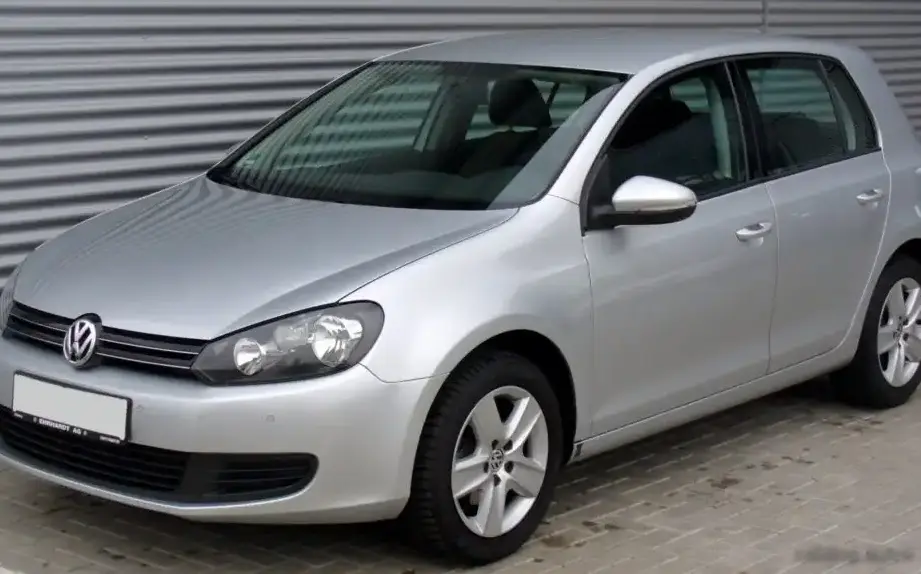
The Volkswagen Golf VI 2.0 TDI with the Direct-Shift Gearbox (DSG) represents a significant and popular iteration within the Golf lineage, produced between 2008 and 2012. This five-door hatchback was a mainstay of the European market, offering a blend of fuel efficiency, practicality, and performance that appealed to a wide range of buyers. Positioned as a mid-range offering within the Golf VI lineup, it sat above the entry-level petrol variants and below the more performance-oriented GTI and higher-output diesel models. The Golf VI, built on the A5 platform, continued Volkswagen’s tradition of a refined and well-engineered compact car, solidifying its reputation as a benchmark in the segment.
Powertrain & Engine Architecture
At the heart of the Golf VI 2.0 TDI DSG lies the CBAB or CFFB engine code, a 1968cc inline-four cylinder diesel engine. This engine utilizes a common rail direct injection system, delivering fuel at extremely high pressure for optimized combustion efficiency and reduced emissions. The engine features a turbocharger, coupled with an intercooler, to boost power and torque output. The double overhead camshaft (DOHC) valvetrain, with four valves per cylinder, further enhances breathing and overall engine efficiency. The DSG (Direct-Shift Gearbox) is a six-speed automated manual transmission. It combines the efficiency of a manual gearbox with the convenience of an automatic, offering quick and smooth gear changes. The DSG utilizes two separate clutches – one for odd gears and one for even gears – enabling pre-selection of the next gear for even faster shifts and a more seamless driving experience.
Driving Characteristics
The 140 horsepower and 236 lb-ft of torque provided a respectable level of performance for the Golf VI. Acceleration from 0-60 mph took approximately 8.8 seconds, and top speed was around 128 mph. While not as quick as the GTI or the more powerful TDI variants, the 2.0 TDI DSG offered a good balance between performance and fuel economy. The DSG transmission contributed to a responsive driving experience, with quick shifts and minimal torque interruption. The gear ratios were tuned for everyday usability, providing ample power for overtaking and highway cruising. Compared to the manual transmission versions, the DSG offered greater convenience, especially in urban traffic, eliminating the need for constant clutch engagement. The engine provided a broad torque curve, making it feel responsive even at lower engine speeds.
Equipment & Trim Levels
The Golf VI 2.0 TDI DSG typically came equipped with a reasonable level of standard features. These included air conditioning, power windows, power mirrors, a CD stereo system, and alloy wheels. Higher trim levels, such as the Trendline and Comfortline, offered additional features such as automatic climate control, a multi-function steering wheel, parking sensors, and upgraded upholstery. Optional extras included a sunroof, navigation system, and a premium sound system. Interior upholstery was typically cloth, with leather options available on higher trims. The dashboard layout was functional and well-designed, with clear instrumentation and intuitive controls.
Chassis & Braking
The Golf VI featured an independent suspension system on both the front and rear axles. The front suspension utilized McPherson struts, while the rear employed a multi-link setup. This configuration provided a comfortable ride and good handling characteristics. Stabilizer bars were fitted to both axles to reduce body roll during cornering. The braking system consisted of ventilated discs on the front wheels and solid discs on the rear. Anti-lock Braking System (ABS) was standard, enhancing safety and control during emergency braking. The chassis was well-tuned to provide a balance between comfort and handling, making it a pleasant car to drive on a variety of road surfaces.
Market Reception & Comparison
The Golf VI 2.0 TDI DSG was well-received by automotive critics and consumers alike. It was praised for its fuel efficiency, comfortable ride, and refined driving experience. Compared to the 1.6 TDI models, the 2.0 TDI offered significantly more power and torque, making it a more enjoyable car to drive, particularly when carrying passengers or luggage. However, it was slightly less fuel-efficient. Compared to the petrol variants, the 2.0 TDI provided superior fuel economy and torque, making it a more practical choice for long-distance driving. The DSG transmission was generally well-regarded, although some owners reported occasional issues with mechatronic unit failures, which could be costly to repair. Overall, it was considered a strong contender in the competitive compact hatchback segment.
Legacy
The Volkswagen Golf VI 2.0 TDI DSG remains a popular choice in the used car market. The 2.0 TDI engine is known for its reliability and durability, provided it has been properly maintained with regular oil changes and servicing. The DSG transmission, while potentially requiring more maintenance than a traditional manual gearbox, offers a smooth and efficient driving experience. These models continue to offer a compelling combination of practicality, fuel economy, and performance, making them a sensible choice for buyers seeking a well-rounded compact hatchback. Finding a well-maintained example with a complete service history is key to ensuring long-term reliability and enjoyment. The Golf VI 2.0 TDI DSG represents a sweet spot in the Golf VI range, offering a good balance of features, performance, and running costs.