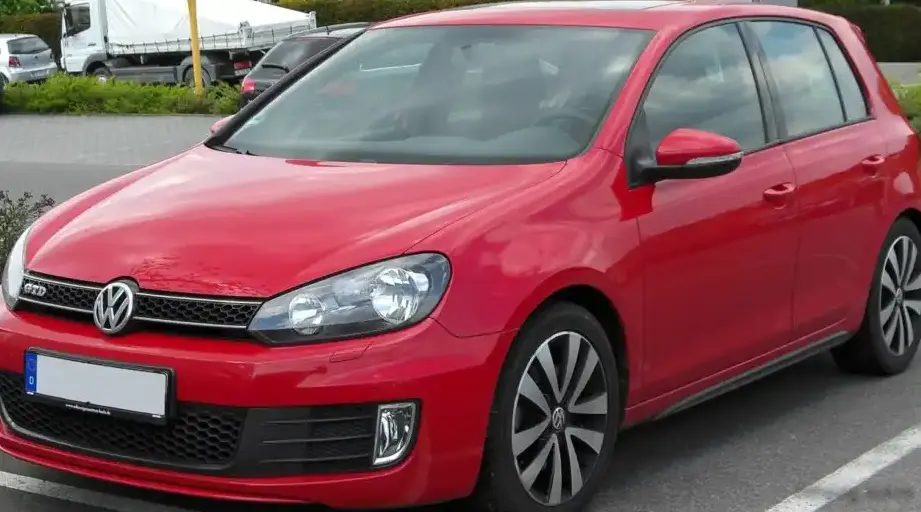
The Volkswagen Golf VI GTD 2.0 TDI (170 hp) represents a compelling blend of performance and efficiency within the sixth generation Golf lineup, produced between 2009 and 2012. Positioned as a diesel-powered performance variant, the GTD aimed to deliver a sporty driving experience while maintaining the Golf’s reputation for practicality and fuel economy. This model occupied a space between the more economical TDI trims and the full-fledged GTI, appealing to drivers seeking a balance of power and running costs. It was primarily marketed in Europe, where diesel engines held a significant market share, and offered a sophisticated alternative to gasoline-powered hot hatches.
Technical Specifications
| Brand | Volkswagen |
| Model | Golf |
| Generation | Golf VI (5-door) |
| Type (Engine) | GTD 2.0 TDI (170 Hp) |
| Start of production | 2009 |
| End of production | 2012 |
| Powertrain Architecture | Internal Combustion engine |
| Body type | Hatchback |
| Seats | 5 |
| Doors | 5 |
| Fuel consumption (urban) | 6.5 l/100 km (36.2 US mpg, 43.5 UK mpg, 15.4 km/l) |
| Fuel consumption (extra urban) | 4.3 l/100 km (54.7 US mpg, 65.7 UK mpg, 23.3 km/l) |
| Fuel consumption (combined) | 5.1 l/100 km (46.1 US mpg, 55.4 UK mpg, 19.6 km/l) |
| CO2 emissions | 134 g/km |
| Fuel Type | Diesel |
| Acceleration 0 – 100 km/h | 8.1 sec |
| Acceleration 0 – 62 mph | 8.1 sec |
| Acceleration 0 – 60 mph | 7.7 sec |
| Maximum speed | 222 km/h (137.94 mph) |
| Emission standard | Euro 5 |
| Weight-to-power ratio | 7.8 kg/Hp, 127.4 Hp/tonne |
| Weight-to-torque ratio | 3.8 kg/Nm, 262.4 Nm/tonne |
| Power | 170 Hp @ 4200 rpm |
| Power per litre | 86.4 Hp/l |
| Torque | 350 Nm @ 1750-2500 rpm (258.15 lb.-ft. @ 1750-2500 rpm) |
| Engine layout | Front, Transverse |
| Engine Model/Code | CBBB, CFGB |
| Engine displacement | 1968 cm3 (120.09 cu. in.) |
| Number of cylinders | 4 |
| Engine configuration | Inline |
| Cylinder Bore | 81 mm (3.19 in.) |
| Piston Stroke | 95.5 mm (3.76 in.) |
| Compression ratio | 16.5:1 |
| Number of valves per cylinder | 4 |
| Fuel injection system | Diesel Commonrail |
| Engine aspiration | Turbocharger, Intercooler |
| Valvetrain | DOHC |
| Engine oil capacity | 4 l (4.23 US qt | 3.52 UK qt) |
| Kerb Weight | 1334 kg (2940.97 lbs.) |
| Max. weight | 1890 kg (4166.74 lbs.) |
| Max load | 556 kg (1225.77 lbs.) |
| Trunk (boot) space – minimum | 350 l (12.36 cu. ft.) |
| Trunk (boot) space – maximum | 1305 l (46.09 cu. ft.) |
| Fuel tank capacity | 55 l (14.53 US gal | 12.1 UK gal) |
| Max. roof load | 100 kg (220.46 lbs.) |
| Permitted trailer load with brakes (8%) | 1700 kg (3747.86 lbs.) |
| Permitted trailer load with brakes (12%) | 1500 kg (3306.93 lbs.) |
| Permitted trailer load without brakes | 700 kg (1543.24 lbs.) |
| Permitted towbar download | 75 kg (165.35 lbs.) |
| Length | 4213 mm (165.87 in.) |
| Width | 1786 mm (70.31 in.) |
| Width including mirrors | 2048 mm (80.63 in.) |
| Height | 1469 mm (57.83 in.) |
| Wheelbase | 2578 mm (101.5 in.) |
| Front track | 1533 mm (60.35 in.) |
| Rear track | 1514 mm (59.61 in.) |
| Ride height (ground clearance) | 140 mm (5.51 in.) |
| Minimum turning circle | 10.9 m (35.76 ft.) |
| Front suspension | Independent type McPherson, Transverse stabilizer |
| Rear suspension | Independent multi-link suspension, Transverse stabilizer |
| Front brakes | Ventilated discs |
| Rear brakes | Disc |
| Steering type | Steering rack and pinion |
| Power steering | Electric |
| Tires size | 225/45 R 17 |
| Wheel rims size | 7 J x 17 |
INTRODUCTION
The Golf VI GTD 2.0 TDI (170 hp) was introduced as part of the Golf Mk6 range, building upon the success of previous GTD models. The “D” in GTD signified “Diesel,” distinguishing it from the gasoline-powered GTI. Production spanned from 2009 to 2012, and the car was built on the Volkswagen Group’s A6 platform (also known as the 1HX0 platform), shared with models like the Audi A3, SEAT Leon, and Škoda Octavia. The GTD aimed to provide a more refined and fuel-efficient alternative to the GTI, appealing to buyers who prioritized economy without sacrificing a degree of performance. It was a key offering in the European market, where diesel engines were favored due to lower fuel costs and favorable tax incentives.
Powertrain & Engine Architecture
At the heart of the Golf VI GTD is the 2.0-liter four-cylinder diesel engine, specifically the CBBB or CFGB engine code depending on the production year and market. This engine utilizes a common rail direct injection system, delivering fuel directly into the combustion chamber at extremely high pressure for optimized combustion. The engine features a variable geometry turbocharger (VGT) and an intercooler, enhancing both power and torque output. The VGT adjusts the turbine vanes to optimize airflow across the engine’s operating range, improving responsiveness and reducing turbo lag. The engine also employs a double overhead camshaft (DOHC) valvetrain with four valves per cylinder, further contributing to its efficiency and performance. The GTD was typically paired with a six-speed manual transmission, although a six-speed DSG (Direct-Shift Gearbox) dual-clutch automatic transmission was also available as an option. The DSG offered quicker shifts and improved fuel economy, but at a higher cost.
Driving Characteristics
The 170 hp and 350 Nm (258 lb-ft) of torque delivered by the 2.0 TDI engine provided the Golf VI GTD with brisk acceleration. While not as overtly sporty as the GTI, the GTD offered a strong mid-range punch, making it well-suited for everyday driving and overtaking maneuvers. The six-speed manual transmission allowed for precise control, while the optional DSG provided seamless gear changes. Compared to the lower-powered TDI variants, the GTD felt noticeably more responsive and capable. However, it lacked the high-revving enthusiasm of the GTI’s gasoline engine. The GTD’s suspension was tuned for a balance between comfort and handling, offering a more composed ride than the GTI but still providing a secure feel in corners. The steering was precise and well-weighted, contributing to an engaging driving experience.
Equipment & Trim Levels
The Golf VI GTD came equipped with a range of standard features designed to enhance both comfort and style. These typically included sports seats upholstered in a unique cloth/Alcantara combination, a leather-wrapped multi-function steering wheel, and distinctive GTD badging both inside and out. Exterior features included a unique front bumper with integrated fog lights, side skirts, and a rear spoiler. Optional extras included features such as a panoramic sunroof, navigation system, parking sensors, and upgraded audio systems. The interior trim was generally dark-themed, with accents in red stitching to emphasize the sporty character of the GTD.
Chassis & Braking
The Golf VI GTD utilized an independent suspension setup, with McPherson struts at the front and a multi-link suspension at the rear. This configuration provided a good balance of ride comfort and handling precision. The GTD typically featured ventilated disc brakes at the front and solid disc brakes at the rear, providing ample stopping power. Anti-lock Braking System (ABS) and Electronic Stability Control (ESC) were standard safety features. The suspension was slightly stiffer than that of the standard Golf models, contributing to a more controlled driving experience. Stabilizer bars were fitted to both the front and rear axles to reduce body roll during cornering.
Market Reception & Comparison
The Golf VI GTD was generally well-received by automotive critics, who praised its blend of performance, fuel economy, and practicality. It was often seen as a more sensible alternative to the GTI, offering a similar level of driving enjoyment with lower running costs. Compared to the lower-powered TDI models, the GTD offered a significant performance upgrade, while remaining more fuel-efficient than the GTI. The DSG transmission was praised for its smoothness and responsiveness, but some critics noted that it added to the car’s overall cost. Reliability was generally good, with the 2.0 TDI engine proving to be a robust and durable unit. However, like all modern diesel engines, the GTD was susceptible to issues with the diesel particulate filter (DPF) if not driven on longer journeys regularly.
Legacy
The Golf VI GTD remains a popular choice in the used car market, particularly in Europe. The 2.0 TDI engine is known for its longevity and relatively low maintenance costs, making it an attractive option for buyers seeking a reliable and economical vehicle. While the DPF can be a potential issue, regular servicing and proper driving habits can help to mitigate this risk. The GTD’s blend of performance, practicality, and fuel efficiency has ensured its enduring appeal, and it continues to be regarded as a well-rounded and capable hot hatch.