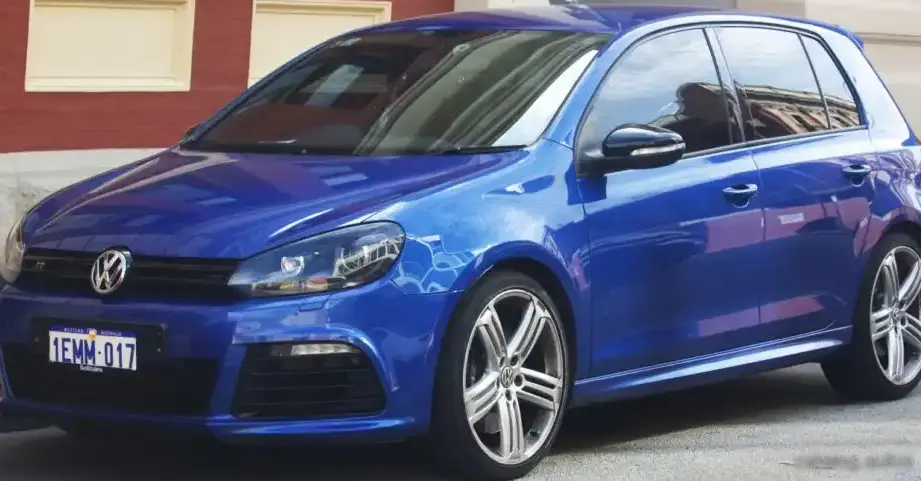
The Volkswagen Golf VI R, produced between 2009 and 2012, represented the high-performance pinnacle of the sixth-generation Golf lineup. Positioned above the GTI, the “R” model offered a significant increase in power and handling capabilities, primarily through the inclusion of a turbocharged 2.0-liter engine, a sophisticated all-wheel-drive system (4MOTION), and a more aggressive suspension setup. This variant was exclusively available as a five-door hatchback in most markets, including Europe, and aimed at enthusiasts seeking a practical yet exhilarating driving experience. The Golf VI R was a key model in solidifying Volkswagen’s reputation for producing accessible, high-performance vehicles.
Technical Specifications
| Brand | Volkswagen |
| Model | Golf |
| Generation | Golf VI (5-door) |
| Type (Engine) | R 2.0 TSI (270 Hp) 4MOTION |
| Start of production | 2009 |
| End of production | 2012 |
| Powertrain Architecture | Internal Combustion engine |
| Body type | Hatchback |
| Seats | 5 |
| Doors | 5 |
| Fuel consumption (economy) – urban (NEDC) | 11.8 l/100 km (19.9 US mpg, 23.9 UK mpg, 8.5 km/l) |
| Fuel consumption (economy) – extra urban (NEDC) | 6.7 l/100 km (35.1 US mpg, 42.2 UK mpg, 14.9 km/l) |
| Fuel consumption (economy) – combined (NEDC) | 8.5 l/100 km (27.7 US mpg, 33.2 UK mpg, 11.8 km/l) |
| CO2 emissions (NEDC) | 199 g/km |
| Fuel Type | Petrol (Gasoline) |
| Acceleration 0 – 100 km/h | 5.7 sec |
| Acceleration 0 – 62 mph | 5.7 sec |
| Acceleration 0 – 60 mph | 5.4 sec |
| Maximum speed | 250 km/h (155.34 mph), Electronically limited |
| Emission standard | Euro 5 |
| Weight-to-power ratio | 5.4 kg/Hp, 186.7 Hp/tonne |
| Weight-to-torque ratio | 4.1 kg/Nm, 242 Nm/tonne |
| Power | 270 Hp @ 6000 rpm |
| Power per litre | 136.1 Hp/l |
| Torque | 350 Nm @ 2500-5000 rpm (258.15 lb.-ft. @ 2500-5000 rpm) |
| Engine layout | Front, Transverse |
| Engine Model/Code | CDLF |
| Engine displacement | 1984 cm3 (121.07 cu. in.) |
| Number of cylinders | 4 |
| Engine configuration | Inline |
| Cylinder Bore | 82.5 mm (3.25 in.) |
| Piston Stroke | 92.8 mm (3.65 in.) |
| Compression ratio | 9.8:1 |
| Number of valves per cylinder | 4 |
| Fuel injection system | Direct injection |
| Engine aspiration | Turbocharger, Intercooler |
| Valvetrain | DOHC |
| Engine oil capacity | 4.6 l (4.86 US qt | 4.05 UK qt) |
| Kerb Weight | 1446 kg (3187.88 lbs.) |
| Max. weight | 2010 kg (4431.29 lbs.) |
| Max load | 564 kg (1243.41 lbs.) |
| Trunk (boot) space – minimum | 275 l (9.71 cu. ft.) |
| Trunk (boot) space – maximum | 1230 l (43.44 cu. ft.) |
| Fuel tank capacity | 60 l (15.85 US gal | 13.2 UK gal) |
| Max. roof load | 75 kg (165.35 lbs.) |
| Length | 4212 mm (165.83 in.) |
| Width | 1786 mm (70.31 in.) |
| Width including mirrors | 2048 mm (80.63 in.) |
| Height | 1461 mm (57.52 in.) |
| Wheelbase | 2578 mm (101.5 in.) |
| Front track | 1533 mm (60.35 in.) |
| Rear (Back) track | 1515 mm (59.65 in.) |
| Ride height (ground clearance) | 132 mm (5.2 in.) |
| Minimum turning circle (turning diameter) | 10.9 m (35.76 ft.) |
| Drivetrain Architecture | All wheel drive (4×4). Internal Combustion engine. The Internal combustion engine (ICE) drives the front wheels permanently, and the rear wheels are driven through an electrically or mechanically operated clutch if necessary. |
| Number of gears and type of gearbox | 6 gears, manual transmission |
| Front suspension | Independent type McPherson, Transverse stabilizer |
| Rear suspension | Independent multi-link suspension, Transverse stabilizer |
| Front brakes | Ventilated discs |
| Rear brakes | Ventilated discs |
| Assisting systems | ABS (Anti-lock braking system) |
| Steering type | Steering rack and pinion |
| Power steering | Electric Steering |
| Tires size | 225/40 R 18 |
| Wheel rims size | 7.5 J x 18 |
INTRODUCTION
The Volkswagen Golf VI R, launched in 2009, was the performance flagship of the Mk6 Golf range. Building upon the already sporty GTI, the R variant elevated performance to a new level with its potent 2.0-liter TSI engine and standard 4MOTION all-wheel-drive system. It was designed to compete with hot hatches like the Ford Focus RS and Subaru Impreza WRX, offering a blend of everyday usability and thrilling performance. Production continued until 2012, with the model primarily targeted at European markets, though limited numbers were imported to other regions. The Golf VI R represented a significant step forward in Volkswagen’s hot hatch lineage.
Powertrain & Engine Architecture
At the heart of the Golf VI R lies the CDLF engine code, a 2.0-liter turbocharged inline-four cylinder engine. This engine is a heavily modified version of the EA888 engine family, featuring a reinforced crankshaft, upgraded pistons, and a larger turbocharger. Direct fuel injection (FSI) is employed, delivering precise fuel metering for optimal combustion. The engine produces 270 horsepower at 6000 rpm and 350 Nm (258 lb-ft) of torque between 2500 and 5000 rpm. The engine’s valvetrain utilizes a dual overhead camshaft (DOHC) design with four valves per cylinder, optimizing airflow for increased power output. The standard transmission is a 6-speed manual gearbox, providing precise gear changes and driver engagement. A dual-clutch DSG (Direct-Shift Gearbox) was also available as an option, offering faster shifts and improved efficiency.
Driving Characteristics
The Golf VI R delivers a noticeably more engaging driving experience compared to the GTI. The 4MOTION all-wheel-drive system provides exceptional traction, particularly in adverse weather conditions or during spirited driving. The system intelligently distributes torque between the front and rear axles, maximizing grip and minimizing understeer. Acceleration from 0 to 62 mph (0-100 km/h) takes just 5.7 seconds, and the electronically limited top speed is 155 mph (250 km/h). The manual transmission offers a direct and satisfying feel, while the optional DSG provides incredibly quick and seamless gear changes. The R’s suspension is firmer than the GTI’s, resulting in reduced body roll and improved handling precision. However, this comes at the expense of some ride comfort. The steering is precise and well-weighted, providing good feedback to the driver.
Equipment & Trim Levels
The Golf VI R came generously equipped as standard. Key features included sport seats upholstered in “Vicenza” cloth, a leather-wrapped steering wheel, automatic climate control, and a touchscreen infotainment system. Bi-xenon headlights with LED daytime running lights were also standard. Optional extras included leather upholstery, a panoramic sunroof, and a premium sound system. The interior featured subtle “R” badging on the steering wheel, door sills, and seats, distinguishing it from other Golf models. Exterior styling cues included unique front and rear bumpers, side skirts, and a rear spoiler. The R also featured larger brake calipers and distinctive 18-inch alloy wheels.
Chassis & Braking
The Golf VI R benefits from a revised chassis and braking system compared to the standard Golf. The front suspension utilizes a McPherson strut design with a transverse stabilizer bar, while the rear suspension employs a multi-link setup, also with a stabilizer bar. This configuration provides a good balance between handling and ride comfort. The braking system features ventilated discs on all four wheels, providing ample stopping power. The R also incorporates ABS (Anti-lock Braking System) and electronic stability control (ESC) as standard safety features.
Market Reception & Comparison
The Golf VI R was generally well-received by automotive critics, who praised its performance, handling, and practicality. It was often lauded as a more focused and engaging alternative to the GTI. Compared to the GTI, the R offered significantly more power and superior traction thanks to the 4MOTION system. However, the R was also more expensive and slightly less fuel-efficient. Compared to rivals like the Ford Focus RS, the Golf R offered a more refined and comfortable driving experience, but lacked the raw, visceral excitement of the Focus. Fuel economy figures averaged around 27.7 US mpg combined, which was respectable for a high-performance hatchback.
Legacy
The Golf VI R has become a sought-after model in the used car market, appreciated for its blend of performance, practicality, and build quality. The 2.0-liter TSI engine, while powerful, is generally considered reliable if properly maintained. Regular oil changes and adherence to the manufacturer’s service schedule are crucial. The 4MOTION system is also known for its durability. However, potential buyers should be aware of potential issues with the turbocharger and fuel injectors. Overall, the Golf VI R remains a compelling option for enthusiasts seeking a capable and rewarding hot hatch.