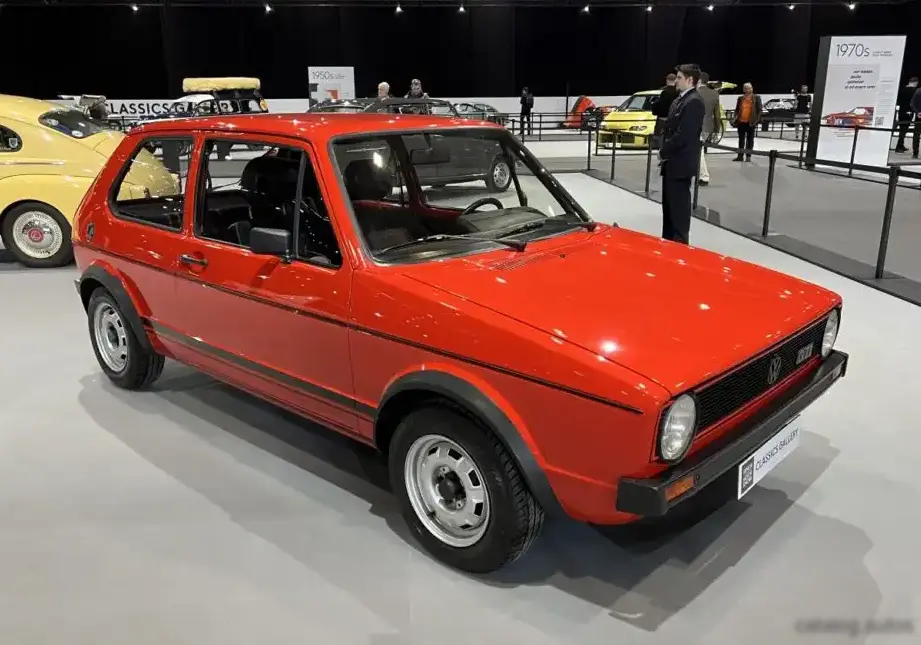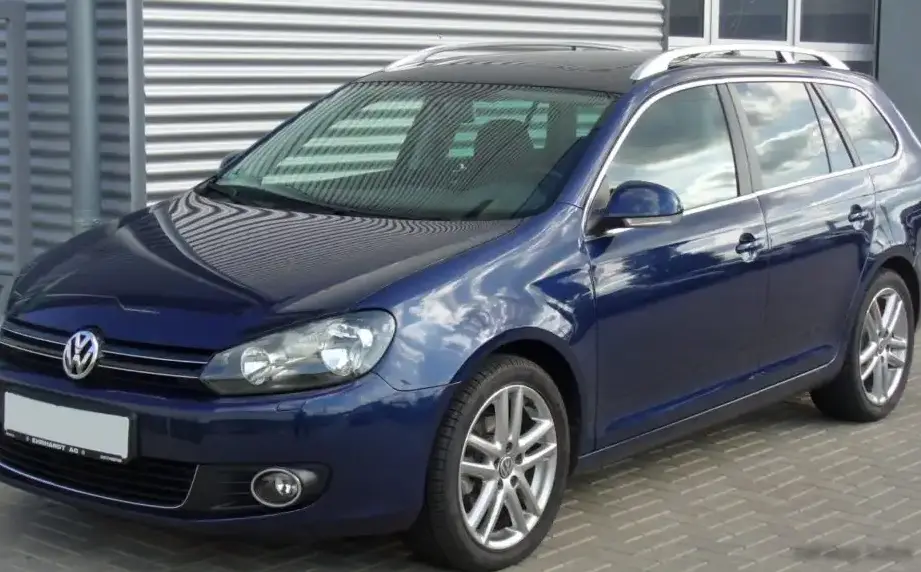
The Volkswagen Golf VI Variant 1.6 TDI (105 hp) was a popular station wagon offered as part of the sixth generation of the Golf, produced between May 2009 and April 2013. Positioned as an economical and practical option within the Golf VI lineup, it catered to buyers seeking the versatility of a wagon with the fuel efficiency of a diesel engine. This variant played a significant role in the European market, where compact wagons were – and continue to be – highly sought after. It represented a balance between affordability, space, and running costs, making it a common sight on European roads.
Technical Specifications
| Brand | Volkswagen |
| Model | Golf |
| Generation | Golf VI Variant |
| Type (Engine) | 1.6 TDI (105 Hp) |
| Start of production | May, 2009 |
| End of production | April, 2013 |
| Powertrain Architecture | Internal Combustion engine |
| Body type | Station wagon (estate) |
| Seats | 5 |
| Doors | 5 |
| Fuel consumption (economy) – urban (NEDC) | 5.7 l/100 km (41.3 US mpg, 49.6 UK mpg, 17.5 km/l) |
| Fuel consumption (economy) – extra urban (NEDC) | 3.9 l/100 km (60.3 US mpg, 72.4 UK mpg, 25.6 km/l) |
| Fuel consumption (economy) – combined (NEDC) | 4.5 l/100 km (52.3 US mpg, 62.8 UK mpg, 22.2 km/l) |
| CO2 emissions (NEDC) | 119 g/km |
| Fuel Type | Diesel |
| Acceleration 0 – 100 km/h | 11.9 sec |
| Acceleration 0 – 62 mph | 11.9 sec |
| Acceleration 0 – 60 mph | 11.3 sec |
| Maximum speed | 190 km/h (118.06 mph) |
| Emission standard | Euro 5 |
| Weight-to-power ratio | 13 kg/Hp, 76.6 Hp/tonne |
| Weight-to-torque ratio | 5.5 kg/Nm, 182.5 Nm/tonne |
| Power | 105 Hp @ 4400 rpm |
| Power per litre | 65.7 Hp/l |
| Torque | 250 Nm @ 1500-2500 rpm (184.39 lb.-ft. @ 1500-2500 rpm) |
| Engine layout | Front, Transverse |
| Engine Model/Code | CAYC |
| Engine displacement | 1598 cm3 (97.52 cu. in.) |
| Number of cylinders | 4 |
| Engine configuration | Inline |
| Cylinder Bore | 79.5 mm (3.13 in.) |
| Piston Stroke | 80.5 mm (3.17 in.) |
| Compression ratio | 16.5:1 |
| Number of valves per cylinder | 4 |
| Fuel injection system | Diesel Commonrail |
| Engine aspiration | Turbocharger, Intercooler |
| Valvetrain | DOHC |
| Engine oil capacity | 4.3 l (4.54 US qt | 3.78 UK qt) |
| Kerb Weight | 1370 kg (3020.33 lbs.) |
| Max. weight | 1980 kg (4365.15 lbs.) |
| Max load | 610 kg (1344.82 lbs.) |
| Trunk (boot) space – minimum | 505 l (17.83 cu. ft.) |
| Trunk (boot) space – maximum | 1495 l (52.8 cu. ft.) |
| Fuel tank capacity | 55 l (14.53 US gal | 12.1 UK gal) |
| Max. roof load | 75 kg (165.35 lbs.) |
| Permitted trailer load with brakes (8%) | 1700 kg (3747.86 lbs.) |
| Permitted trailer load with brakes (12%) | 1400 kg (3086.47 lbs.) |
| Permitted trailer load without brakes | 720 kg (1587.33 lbs.) |
| Permitted towbar download | 75 kg (165.35 lbs.) |
| Length | 4534 mm (178.5 in.) |
| Width | 1781 mm (70.12 in.) |
| Width including mirrors | 2003 mm (78.86 in.) |
| Height | 1504 mm (59.21 in.) |
| Wheelbase | 2578 mm (101.5 in.) |
| Front track | 1535 mm (60.43 in.) |
| Rear (Back) track | 1508 mm (59.37 in.) |
| Ride height (ground clearance) | 141 mm (5.55 in.) |
| Minimum turning circle (turning diameter) | 10.9 m (35.76 ft.) |
| Front suspension | Independent type McPherson, Transverse stabilizer |
| Rear suspension | Independent multi-link suspension, Transverse stabilizer |
| Front brakes | Ventilated discs |
| Rear brakes | Disc |
| Assisting systems | ABS (Anti-lock braking system) |
| Steering type | Steering rack and pinion |
| Power steering | Electric Steering |
| Tires size | 205/55 R16 |
| Wheel rims size | 6.5J x 16 |
INTRODUCTION
The Volkswagen Golf VI Variant 1.6 TDI (105 hp) represents a practical and fuel-efficient option within the Golf VI range, produced from 2009 to 2013. Built on the A6 platform (internally designated 1HX0 for the Variant), this model aimed to provide the spaciousness of a station wagon combined with the economy of a small-displacement diesel engine. It was primarily marketed in Europe, where the demand for compact wagons remained strong. This variant occupied the lower-mid range of the Golf VI lineup, serving as a more affordable alternative to the higher-performance petrol and diesel options.
Powertrain & Engine Architecture
At the heart of the Golf VI Variant 1.6 TDI is the CAYC engine code, a 1.6-liter inline-four cylinder diesel engine. This engine utilizes a common rail direct injection system, delivering fuel directly into the combustion chamber at extremely high pressure for improved efficiency and reduced emissions. The engine features a turbocharger with an intercooler, which enhances power output by forcing more air into the cylinders. The valvetrain is a double overhead camshaft (DOHC) design with four valves per cylinder, optimizing gas flow for better performance. The engine produces 105 horsepower at 4400 rpm and 250 Nm (184 lb-ft) of torque between 1500 and 2500 rpm. The engine is transversely mounted in the front of the vehicle. The 1.6 TDI was typically paired with a five-speed manual transmission, but a six-speed automatic transmission (often the 09G) was also available, though less common. The automatic transmission was designed to prioritize fuel efficiency and smooth shifting, rather than outright performance.
Driving Characteristics
The 1.6 TDI engine, when coupled with the five-speed manual transmission, provided adequate performance for everyday driving. Acceleration from 0 to 100 km/h (0-62 mph) took around 11.9 seconds. The automatic transmission, while offering convenience, slightly dulled the performance, with similar 0-60 mph times around 11.3 seconds. The engine’s torque peak at low to mid-range RPMs made it reasonably responsive in city driving and during overtaking maneuvers. However, it lacked the punch of the more powerful Golf variants, such as those equipped with the 2.0 TDI or petrol engines. The gear ratios in the automatic transmission were optimized for fuel economy, resulting in a more relaxed driving experience but less aggressive acceleration. The suspension setup, typical for the Golf VI, provided a comfortable ride, although it wasn’t particularly sporty.
Equipment & Trim Levels
The Golf VI Variant 1.6 TDI (105 hp) typically came with a standard equipment list that included air conditioning, power windows, central locking, and an audio system with CD player. Safety features such as ABS, airbags, and electronic stability control were also standard. Higher trim levels, such as Trendline and Comfortline, added features like alloy wheels, a multi-function steering wheel, cruise control, and parking sensors. Optional extras included a sunroof, navigation system, and upgraded upholstery. Interior upholstery was generally cloth, with the option of leather seats on higher trims. The dashboard layout was typical of the Golf VI, with a functional and straightforward design.
Chassis & Braking
The Golf VI Variant 1.6 TDI utilized an independent McPherson strut suspension at the front and an independent multi-link suspension at the rear. This setup provided a good balance between ride comfort and handling. The front brakes were ventilated discs, while the rear brakes were solid discs. The braking system was assisted by ABS (Anti-lock Braking System) and electronic stability control. The suspension components were tuned to accommodate the vehicle’s weight and the engine’s power output. Stabilizer bars were fitted to both the front and rear axles to reduce body roll during cornering.
Market Reception & Comparison
The Golf VI Variant 1.6 TDI (105 hp) was generally well-received by critics as a practical and economical family car. It was praised for its fuel efficiency, spacious interior, and comfortable ride. However, some reviewers noted that the engine lacked power, particularly when fully loaded or driving uphill. Compared to the 2.0 TDI variants, the 1.6 TDI offered significantly lower fuel consumption but also considerably less performance. The 1.6 TDI was also more affordable than the petrol-powered Golfs, making it an attractive option for budget-conscious buyers. Its fuel economy of around 52.3 US mpg combined was a major selling point.
Legacy
The CAYC engine, while generally reliable, is known to have some potential issues, including diesel particulate filter (DPF) clogging if not driven on longer journeys regularly. The automatic transmissions, particularly the 09G, can be prone to wear and tear if not properly maintained. However, with regular servicing and careful driving, these engines and transmissions can provide many years of reliable service. Today, the Golf VI Variant 1.6 TDI (105 hp) remains a popular choice in the used car market, particularly for those seeking an affordable and fuel-efficient station wagon. Its practicality, reliability, and relatively low running costs continue to make it a compelling option for families and individuals alike.