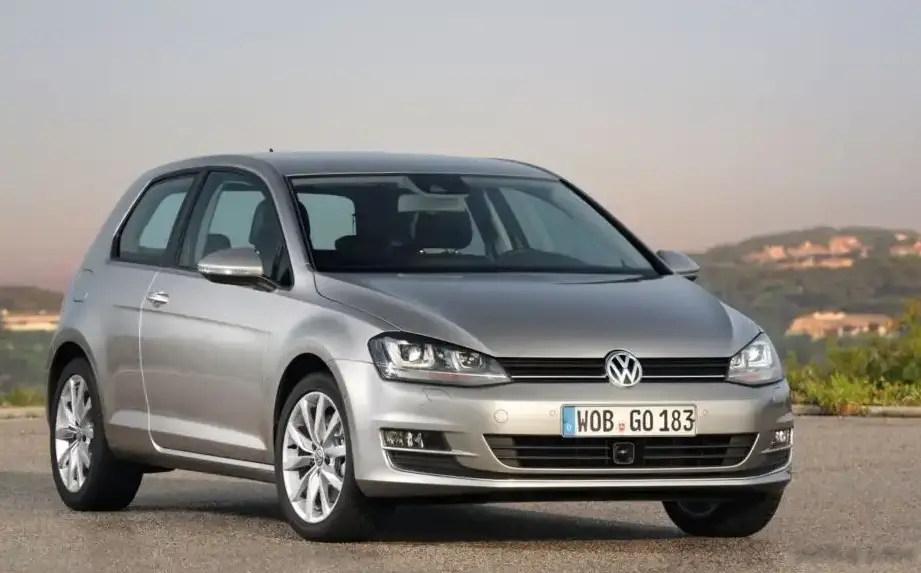
The Volkswagen Golf VII, produced from 2012 to 2020, represented a significant evolution in the iconic Golf lineage. Within the seventh generation (internally designated the A7), a diverse range of engines and trim levels were offered to cater to a broad spectrum of buyers. This article focuses specifically on the 3-door Golf VII 2.0 TDI variant producing 150 horsepower, a popular choice in European markets during its 2012-2014 production run. Positioned as a mid-range offering, it bridged the gap between the more economical base models and the performance-oriented GTI.
Technical Specifications
| Brand | Volkswagen |
| Model | Golf |
| Generation | Golf VII (3-door) |
| Type (Engine) | 2.0 TDI (150 Hp) |
| Start of production | 2012 |
| End of production | 2014 |
| Powertrain Architecture | Internal Combustion engine |
| Body type | Hatchback |
| Seats | 5 |
| Doors | 3 |
| Fuel consumption (urban) | 5 l/100 km (47 US mpg, 56.5 UK mpg, 20 km/l) |
| Fuel consumption (extra urban) | 3.6 l/100 km (65.3 US mpg, 78.5 UK mpg, 27.8 km/l) |
| Fuel consumption (combined) | 4.1 l/100 km (57.4 US mpg, 68.9 UK mpg, 24.4 km/l) |
| CO2 emissions | 106 g/km |
| Fuel Type | Diesel |
| Acceleration 0 – 100 km/h | 8.6 sec |
| Acceleration 0 – 62 mph | 8.6 sec |
| Acceleration 0 – 60 mph | 8.2 sec |
| Maximum speed | 216 km/h (134.22 mph) |
| Emission standard | Euro 5 |
| Weight-to-power ratio | 8.5 kg/Hp, 117.3 Hp/tonne |
| Weight-to-torque ratio | 4 kg/Nm, 250.2 Nm/tonne |
| Power | 150 Hp @ 3500-4000 rpm |
| Torque | 320 Nm @ 1750-3000 rpm (236.02 lb.-ft.) |
| Engine layout | Front, Transverse |
| Engine Model/Code | CRBC, CRLB |
| Engine displacement | 1968 cm3 (120.09 cu. in.) |
| Number of cylinders | 4 |
| Engine configuration | Inline |
| Cylinder Bore | 81 mm (3.19 in.) |
| Piston Stroke | 95.5 mm (3.76 in.) |
| Compression ratio | 16.2:1 |
| Number of valves per cylinder | 4 |
| Fuel injection system | Diesel Commonrail |
| Engine aspiration | Turbocharger, Intercooler |
| Valvetrain | DOHC |
| Engine oil capacity | 4.7 l (4.97 US qt | 4.14 UK qt) |
| Kerb Weight | 1279 kg (2819.71 lbs.) |
| Max. weight | 1860 kg (4100.6 lbs.) |
| Max load | 581 kg (1280.89 lbs.) |
| Trunk (boot) space – minimum | 380 l (13.42 cu. ft.) |
| Trunk (boot) space – maximum | 1270 l (44.85 cu. ft.) |
| Fuel tank capacity | 50 l (13.21 US gal | 11 UK gal) |
| Max. roof load | 75 kg (165.35 lbs.) |
| Permitted trailer load with brakes (12%) | 1600 kg (3527.4 lbs.) |
| Permitted trailer load without brakes | 670 kg (1477.1 lbs.) |
| Permitted towbar download | 80 kg (176.37 lbs.) |
| Length | 4255 mm (167.52 in.) |
| Width | 1799 mm (70.83 in.) |
| Width including mirrors | 2027 mm (79.8 in.) |
| Height | 1452 mm (57.17 in.) |
| Wheelbase | 2637 mm (103.82 in.) |
| Front track | 1549 mm (60.98 in.) |
| Rear track | 1520 mm (59.84 in.) |
| Ride height (ground clearance) | 142 mm (5.59 in.) |
| Minimum turning circle | 10.9 m (35.76 ft.) |
| Drivetrain Architecture | Front wheel drive |
| Number of gears and type of gearbox | 6 gears, manual transmission |
| Front suspension | Independent, type McPherson with coil spring and anti-roll bar |
| Rear suspension | Independent multi-link spring suspension with stabilizer |
| Front brakes | Ventilated discs |
| Rear brakes | Disc |
INTRODUCTION
The Golf VII, launched in 2012, marked a pivotal shift for Volkswagen’s best-selling model. Built on the new MQB (Modular Transversal Matrix) platform – 1HX0/A3 – it offered increased interior space, reduced weight, and a host of new technologies. The 2.0 TDI 150 hp variant, available with both manual and automatic transmissions, was a mainstay in many European markets, appealing to drivers seeking a balance between fuel efficiency, performance, and practicality. The three-door body style, while less common than the five-door, offered a sportier aesthetic and slightly reduced weight.
Powertrain & Engine Architecture
At the heart of this Golf variant lies the Volkswagen Group’s 2.0-liter four-cylinder diesel engine, specifically the CRBC or CRLB engine codes. These engines are common rail direct injection diesels, utilizing piezo injectors for precise fuel delivery. The engine boasts a turbocharger with an intercooler, enhancing power output and efficiency. The DOHC (Double Overhead Camshaft) valvetrain, with four valves per cylinder, contributes to improved breathing and overall performance. The 150 horsepower peak is achieved between 3500 and 4000 rpm, while the substantial 320 Nm (236 lb-ft) of torque is available from a low 1750 rpm, providing strong pulling power. The engine is transversely mounted, driving the front wheels. The 6-speed manual transmission was the most common pairing, offering precise shifts and driver engagement.
Driving Characteristics
The 2.0 TDI 150 hp Golf VII provided a refined and capable driving experience. While not overtly sporty, the engine delivered ample power for everyday driving and comfortable highway cruising. The readily available torque meant strong acceleration in most situations, and the 6-speed manual transmission allowed drivers to maintain optimal engine speed. Compared to the lower-powered 1.6 TDI variants, the 2.0 TDI offered a noticeable performance boost. However, it didn’t possess the outright acceleration of the GTI models. The gear ratios were well-chosen for a balance of fuel economy and responsiveness. The engine was relatively quiet and smooth for a diesel, contributing to a comfortable cabin environment.
Equipment & Trim Levels
The 2.0 TDI 150 hp Golf VII was typically offered in mid-range trim levels, such as ‘Trendline’ or ‘Comfortline’ depending on the market. Standard equipment generally included air conditioning, power windows, central locking, a multi-function steering wheel, and an infotainment system with a touchscreen display. Safety features like ABS, ESP (Electronic Stability Program), and multiple airbags were also standard. Optional extras included features like alloy wheels, parking sensors, a sunroof, upgraded infotainment systems with navigation, and leather upholstery. Interior upholstery was typically cloth, with higher trims offering partial leather options.
Chassis & Braking
The Golf VII’s MQB platform provided a solid foundation for its chassis. The front suspension utilized a McPherson strut setup with coil springs and an anti-roll bar, while the rear employed a more sophisticated multi-link suspension system, also with a stabilizer bar. This configuration delivered a good balance of ride comfort and handling precision. Braking duties were handled by ventilated discs at the front and solid discs at the rear. ABS (Anti-lock Braking System) was standard, ensuring effective braking performance in various conditions. The steering was electrically assisted, providing a light and precise feel.
Market Reception & Comparison
The Golf VII 2.0 TDI 150 hp was well-received by automotive critics and consumers alike. It was praised for its fuel efficiency, comfortable ride, and refined engine. Compared to the 1.6 TDI models, the 2.0 TDI offered a significant performance upgrade, making it a more appealing option for drivers who frequently traveled long distances or carried passengers. While the GTI offered more exhilarating performance, it came at a higher price point. The 2.0 TDI’s fuel economy was competitive within its class, and its reliability was generally considered good, although diesel particulate filter (DPF) issues could arise with predominantly short-trip driving.
Legacy
The 2.0 TDI 150 hp Golf VII remains a popular choice in the used car market. Its combination of fuel efficiency, practicality, and reliability has ensured its enduring appeal. The CRBC and CRLB engines, while generally robust, are known to require regular maintenance, particularly regarding the DPF and turbocharger. Proper servicing and the use of high-quality oil are crucial for long-term reliability. Today, these Golfs represent a good value proposition for buyers seeking a well-rounded and economical hatchback.