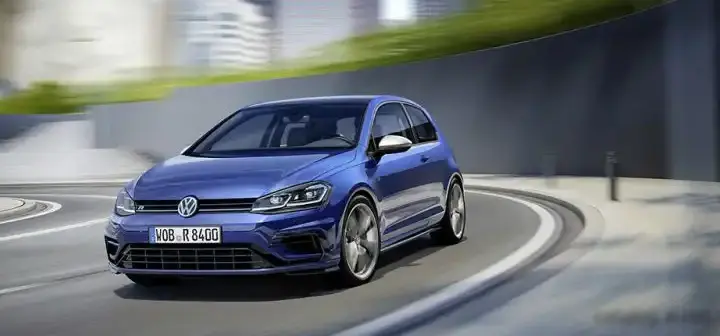
The Volkswagen Golf VII R, specifically the 3-door hatchback produced during the 2017 facelift and continuing through 2019, represents the high-performance pinnacle of the seventh-generation Golf lineup. Introduced in January 2019 and concluding production in July 2019, this variant combined a potent 2.0-liter turbocharged engine with Volkswagen’s 4MOTION all-wheel-drive system and a 7-speed dual-clutch transmission (DSG). Positioned as the flagship model, the Golf VII R offered a significant performance upgrade over lower trims like the Golf, Golf TSI, and even the GTD diesel, targeting enthusiasts seeking a refined yet exhilarating driving experience. It was primarily marketed in Europe and other global markets, with limited availability in the United States.
Technical Specifications
| Brand | Volkswagen |
| Model | Golf |
| Generation | Golf VII (3-door, facelift 2017) |
| Type (Engine) | R 2.0 TSI (300 Hp) 4MOTION DSG |
| Start of production | January, 2019 |
| End of production | July, 2019 |
| Powertrain Architecture | Internal Combustion engine |
| Body type | Hatchback |
| Seats | 5 |
| Doors | 3 |
| Fuel consumption (urban) | 8-8.2 l/100 km (29.4 – 28.7 US mpg, 35.3 – 34.4 UK mpg, 12.5 – 12.2 km/l) |
| Fuel consumption (extra urban) | 6.4-6.6 l/100 km (36.8 – 35.6 US mpg, 44.1 – 42.8 UK mpg, 15.6 – 15.2 km/l) |
| Fuel consumption (combined) | 7-7.2 l/100 km (33.6 – 32.7 US mpg, 40.4 – 39.2 UK mpg, 14.3 – 13.9 km/l) |
| CO2 emissions | 158-164 g/km |
| Fuel Type | Petrol (Gasoline) |
| Acceleration 0 – 100 km/h | 4.7 sec |
| Acceleration 0 – 62 mph | 4.7 sec |
| Acceleration 0 – 60 mph | 4.5 sec |
| Maximum speed | 250 km/h (155.34 mph) – Electronically limited |
| Emission standard | Euro 6 |
| Weight-to-power ratio | 4.8 kg/Hp, 209.8 Hp/tonne |
| Weight-to-torque ratio | 3.6 kg/Nm, 279.7 Nm/tonne |
| Power | 300 Hp @ 5300-6500 rpm |
| Power per litre | 151.2 Hp/l |
| Torque | 400 Nm @ 2000-5200 rpm (295.02 lb.-ft. @ 2000-5200 rpm) |
| Engine layout | Front, Transverse |
| Engine Model/Code | EA888 / DNUE |
| Engine displacement | 1984 cm3 (121.07 cu. in.) |
| Number of cylinders | 4 |
| Engine configuration | Inline |
| Cylinder Bore | 82.5 mm (3.25 in.) |
| Piston Stroke | 92.8 mm (3.65 in.) |
| Compression ratio | 9.3:1 |
| Number of valves per cylinder | 4 |
| Fuel injection system | Direct injection |
| Engine aspiration | Turbocharger, Intercooler |
| Valvetrain | DOHC |
| Engine oil capacity | 5.7 l (6.02 US qt | 5.02 UK qt) |
| Kerb Weight | 1430 kg (3152.61 lbs.) |
| Max. weight | 1990 kg (4387.2 lbs.) |
| Max load | 560 kg (1234.59 lbs.) |
| Trunk (boot) space – minimum | 343 l (12.11 cu. ft.) |
| Trunk (boot) space – maximum | 1233 l (43.54 cu. ft.) |
| Fuel tank capacity | 55 l (14.53 US gal | 12.1 UK gal) |
| Max. roof load | 75 kg (165.35 lbs.) |
| Length | 4263 mm (167.83 in.) |
| Width | 1799 mm (70.83 in.) |
| Width including mirrors | 2027 mm (79.8 in.) |
| Height | 1465 mm (57.68 in.) |
| Wheelbase | 2626 mm (103.39 in.) |
| Front track | 1533-1549 mm (60.35 – 60.98 in.) |
| Rear (Back) track | 1503-1521 mm (59.17 – 59.88 in.) |
| Ride height (ground clearance) | 128 mm (5.04 in.) |
| Minimum turning circle | 10.9 m (35.76 ft.) |
| Drivetrain Architecture | All wheel drive (4×4). ICE drives front wheels, rear driven via clutch. |
| Number of gears | 7 |
| Gearbox type | Automatic transmission DSG |
| Front suspension | Independent, McPherson with coil spring and anti-roll bar |
| Rear suspension | Independent multi-link spring suspension with stabilizer |
| Front brakes | Ventilated discs |
| Rear brakes | Ventilated discs |
| Assisting systems | ABS (Anti-lock braking system) |
| Steering type | Steering rack and pinion |
| Power steering | Electric |
| Tires size | 225/40 R18; 235/35 R19 |
| Wheel rims size | 7.5J x 18; 8J x 19 |
Powertrain & Engine Architecture
The heart of the Golf VII R is the EA888 2.0-liter turbocharged inline-four cylinder engine, specifically the DNUE variant. This engine is a direct-injection gasoline engine, utilizing a sophisticated fuel delivery system for optimal combustion efficiency and power output. The engine features a cast iron block and an aluminum cylinder head, incorporating double overhead camshafts (DOHC) and four valves per cylinder. The turbocharger, equipped with an intercooler, provides significant boost, contributing to the engine’s 300 horsepower and 295 lb-ft of torque. The 7-speed DSG (Direct-Shift Gearbox) is a dual-clutch transmission known for its rapid and smooth gear changes. The 4MOTION all-wheel-drive system utilizes a Haldex multi-plate clutch to distribute torque between the front and rear axles, enhancing traction and stability, particularly in adverse weather conditions.
Driving Characteristics
The Golf VII R with the 2.0 TSI engine and DSG transmission delivers a remarkably responsive and engaging driving experience. Acceleration from 0 to 60 mph takes approximately 4.5 seconds, and the electronically limited top speed of 155 mph provides ample performance for both road and track. The DSG transmission’s quick shifts contribute to a seamless power delivery, while the 4MOTION system ensures excellent grip and cornering stability. Compared to the standard Golf or even the GTI, the R offers a noticeably firmer suspension and more direct steering feel. While the automatic transmission provides convenience, some enthusiasts may prefer the greater control offered by a manual gearbox, which was not available in this specific configuration.
Equipment & Trim Levels
The Golf VII R came generously equipped as standard. Interior features typically included sport seats upholstered in cloth and Alcantara, a leather-wrapped steering wheel, and stainless steel pedal caps. Infotainment systems featured a touchscreen display with navigation, Bluetooth connectivity, and Apple CarPlay/Android Auto compatibility. Standard safety equipment included ABS, electronic stability control, and multiple airbags. Optional extras included adaptive dampers (DCC), a panoramic sunroof, and premium sound systems. The R trim was generally considered the highest specification level, offering a more luxurious and technologically advanced experience than lower Golf variants.
Chassis & Braking
The Golf VII R featured a sport-tuned chassis with a lowered ride height compared to standard Golf models. The front suspension utilized McPherson struts with a stabilizer bar, while the rear suspension employed a multi-link setup, also with a stabilizer bar. This configuration provided a balance between comfort and handling. The braking system consisted of ventilated discs on all four wheels, providing ample stopping power. The R also benefited from larger brake calipers and rotors compared to lower trims.
Market Reception & Comparison
The Golf VII R was widely praised by automotive critics for its performance, handling, and overall refinement. It was often compared favorably to rivals such as the Audi S3, BMW M140i, and Mercedes-AMG A35. While the R offered a compelling combination of performance and practicality, some critics noted its relatively high price point. Fuel economy was respectable for a high-performance hatchback, averaging around 33.6 mpg in combined driving. Reliability was generally good, although the complexity of the turbocharged engine and DSG transmission could potentially lead to higher maintenance costs over the long term.
Legacy
The Golf VII R has established itself as a highly desirable used car, retaining strong resale values. The EA888 engine, while capable of high performance, requires regular maintenance, including oil changes and spark plug replacements. The DSG transmission also benefits from fluid changes at recommended intervals. Overall, the Golf VII R represents a significant achievement in hot hatch engineering, offering a compelling blend of performance, practicality, and refinement that continues to appeal to enthusiasts today.