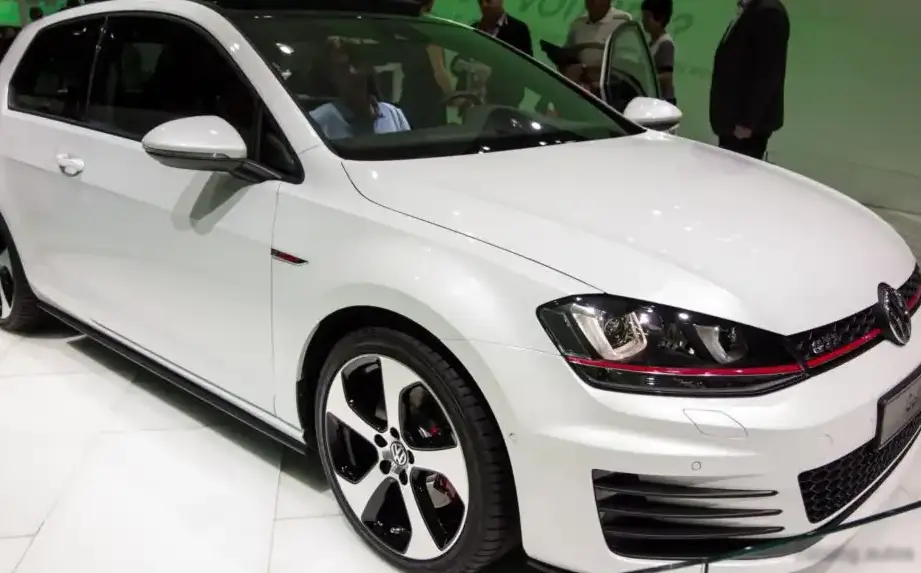
The Volkswagen Golf VII GTI 2.0 TSI (220 hp) is a performance-oriented variant of the seventh-generation Golf, produced between March 2013 and February 2017. Positioned as a key model within the GTI range, it offered a significant step up in power and driving dynamics compared to the standard Golf models. This three-door hatchback was a cornerstone of Volkswagen’s hot hatch lineage, appealing to enthusiasts seeking a blend of practicality, performance, and refinement. It was primarily marketed in Europe and other global markets, with limited availability in the United States where the Golf GTI was offered with a slightly different specification.
Technical Specifications
| Brand | Volkswagen |
| Model | Golf |
| Generation | Golf VII (3-door) |
| Type (Engine) | GTI 2.0 TSI (220 Hp) |
| Start of production | March, 2013 |
| End of production | February, 2017 |
| Powertrain Architecture | Internal Combustion engine |
| Body type | Hatchback |
| Seats | 5 |
| Doors | 3 |
| Fuel consumption (urban) | 7.5-7.8 l/100 km (31.4 – 30.2 US mpg) |
| Fuel consumption (extra urban) | 5.1-5.5 l/100 km (46.1 – 42.8 US mpg) |
| Fuel consumption (combined) | 6-6.4 l/100 km (39.2 – 36.8 US mpg) |
| CO2 emissions | 139-148 g/km |
| Fuel Type | Petrol (Gasoline) |
| Acceleration 0 – 100 km/h | 6.5 sec |
| Acceleration 0 – 62 mph | 6.5 sec |
| Acceleration 0 – 60 mph | 6.2 sec |
| Maximum speed | 246 km/h (152.86 mph) |
| Emission standard | Euro 6 |
| Weight-to-power ratio | 5.8 kg/Hp |
| Weight-to-torque ratio | 3.6 kg/Nm |
| Power | 220 Hp @ 4500-6200 rpm |
| Torque | 350 Nm @ 1500-4400 rpm (258.15 lb.-ft. @ 1500-4400 rpm) |
| Engine layout | Front, Transverse |
| Engine Model/Code | EA888 / CHHB |
| Engine displacement | 1984 cm3 (121.07 cu. in.) |
| Number of cylinders | 4 |
| Engine configuration | Inline |
| Cylinder Bore | 82.5 mm (3.25 in.) |
| Piston Stroke | 92.8 mm (3.65 in.) |
| Compression ratio | 9.6:1 |
| Number of valves per cylinder | 4 |
| Fuel injection system | Direct injection and Multi-port manifold injection |
| Engine aspiration | Turbocharger, Intercooler |
| Valvetrain | DOHC |
| Engine oil capacity | 5.7 l (6.02 US qt | 5.02 UK qt) |
| Kerb Weight | 1276 kg (2813.1 lbs.) |
| Max. weight | 1820 kg (4012.41 lbs.) |
| Max load | 544 kg (1199.31 lbs.) |
| Trunk (boot) space – minimum | 380 l (13.42 cu. ft.) |
| Trunk (boot) space – maximum | 1270 l (44.85 cu. ft.) |
| Fuel tank capacity | 50 l (13.21 US gal | 11 UK gal) |
| Max. roof load | 75 kg (165.35 lbs.) |
| Permitted trailer load with brakes (8%) | 1800 kg (3968.32 lbs.) |
| Permitted trailer load with brakes (12%) | 1600 kg (3527.4 lbs.) |
| Permitted trailer load without brakes | 670 kg (1477.1 lbs.) |
| Permitted towbar download | 80 kg (176.37 lbs.) |
| Length | 4268 mm (168.03 in.) |
| Width | 1799 mm (70.83 in.) |
| Width including mirrors | 2027 mm (79.8 in.) |
| Height | 1442 mm (56.77 in.) |
| Wheelbase | 2631 mm (103.58 in.) |
| Front track | 1538 mm (60.55 in.) |
| Rear track | 1516 mm (59.69 in.) |
| Ride height (ground clearance) | 133 mm (5.24 in.) |
| Minimum turning circle | 10.9 m (35.76 ft.) |
| Front suspension | Independent, type McPherson with coil spring and anti-roll bar |
| Rear suspension | Independent multi-link spring suspension with stabilizer |
| Front brakes | Ventilated discs |
| Rear brakes | Disc |
| Drive wheel | Front wheel drive |
| Number of gears and type of gearbox | 6 gears, manual transmission |
| Tires size | 225/45 R17; 225/40 R18; 225/35 R19 |
| Wheel rims size | 7.5J x 17; 7.5J x 18; 7.5J x 19 |
INTRODUCTION
The Golf VII GTI 2.0 TSI (220 hp) represented a significant evolution of the iconic GTI formula. Launched as part of the seventh-generation Golf range (2013-2020), it built upon the success of its predecessors by combining a potent turbocharged engine with a refined chassis and a well-appointed interior. The three-door body style, while less common than the five-door, offered a slightly more focused driving experience and a sportier aesthetic. This variant occupied the middle ground within the GTI lineup, offering a compelling balance between performance and everyday usability. It sat above the base GTI models with lower horsepower and below the more focused Performance Pack versions.
Powertrain & Engine Architecture
At the heart of the Golf VII GTI 2.0 TSI (220 hp) lies the EA888 engine, specifically the CHHB code variant. This 2.0-liter, inline-four cylinder engine utilizes direct fuel injection combined with multi-point injection, optimizing both power delivery and fuel efficiency. The engine is turbocharged with an intercooler, boosting output to 220 horsepower at 4500-6200 rpm and 350 Nm (258 lb-ft) of torque between 1500-4400 rpm. The engine features a dual overhead camshaft (DOHC) valvetrain with four valves per cylinder. The standard transmission for this model was a precise six-speed manual gearbox, although a dual-clutch DSG automatic transmission was also available as an option. The DSG offered quicker shifts and enhanced convenience, but the manual was favored by driving enthusiasts. The engine also incorporated a start/stop system to further improve fuel economy.
Driving Characteristics
The 220 hp GTI delivered a genuinely engaging driving experience. Acceleration from 0 to 100 km/h (0-62 mph) took approximately 6.5 seconds, and it reached a top speed of 246 km/h (153 mph). The engine’s broad torque curve provided strong acceleration in any gear, making it a flexible and responsive performer in real-world driving conditions. Compared to lower-powered Golf models, the GTI offered a noticeably more urgent response and a greater sense of control. While not as brutally fast as the Performance Pack version, the 220 hp GTI provided ample power for spirited driving on both winding roads and open highways. The manual transmission offered a satisfyingly direct connection to the engine, while the optional DSG provided seamless and rapid gear changes.
Equipment & Trim Levels
The GTI 2.0 TSI (220 hp) came standard with a comprehensive list of features. Interior highlights included sport seats upholstered in the classic tartan fabric, a leather-wrapped steering wheel, and aluminum pedal caps. Standard equipment also included air conditioning, a touchscreen infotainment system, and alloy wheels. Optional extras included adaptive chassis control (DCC), which allowed the driver to adjust the suspension stiffness, and a panoramic sunroof. Higher trim levels offered additional features such as leather upholstery, navigation system, and advanced driver-assistance systems.
Chassis & Braking
The Golf VII GTI featured a fully independent suspension system, with a McPherson strut setup at the front and a multi-link arrangement at the rear. This configuration provided a good balance between ride comfort and handling precision. The GTI also benefited from a slightly lowered ride height and stiffer springs compared to standard Golf models. Braking duties were handled by ventilated disc brakes at the front and solid discs at the rear. Anti-lock braking system (ABS) was standard, ensuring safe and controlled stopping power. The GTI’s chassis was well-balanced and provided a stable and predictable platform for spirited driving.
Market Reception & Comparison
The Golf VII GTI 2.0 TSI (220 hp) was widely praised by automotive critics for its performance, handling, and refinement. It was consistently ranked among the best hot hatches on the market. Compared to the lower-powered Golf models, the GTI offered a significant upgrade in driving dynamics and overall enjoyment. Against rivals such as the Ford Focus ST and the Renault Mégane RS, the GTI was often lauded for its more mature and sophisticated character. Fuel economy was respectable for a performance car, averaging around 6.0-6.4 l/100 km (39.2-36.8 US mpg). Reliability was generally good, although some owners reported minor issues with the turbocharger and fuel injectors.
Legacy
The Golf VII GTI 2.0 TSI (220 hp) remains a popular choice in the used car market. Its combination of performance, practicality, and build quality has ensured its enduring appeal. The EA888 engine, while not without its quirks, is generally considered to be a robust and reliable unit. Regular maintenance, including oil changes and timing belt replacements, is essential to ensure long-term reliability. Today, these GTIs represent a sweet spot in the seventh-generation Golf range, offering a compelling blend of performance and value for money. They continue to be enjoyed by enthusiasts who appreciate the GTI’s heritage and its reputation as a benchmark hot hatch.