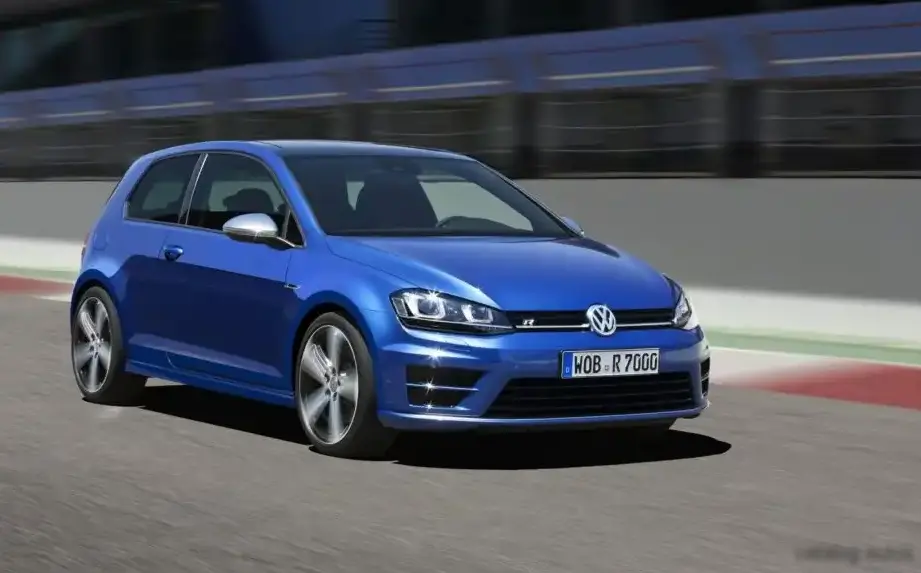
The Volkswagen Golf VII R 2.0 TSI 4MOTION, produced from December 2013 to December 2016, represents the high-performance variant of the seventh-generation Golf. Positioned as the flagship model within the Golf VII range, the ‘R’ offered a significant step up in power and handling compared to the standard Golf and even the GTI. Built on the Volkswagen Group’s MQB platform (A5/PQ35), the three-door hatchback combined a potent turbocharged engine with a sophisticated all-wheel-drive system, targeting enthusiasts seeking a practical yet exhilarating driving experience. This model was primarily marketed in Europe and other global markets, with limited availability in the United States.
Technical Specifications
| Brand | Volkswagen |
| Model | Golf |
| Generation | Golf VII (3-door) |
| Type (Engine) | R 2.0 TSI (300 Hp) 4MOTION |
| Start of production | December, 2013 |
| End of production | December, 2016 |
| Powertrain Architecture | Internal Combustion engine |
| Body type | Hatchback |
| Seats | 5 |
| Doors | 3 |
| Fuel consumption (economy) – urban (NEDC) | 9.4 l/100 km (25 US mpg, 30.1 UK mpg, 10.6 km/l) |
| Fuel consumption (economy) – extra urban (NEDC) | 5.9 l/100 km (39.9 US mpg, 47.9 UK mpg, 16.9 km/l) |
| Fuel consumption (economy) – combined (NEDC) | 7.1 l/100 km (33.1 US mpg, 39.8 UK mpg, 14.1 km/l) |
| CO2 emissions (NEDC) | 165 g/km |
| Fuel Type | Petrol (Gasoline) |
| Acceleration 0 – 100 km/h | 5.1 sec |
| Acceleration 0 – 62 mph | 5.1 sec |
| Acceleration 0 – 60 mph | 4.8 sec |
| Maximum speed | 250 km/h (155.34 mph), Electronically limited |
| Emission standard | Euro 6 |
| Weight-to-power ratio | 4.7 kg/Hp, 214.1 Hp/tonne |
| Weight-to-torque ratio | 3.7 kg/Nm, 271.2 Nm/tonne |
| Power | 300 Hp @ 5500-6200 rpm |
| Power per litre | 151.2 Hp/l |
| Torque | 380 Nm @ 1800-5500 rpm (280.27 lb.-ft. @ 1800-5500 rpm) |
| Engine layout | Front, Transverse |
| Engine Model/Code | EA888 / CJXC |
| Engine displacement | 1984 cm3 (121.07 cu. in.) |
| Number of cylinders | 4 |
| Engine configuration | Inline |
| Cylinder Bore | 82.5 mm (3.25 in.) |
| Piston Stroke | 92.8 mm (3.65 in.) |
| Compression ratio | 9.6:1 |
| Number of valves per cylinder | 4 |
| Fuel injection system | Direct injection and Multi-port manifold injection |
| Engine aspiration | Turbocharger, Intercooler |
| Valvetrain | DOHC |
| Engine oil capacity | 5.7 l (6.02 US qt | 5.02 UK qt) |
| Kerb Weight | 1401 kg (3088.68 lbs.) |
| Max. weight | 1960 kg (4321.06 lbs.) |
| Max load | 559 kg (1232.38 lbs.) |
| Trunk (boot) space – minimum | 343 l (12.11 cu. ft.) |
| Trunk (boot) space – maximum | 1233 l (43.54 cu. ft.) |
| Fuel tank capacity | 55 l (14.53 US gal | 12.1 UK gal) |
| Max. roof load | 75 kg (165.35 lbs.) |
| Length | 4276 mm (168.35 in.) |
| Width | 1799 mm (70.83 in.) |
| Width including mirrors | 2027 mm (79.8 in.) |
| Height | 1436 mm (56.54 in.) |
| Wheelbase | 2630 mm (103.54 in.) |
| Front track | 1541 mm (60.67 in.) |
| Rear (Back) track | 1515 mm (59.65 in.) |
| Ride height (ground clearance) | 128 mm (5.04 in.) |
| Minimum turning circle (turning diameter) | 10.9 m (35.76 ft.) |
| Drivetrain Architecture | All wheel drive (4×4). Internal Combustion engine. The Internal combustion engine (ICE) drives the front wheels permanently, and the rear wheels are driven through an electrically or mechanically operated clutch if necessary. |
| Number of gears and type of gearbox | 6 gears, manual transmission |
| Front suspension | Independent, type McPherson with coil spring and anti-roll bar |
| Rear suspension | Independent multi-link spring suspension with stabilizer |
| Front brakes | Ventilated discs, 340 mm |
| Rear brakes | Ventilated discs, 310 mm |
| Assisting systems | ABS (Anti-lock braking system) |
| Steering type | Steering rack and pinion |
| Power steering | Electric Steering |
| Tires size | 225/40 R18; 235/35 R19 |
| Wheel rims size | 7.5J x 18; 8J x 19 |
INTRODUCTION
The Golf VII R, launched in December 2013, was the performance apex of the seventh-generation Golf lineup. It built upon the success of previous ‘R’ models, offering a compelling blend of everyday usability and exhilarating performance. The three-door body style, while less common than the five-door, provided a slightly lighter and more focused driving experience. The R distinguished itself from the Golf GTI through its more powerful engine, standard 4MOTION all-wheel drive, and upgraded braking and suspension components. It was a direct competitor to models like the Audi S3 and the BMW M235i, offering a premium feel at a slightly more accessible price point.
Powertrain & Engine Architecture
At the heart of the Golf VII R lies the EA888 2.0-liter turbocharged inline-four cylinder engine, specifically the CJXC code. This engine produced 300 horsepower at 5,500-6,200 rpm and 380 Nm (280 lb-ft) of torque from 1,800-5,500 rpm. The EA888 engine family is known for its robust construction and tunability. The CJXC version featured direct injection combined with multi-point fuel injection, optimizing both power and efficiency. A sophisticated turbocharger and intercooler system managed boost pressure, while a dual overhead camshaft (DOHC) valvetrain ensured precise valve control. The engine’s all-aluminum construction contributed to its relatively lightweight design. The six-speed manual transmission was standard, providing precise gear changes and engaging driver control.
Driving Characteristics
The Golf VII R delivered a noticeably more aggressive driving experience than the GTI. The 4MOTION all-wheel-drive system, utilizing a Haldex multi-plate clutch, provided excellent traction in all weather conditions and allowed for confident cornering. The manual transmission offered a direct connection to the engine, while the gear ratios were optimized for both acceleration and cruising. The R’s suspension, featuring stiffer springs and dampers compared to the standard Golf, minimized body roll and provided a more planted feel. Acceleration from 0 to 100 km/h (0-62 mph) took just 5.1 seconds, making it a genuinely quick hatchback. While the engine offered a broad torque curve, the peak power delivery was more pronounced at higher RPMs, encouraging drivers to explore the engine’s upper limits.
Equipment & Trim Levels
The Golf VII R came generously equipped as standard. Interior features included sport seats upholstered in a unique ‘R’ specific cloth and leather combination, stainless steel pedal caps, and ambient lighting. The dashboard featured ‘R’ badging and a distinctive instrument cluster design. Standard technology included a touchscreen infotainment system with navigation, Bluetooth connectivity, and automatic climate control. Optional extras included adaptive dampers (DCC), a panoramic sunroof, and a premium sound system. The exterior was distinguished by unique ‘R’ design bumpers, side skirts, a rear spoiler, and quad exhaust outlets.
Chassis & Braking
The Golf VII R benefited from a revised chassis and upgraded braking system. The front suspension utilized a McPherson strut design with a stabilizer bar, while the rear featured a multi-link setup, also with a stabilizer bar. This configuration provided a good balance between ride comfort and handling precision. Braking duties were handled by ventilated discs on all four wheels, with larger front discs (340mm) compared to the GTI. The anti-lock braking system (ABS) and electronic stability control (ESC) were standard, enhancing safety and control.
Market Reception & Comparison
The Golf VII R was widely praised by automotive critics for its performance, handling, and practicality. It was often lauded as a benchmark in the hot hatchback segment. Compared to the Golf GTI, the R offered a significant power increase and the added security of all-wheel drive. However, it also came with a higher price tag and slightly increased fuel consumption. Against rivals like the Audi S3, the Golf R offered a similar level of performance at a more competitive price point. Fuel economy, while respectable for a performance car, averaged around 7.1 l/100 km (33.1 US mpg).
Legacy
The Golf VII R has proven to be a reliable and durable performance car. The EA888 engine, while requiring regular maintenance, is generally considered robust. The 4MOTION system has also proven to be dependable. On the used car market, the Golf VII R holds its value well, reflecting its desirability and reputation for quality. It remains a popular choice for enthusiasts seeking a well-rounded and engaging driving experience. The Golf VII R solidified the ‘R’ badge as a symbol of Volkswagen’s performance capabilities and paved the way for future high-performance Golf models.