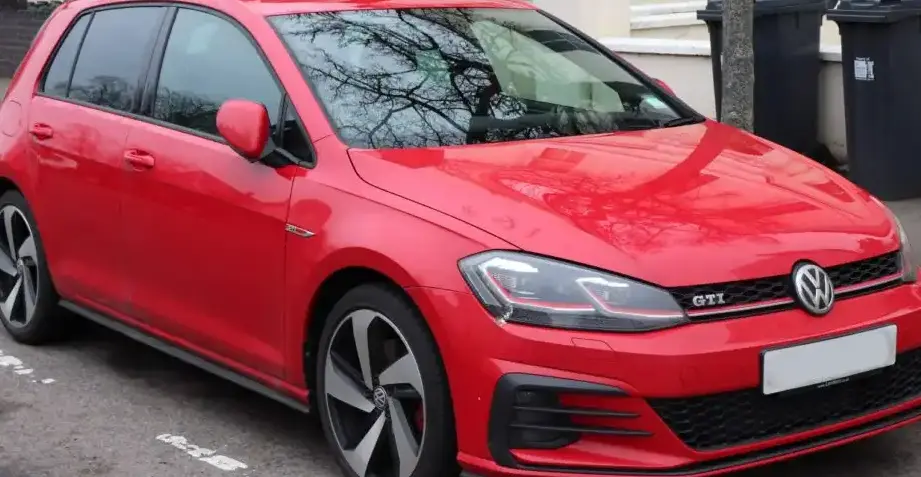
The Volkswagen Golf VII, produced from 2012 to 2014, represented a significant evolution of Volkswagen’s iconic hatchback. Among the various engine and transmission combinations offered, the 1.2 TSI (105 horsepower) paired with the 7-speed DSG dual-clutch automatic transmission occupied an important position as an entry-level offering, particularly in European markets. This variant aimed to balance fuel efficiency with acceptable performance and modern convenience, appealing to buyers seeking a practical and technologically advanced compact car. It was a key component of the broader Golf VII lineup, built on the MQB (Modular Transverse Matrix) platform – a modular platform strategy that underpinned numerous Volkswagen Group vehicles.
Technical Specifications
| Brand | Volkswagen |
| Model | Golf |
| Generation | Golf VII (5-door) |
| Type (Engine) | 1.2 TSI (105 Hp) DSG |
| Start of production | 2012 |
| End of production | 2014 |
| Powertrain Architecture | Internal Combustion engine |
| Body type | Hatchback |
| Seats | 5 |
| Doors | 5 |
| Fuel consumption (urban) | 5.6 l/100 km (42 US mpg, 50.4 UK mpg, 17.9 km/l) |
| Fuel consumption (extra urban) | 4.4 l/100 km (53.5 US mpg, 64.2 UK mpg, 22.7 km/l) |
| Fuel consumption (combined) | 4.8 l/100 km (49 US mpg, 58.9 UK mpg, 20.8 km/l) |
| Fuel Type | Petrol (Gasoline) |
| Acceleration 0 – 100 km/h | 10.2 sec |
| Acceleration 0 – 62 mph | 10.2 sec |
| Acceleration 0 – 60 mph | 9.7 sec |
| Maximum speed | 192 km/h (119.3 mph) |
| Weight-to-power ratio | 11.7 kg/Hp, 85.4 Hp/tonne |
| Weight-to-torque ratio | 7 kg/Nm, 142.4 Nm/tonne |
| Power | 105 Hp @ 5000 rpm |
| Power per litre | 87.7 Hp/l |
| Torque | 175 Nm @ 1550-4100 rpm (129.07 lb.-ft. @ 1550-4100 rpm) |
| Engine layout | Front, Transverse |
| Engine Model/Code | CJZA |
| Engine displacement | 1197 cm3 (73.05 cu. in.) |
| Number of cylinders | 4 |
| Engine configuration | Inline |
| Fuel injection system | Direct injection |
| Engine aspiration | Turbocharger, Intercooler |
| Engine oil capacity | 4 l (4.23 US qt | 3.52 UK qt) |
| Kerb Weight | 1229 kg (2709.48 lbs.) |
| Max. weight | 1730 kg (3814 lbs.) |
| Max load | 501 kg (1104.52 lbs.) |
| Trunk (boot) space – minimum | 380 l (13.42 cu. ft.) |
| Trunk (boot) space – maximum | 1270 l (44.85 cu. ft.) |
| Fuel tank capacity | 50 l (13.21 US gal | 11 UK gal) |
| Length | 4255 mm (167.52 in.) |
| Width | 1799 mm (70.83 in.) |
| Height | 1452 mm (57.17 in.) |
| Wheelbase | 2637 mm (103.82 in.) |
| Front track | 1549 mm (60.98 in.) |
| Rear (Back) track | 1520 mm (59.84 in.) |
| Minimum turning circle | 10.9 m (35.76 ft.) |
| Drivetrain Architecture | Front wheel drive |
| Number of gears and type of gearbox | 7 gears, automatic transmission DSG |
| Front brakes | Ventilated discs |
| Assisting systems | ABS (Anti-lock braking system) |
| Steering type | Steering rack and pinion |
| Power steering | Electric Steering |
Powertrain & Engine Architecture
The heart of this Golf variant was the CJZA engine, a 1.2-liter turbocharged four-cylinder gasoline engine. This engine was part of Volkswagen’s EA111 family, known for its compact size and efficiency. The 1.2 TSI employed direct fuel injection (FSI) and a turbocharger with an intercooler to boost power output. The direct injection system allowed for precise fuel delivery, improving combustion efficiency and reducing emissions. The turbocharger, a key component, provided increased power and torque compared to naturally aspirated engines of similar displacement. The engine’s valvetrain featured four valves per cylinder, contributing to improved breathing and overall performance. The 7-speed DSG (Direct-Shift Gearbox) was a crucial element of this configuration. This dual-clutch transmission offered quick, smooth shifts and contributed to the car’s overall efficiency. The DSG operates by essentially having two separate manual transmissions within one housing, allowing for pre-selection of the next gear, resulting in near-seamless gear changes.
Driving Characteristics
The 105 hp output and 175 Nm (129 lb-ft) of torque delivered by the 1.2 TSI engine, coupled with the 7-speed DSG, provided adequate performance for everyday driving. Acceleration from 0-60 mph took approximately 9.7 seconds, and top speed was around 119 mph. While not a sports-oriented setup, the DSG transmission helped maximize the available power, providing responsive acceleration in most situations. Compared to the more powerful Golf variants, such as those equipped with the 1.4 TSI or 2.0 TDI engines, this version felt less eager to accelerate, particularly when fully loaded or tackling steep inclines. However, the DSG transmission’s ability to keep the engine in its optimal power band mitigated some of this difference. The gear ratios were tuned for fuel efficiency, prioritizing smooth cruising over outright performance. The 1.2 TSI/DSG combination offered a more refined driving experience than the base 1.2 MPI (Multi-Point Injection) engine paired with a manual transmission.
Equipment & Trim Levels
The 1.2 TSI DSG Golf VII typically fell into the mid-range of the Golf VII trim levels. Standard equipment generally included air conditioning, power windows, central locking, a basic audio system with USB connectivity, and alloy wheels. Safety features such as ABS, ESP (Electronic Stability Program), and multiple airbags were also standard. Optional extras included features like a touchscreen infotainment system, navigation, parking sensors, automatic climate control, and upgraded upholstery. The interior typically featured cloth upholstery, with options for leather or Alcantara available at an extra cost. The dashboard layout was clean and functional, reflecting Volkswagen’s design philosophy of understated elegance.
Chassis & Braking
The Golf VII’s chassis was designed to provide a comfortable yet engaging driving experience. The front suspension utilized MacPherson struts, while the rear suspension employed a multi-link setup. This configuration offered a good balance between ride comfort and handling precision. The 1.2 TSI variant typically featured ventilated disc brakes on the front wheels and drum brakes on the rear wheels. This setup was adequate for the car’s weight and performance capabilities. The electric power steering provided light and precise steering feel, making it easy to maneuver in urban environments. Stabilizer bars were fitted to both the front and rear axles to reduce body roll during cornering.
Market Reception & Comparison
The 1.2 TSI DSG Golf VII was generally well-received by automotive critics as a practical and efficient option. It was praised for its fuel economy, comfortable ride, and the smoothness of the DSG transmission. However, some critics noted that the engine could feel strained when pushed hard, and the performance was not as exhilarating as that of more powerful Golf variants. Compared to the 1.6 TDI diesel model, the 1.2 TSI offered slightly less fuel economy but a more responsive engine. The 1.4 TSI provided a noticeable performance upgrade but came at a higher price point. In terms of reliability, the 1.2 TSI engine was generally considered to be reasonably reliable, although some owners reported issues with the turbocharger and direct injection system over the long term.
Legacy
The 1.2 TSI engine, while eventually superseded by newer, more efficient engines in the Golf lineup, remains a common sight on European roads. The 7-speed DSG transmission has proven to be a durable and reliable unit when properly maintained. In the used car market, the 1.2 TSI DSG Golf VII represents a relatively affordable entry point into Volkswagen ownership. Potential buyers should be aware of the potential for issues with the turbocharger and direct injection system and ensure that the car has been regularly serviced. Overall, this variant offers a good balance of practicality, efficiency, and modern features, making it a viable option for those seeking a well-rounded compact hatchback.