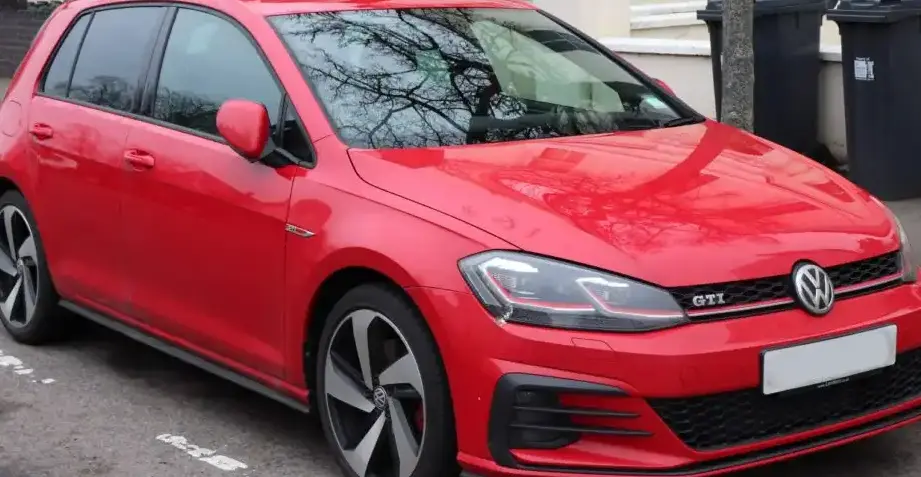
The Volkswagen Golf VII, produced from 2012 to 2014, represented a significant evolution of Volkswagen’s iconic hatchback. Among the various engine and transmission combinations offered, the 1.4 TSI 122 horsepower variant with a six-speed manual transmission occupied a crucial mid-range position in the lineup. This model aimed to balance fuel efficiency with acceptable performance, appealing to a broad spectrum of buyers seeking a practical and modern compact car. It was built on the Volkswagen Group’s MQB platform (A5 generation), shared with models like the Audi A3, SEAT Leon, and Škoda Octavia, allowing for economies of scale and a consistent driving experience across brands.
Technical Specifications
| Brand | Volkswagen |
| Model | Golf |
| Generation | Golf VII (5-door) |
| Type (Engine) | 1.4 TSI (122 Hp) |
| Start of production | 2012 |
| End of production | 2014 |
| Powertrain Architecture | Internal Combustion engine |
| Body type | Hatchback |
| Seats | 5 |
| Doors | 5 |
| Fuel consumption (urban) | 6.6 l/100 km (35.6 US mpg, 42.8 UK mpg, 15.2 km/l) |
| Fuel consumption (extra urban) | 4.3 l/100 km (54.7 US mpg, 65.7 UK mpg, 23.3 km/l) |
| Fuel consumption (combined) | 5.2 l/100 km (45.2 US mpg, 54.3 UK mpg, 19.2 km/l) |
| Fuel Type | Petrol (Gasoline) |
| Acceleration 0 – 100 km/h | 9.3 sec |
| Acceleration 0 – 62 mph | 9.3 sec |
| Acceleration 0 – 60 mph | 8.8 sec |
| Maximum speed | 203 km/h (126.14 mph) |
| Weight-to-power ratio | 10 kg/Hp, 99.6 Hp/tonne |
| Weight-to-torque ratio | 6.1 kg/Nm, 163.3 Nm/tonne |
| Power | 122 Hp @ 5000 rpm |
| Power per litre | 87.5 Hp/l |
| Torque | 200 Nm @ 1500-4000 rpm (147.51 lb.-ft. @ 1500-4000 rpm) |
| Engine layout | Front, Transverse |
| Engine Model/Code | CXSA |
| Engine displacement | 1395 cm3 (85.13 cu. in.) |
| Number of cylinders | 4 |
| Engine configuration | Inline |
| Fuel injection system | Direct injection |
| Engine aspiration | Turbocharger, Intercooler |
| Engine oil capacity | 4 l (4.23 US qt | 3.52 UK qt) |
| Kerb Weight | 1225 kg (2700.66 lbs.) |
| Max. weight | 1720 kg (3791.95 lbs.) |
| Max load | 495 kg (1091.29 lbs.) |
| Trunk (boot) space – minimum | 380 l (13.42 cu. ft.) |
| Trunk (boot) space – maximum | 1270 l (44.85 cu. ft.) |
| Fuel tank capacity | 50 l (13.21 US gal | 11 UK gal) |
| Length | 4255 mm (167.52 in.) |
| Width | 1799 mm (70.83 in.) |
| Height | 1452 mm (57.17 in.) |
| Wheelbase | 2637 mm (103.82 in.) |
| Front track | 1549 mm (60.98 in.) |
| Rear (Back) track | 1520 mm (59.84 in.) |
| Minimum turning circle | 10.9 m (35.76 ft.) |
| Drivetrain Architecture | Front wheel drive |
| Number of gears | 6 gears, manual transmission |
| Front brakes | Ventilated discs |
| Assisting systems | ABS (Anti-lock braking system) |
| Steering type | Steering rack and pinion |
| Power steering | Electric Steering |
Powertrain & Engine Architecture
The heart of this Golf variant is the 1.4-liter TSI (Turbocharged Stratified Injection) engine, specifically the CXSA engine code. This engine is a four-cylinder, inline configuration, utilizing direct fuel injection and a turbocharger with an intercooler to boost power and efficiency. The direct injection system precisely meters fuel into the combustion chamber, improving combustion efficiency and reducing emissions. The turbocharger, a key component, forces more air into the engine, allowing it to produce more power from a relatively small displacement. The engine’s output of 122 horsepower at 5000 rpm and 200 Nm (147.51 lb-ft) of torque between 1500 and 4000 rpm provides a good balance of performance and fuel economy. The six-speed manual transmission was the standard offering, providing drivers with full control over gear selection. The gear ratios were tuned for a blend of acceleration and highway cruising efficiency.
Driving Characteristics
The 1.4 TSI 122 hp Golf VII offered a competent and refined driving experience. While not as overtly sporty as the GTI or R models, it provided sufficient power for everyday driving and occasional highway journeys. Acceleration from 0 to 60 mph took approximately 8.8 seconds, which was respectable for its class. The turbocharger provided a noticeable boost in power during acceleration, but turbo lag was present, particularly at lower engine speeds. The six-speed manual transmission allowed for precise gear changes, and the clutch feel was generally light and easy to modulate. Compared to the higher-output 1.8 TSI or diesel variants, this engine prioritized fuel economy over outright performance. The manual transmission also offered a more engaging driving experience than the optional DSG (Direct-Shift Gearbox).
Equipment & Trim Levels
The 1.4 TSI 122 hp Golf VII typically came equipped with a reasonable level of standard features. These included air conditioning, power windows, power mirrors, a CD/MP3 stereo system, and alloy wheels. Higher trim levels, such as Trendline and Comfortline, added features like automatic climate control, a touchscreen infotainment system, parking sensors, and cruise control. Optional extras included a panoramic sunroof, leather upholstery, and a navigation system. Interior upholstery was typically cloth, with higher trims offering partial leather options. The dashboard layout was clean and modern, with a focus on ergonomics and ease of use.
Chassis & Braking
The Golf VII’s chassis was designed to provide a comfortable and controlled ride. The front suspension utilized MacPherson struts, while the rear suspension employed a multi-link setup. This configuration provided a good balance of ride comfort and handling precision. The braking system consisted of ventilated disc brakes at the front and drum brakes at the rear. ABS (Anti-lock Braking System) was standard, enhancing braking performance and safety. The steering was electrically assisted, providing light and precise steering feel. Stabilizer bars were fitted to both the front and rear axles to reduce body roll during cornering.
Market Reception & Comparison
The 1.4 TSI 122 hp Golf VII was generally well-received by automotive critics. It was praised for its fuel efficiency, comfortable ride, and refined interior. However, some critics noted that the engine could feel underpowered when fully loaded or driving uphill. Compared to the 1.8 TSI variant, the 1.4 TSI offered better fuel economy but less performance. The 1.6 TDI diesel model provided even better fuel economy but lacked the refinement of the TSI engine. The 1.4 TSI represented a sweet spot for buyers seeking a balance of economy and usability.
Legacy
The 1.4 TSI engine proved to be a reliable and durable powerplant when properly maintained. Common issues included occasional turbocharger failures and oil leaks, but these were not widespread. The Golf VII, in general, has established a reputation for reliability and build quality. In the used car market, the 1.4 TSI 122 hp variant remains a popular choice for buyers seeking an affordable and practical compact car. Its fuel efficiency and relatively low running costs make it an attractive option for daily commuting and family use. The MQB platform’s widespread use also means that parts availability is generally good, contributing to lower maintenance costs.