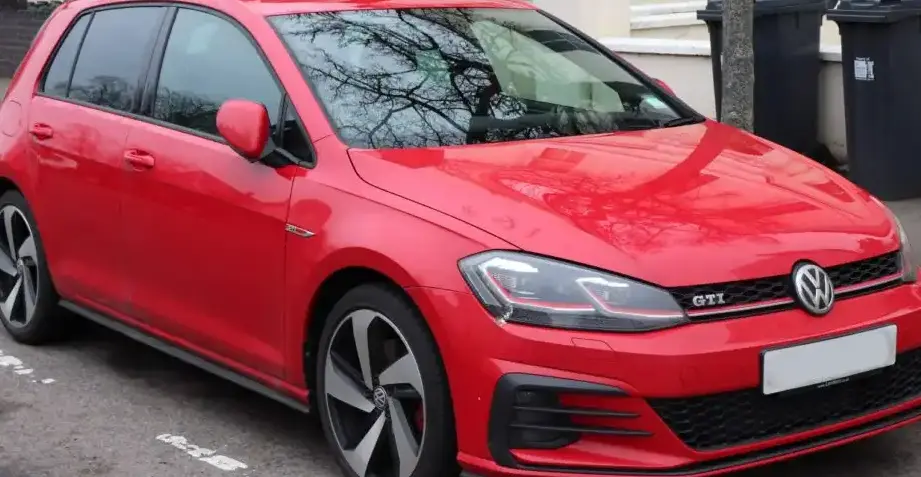
The Volkswagen Golf VII, produced from 2013 to 2020, represented a significant evolution of the iconic Golf lineage. Within the seventh generation, the 1.4 TSI (150 hp) variant with a 7-speed Dual Clutch Gearbox (DSG) and Active Cylinder Technology (ACT) occupied a key position in the lineup, offering a balance of performance, fuel efficiency, and technology. Production of this specific configuration ran from April 2014 to June 2017, primarily targeting European and global markets where fuel economy and refinement were highly valued. This model aimed to bridge the gap between the entry-level trims and the more powerful GTI, appealing to buyers seeking a sophisticated and practical hatchback.
Technical Specifications
| Brand | Volkswagen |
| Model | Golf |
| Generation | Golf VII (5-door) |
| Type (Engine) | 1.4 TSI (150 Hp) DSG ACT |
| Start of production | April, 2014 |
| End of production | June, 2017 |
| Powertrain Architecture | Internal Combustion engine |
| Body type | Hatchback |
| Seats | 5 |
| Doors | 5 |
| Fuel consumption (urban) | 5.8 l/100 km (40.6 US mpg, 48.7 UK mpg, 17.2 km/l) |
| Fuel consumption (extra urban) | 4.1 l/100 km (57.4 US mpg, 68.9 UK mpg, 24.4 km/l) |
| Fuel consumption (combined) | 4.7 l/100 km (50 US mpg, 60.1 UK mpg, 21.3 km/l) |
| CO2 emissions | 110 g/km |
| Fuel Type | Petrol (Gasoline) |
| Acceleration 0 – 100 km/h | 8.2 sec |
| Acceleration 0 – 62 mph | 8.2 sec |
| Acceleration 0 – 60 mph | 7.8 sec |
| Maximum speed | 216 km/h (134.22 mph) |
| Emission standard | Euro 6 |
| Weight-to-power ratio | 8.6 kg/Hp, 116.3 Hp/tonne |
| Weight-to-torque ratio | 5.2 kg/Nm, 193.8 Nm/tonne |
| Power | 150 Hp @ 5000-6000 rpm |
| Power per litre | 107.5 Hp/l |
| Torque | 250 Nm @ 1500-3500 rpm (184.39 lb.-ft. @ 1500-3500 rpm) |
| Engine layout | Front, Transverse |
| Engine Model/Code | CZDA, CHPB |
| Engine displacement | 1395 cm3 (85.13 cu. in.) |
| Number of cylinders | 4 |
| Engine configuration | Inline |
| Number of valves per cylinder | 4 |
| Fuel injection system | Direct injection |
| Engine aspiration | Turbocharger, Intercooler |
| Engine oil capacity | 4 l (4.23 US qt | 3.52 UK qt) |
| Kerb Weight | 1290 kg (2843.96 lbs.) |
| Max. weight | 1800 kg (3968.32 lbs.) |
| Max load | 510 kg (1124.36 lbs.) |
| Trunk (boot) space – minimum | 380 l (13.42 cu. ft.) |
| Trunk (boot) space – maximum | 1270 l (44.85 cu. ft.) |
| Fuel tank capacity | 50 l (13.21 US gal | 11 UK gal) |
| Length | 4255 mm (167.52 in.) |
| Width | 1799 mm (70.83 in.) |
| Height | 1452 mm (57.17 in.) |
| Wheelbase | 2637 mm (103.82 in.) |
| Front track | 1549 mm (60.98 in.) |
| Rear (Back) track | 1520 mm (59.84 in.) |
| Minimum turning circle | 10.9 m (35.76 ft.) |
| Drivetrain Architecture | Front wheel drive |
| Number of gears and type of gearbox | 7 gears, automatic transmission DSG |
| Front brakes | Ventilated discs |
| Rear brakes | Disc |
| Tires size | 195/65 R15 |
| Wheel rims size | 6J x 15 |
Introduction
The Golf VII 1.4 TSI 150 hp DSG ACT represented a sweet spot in the Golf range. Introduced in 2014 as part of the seventh-generation Golf (internally designated the 5G platform), this variant aimed to deliver a compelling blend of performance and efficiency. The inclusion of the 7-speed DSG transmission and Active Cylinder Technology (ACT) underscored Volkswagen’s commitment to advanced engineering. Positioned above the base 1.2 TSI models and below the more potent 1.8 TSI and GTI versions, it catered to drivers seeking a refined and capable daily driver.
Powertrain & Engine Architecture
At the heart of this Golf variant lies the EA211 series 1.4-liter turbocharged four-cylinder engine. Engine codes CZDA and CHPB were commonly used for this configuration. This engine utilizes direct fuel injection, delivering fuel directly into the combustion chamber for improved efficiency and power. The turbocharger, coupled with an intercooler, provides a significant boost in power output. The engine’s valvetrain features dual overhead camshafts and four valves per cylinder, optimizing gas flow for enhanced performance. The 7-speed DSG (Direct-Shift Gearbox) is a dual-clutch transmission that offers incredibly fast and smooth gear changes. The ACT system is a key feature, capable of deactivating two cylinders under light load conditions to reduce fuel consumption. This system seamlessly switches between four and two-cylinder operation, providing a noticeable improvement in fuel economy without sacrificing drivability.
Driving Characteristics
The 150 hp output, combined with 250 Nm (184 lb-ft) of torque, provides adequate performance for everyday driving. Acceleration from 0 to 100 km/h (0-62 mph) takes approximately 8.2 seconds. While not as quick as the higher-powered Golf variants, the 1.4 TSI offers a responsive and enjoyable driving experience. The DSG transmission contributes to this, providing quick and precise shifts. The gear ratios are tuned for a balance of acceleration and fuel efficiency. Compared to the manual transmission versions, the DSG offers smoother shifts and eliminates the need for clutch operation. However, some drivers may prefer the more engaging feel of a manual gearbox. Compared to the 1.8 TSI, the 1.4 TSI feels less powerful, particularly during overtaking maneuvers, but it compensates with superior fuel economy.
Equipment & Trim Levels
The Golf VII 1.4 TSI 150 hp DSG ACT typically came equipped with a generous amount of standard features. These included air conditioning, power windows, power mirrors, a touchscreen infotainment system, and alloy wheels. Higher trim levels offered additional features such as automatic climate control, a larger touchscreen display, navigation system, parking sensors, and upgraded upholstery. Interior upholstery was typically cloth, with optional leather available. Dashboard configurations were generally consistent across the range, with a focus on ergonomics and functionality. Optional extras included a panoramic sunroof, adaptive cruise control, and a premium sound system.
Chassis & Braking
The Golf VII utilized an independent suspension system, with MacPherson struts at the front and a multi-link setup at the rear. This configuration provides a comfortable ride and good handling characteristics. The chassis was tuned to balance comfort and agility. Braking systems varied depending on the trim level. Most 1.4 TSI models were equipped with ventilated front discs and solid rear discs. Anti-lock Braking System (ABS) was standard, along with Electronic Stability Control (ESC). Stabilizer bars were fitted to both the front and rear axles to reduce body roll during cornering. The weight distribution was well-balanced, contributing to the car’s stable handling.
Market Reception & Comparison
The Golf VII 1.4 TSI 150 hp DSG ACT was generally well-received by automotive critics. It was praised for its refined engine, smooth-shifting DSG transmission, and excellent fuel economy. Critics noted that it offered a good balance of performance and practicality. Compared to the 1.8 TSI, the 1.4 TSI was considered a more economical choice, while still providing a satisfying driving experience. The 1.2 TSI, while more affordable, lacked the performance of the 1.4 TSI. Fuel economy figures of around 4.7 l/100 km (50 US mpg) were consistently reported, making it an attractive option for drivers concerned about running costs. Reliability was generally good, although some owners reported minor issues with the DSG transmission.
Legacy
The 1.4 TSI engine, in various iterations, became a mainstay in the Volkswagen Group’s lineup for many years. The combination of turbocharging, direct injection, and cylinder deactivation technology proved to be a successful formula. The 7-speed DSG transmission also gained a reputation for its smoothness and efficiency. In the used car market, the Golf VII 1.4 TSI 150 hp DSG ACT remains a popular choice, offering a compelling blend of value, reliability, and practicality. Regular maintenance, particularly of the DSG transmission, is crucial to ensure long-term reliability. These models continue to be sought after by drivers looking for a well-rounded and efficient hatchback.