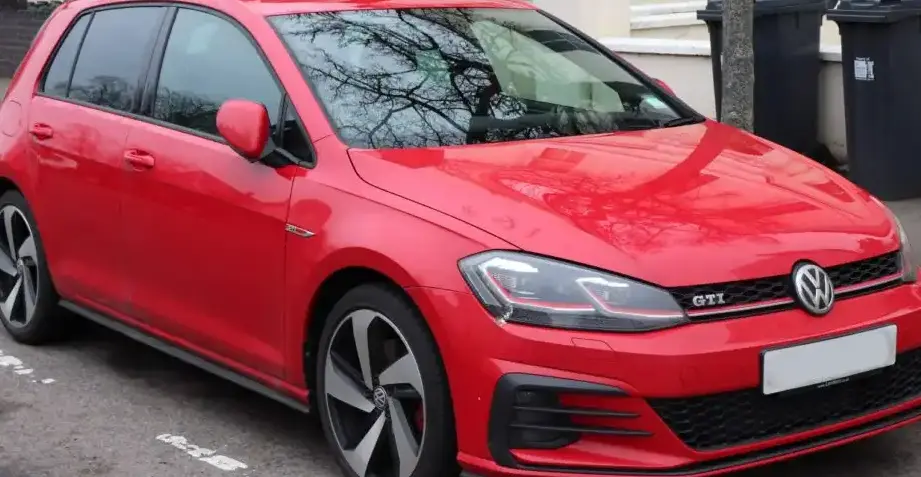
The Volkswagen Golf VII, produced from 2012 to 2020, represented a significant evolution of Volkswagen’s iconic hatchback. The 5-door variant, particularly the 1.6 TDI model with 105 horsepower, was a mainstay in the European market, offering a blend of fuel efficiency and practicality. Introduced in August 2012 and continuing through April 2014 in this specific configuration, this version occupied the lower-mid range of the Golf VII lineup, positioned as an economical choice for buyers prioritizing fuel costs and everyday usability. It was built on the Volkswagen Group’s MQB (Modular Transverse Matrix) platform, also known as the A3 platform, shared with models like the Audi A3 and SEAT Leon.
Technical Specifications
| Brand | Volkswagen |
| Model | Golf |
| Generation | Golf VII (5-door) |
| Type (Engine) | 1.6 TDI (105 Hp) |
| Start of production | August, 2012 |
| End of production | April, 2014 |
| Powertrain Architecture | Internal Combustion engine |
| Body type | Hatchback |
| Seats | 5 |
| Doors | 5 |
| Fuel consumption (urban) | 4.6 l/100 km (51.1 US mpg, 61.4 UK mpg, 21.7 km/l) |
| Fuel consumption (extra urban) | 3.3 l/100 km (71.3 US mpg, 85.6 UK mpg, 30.3 km/l) |
| Fuel consumption (combined) | 3.8 l/100 km (61.9 US mpg, 74.3 UK mpg, 26.3 km/l) |
| Fuel Type | Diesel |
| Acceleration 0 – 100 km/h | 10.7 sec |
| Acceleration 0 – 62 mph | 10.7 sec |
| Acceleration 0 – 60 mph | 10.2 sec |
| Maximum speed | 192 km/h (119.3 mph) |
| Weight-to-power ratio | 12.3 kg/Hp, 81.1 Hp/tonne |
| Weight-to-torque ratio | 5.2 kg/Nm, 193.1 Nm/tonne |
| Power | 105 Hp @ 3000-4000 rpm |
| Power per litre | 65.7 Hp/l |
| Torque | 250 Nm @ 1500-2750 rpm (184.39 lb.-ft. @ 1500-2750 rpm) |
| Engine layout | Front, Transverse |
| Engine Model/Code | CLHA |
| Engine displacement | 1598 cm3 (97.52 cu. in.) |
| Number of cylinders | 4 |
| Engine configuration | Inline |
| Fuel injection system | Diesel Commonrail |
| Engine aspiration | Turbocharger, Intercooler |
| Engine oil capacity | 4.7 l (4.97 US qt | 4.14 UK qt) |
| Kerb Weight | 1295 kg (2854.99 lbs.) |
| Max. weight | 1800 kg (3968.32 lbs.) |
| Max load | 505 kg (1113.33 lbs.) |
| Trunk (boot) space – minimum | 380 l (13.42 cu. ft.) |
| Trunk (boot) space – maximum | 1270 l (44.85 cu. ft.) |
| Fuel tank capacity | 50 l (13.21 US gal | 11 UK gal) |
| Length | 4255 mm (167.52 in.) |
| Width | 1799 mm (70.83 in.) |
| Height | 1452 mm (57.17 in.) |
| Wheelbase | 2637 mm (103.82 in.) |
| Front track | 1549 mm (60.98 in.) |
| Rear (Back) track | 1520 mm (59.84 in.) |
| Minimum turning circle | 10.9 m (35.76 ft.) |
| Drivetrain Architecture | The Internal combustion engine (ICE) drives the front wheels of the vehicle. |
| Drive wheel | Front wheel drive |
| Number of gears and type of gearbox | 5 gears, manual transmission |
| Front brakes | Ventilated discs |
| Assisting systems | ABS (Anti-lock braking system) |
| Steering type | Steering rack and pinion |
| Power steering | Electric Steering |
Powertrain & Engine Architecture
The heart of this Golf VII variant is the 1.6-liter (1598 cc) CLHA engine, a four-cylinder inline diesel. This engine utilizes a common rail direct injection system, delivering fuel at extremely high pressure for optimized combustion. A turbocharger with an intercooler is employed to boost power output and improve efficiency. The CLHA engine is known for its relatively simple design, contributing to its reliability. The engine produces 105 horsepower at 3000-4000 rpm and 250 Nm (184 lb-ft) of torque between 1500-2750 rpm. This torque curve provides good low-end responsiveness, making it suitable for everyday driving. The engine is paired with a 5-speed manual transmission, which was the standard offering for this trim level. While a DSG (Direct-Shift Gearbox) automatic was available on other Golf VII models, it wasn’t typically paired with this specific engine and power output.
Driving Characteristics
The 1.6 TDI 105 hp Golf VII offers a practical and economical driving experience. Acceleration is adequate for most situations, with a 0-60 mph time of around 10.2 seconds. However, it’s not a particularly sporty vehicle. The focus is on fuel efficiency and comfortable cruising. The 5-speed manual transmission is well-matched to the engine’s torque curve, allowing for smooth gear changes. Compared to the more powerful 2.0 TDI variants, this model feels noticeably slower, especially when fully loaded or tackling steep inclines. The manual gearbox also provides a more engaging driving experience than the DSG automatic found in higher-spec models. The gear ratios are tuned for economy, meaning highway cruising is relaxed, but quick overtaking maneuvers require downshifting.
Equipment & Trim Levels
The 1.6 TDI 105 hp Golf VII typically came with a reasonable level of standard equipment. This included air conditioning, electric front windows, a basic audio system with USB connectivity, and ABS brakes. Safety features such as multiple airbags and electronic stability control were also standard. Interior upholstery was typically cloth, and the dashboard featured a functional but relatively simple design. Optional extras included alloy wheels, a touchscreen infotainment system, parking sensors, and cruise control. Trim levels varied slightly depending on the market, but generally, this engine was offered in base or mid-range trims, focusing on value for money.
Chassis & Braking
The Golf VII’s chassis is well-engineered, providing a comfortable ride and decent handling. The front suspension utilizes MacPherson struts, while the rear suspension employs a multi-link setup. This configuration offers a good balance between ride comfort and handling precision. The 1.6 TDI models typically featured ventilated disc brakes on the front wheels and drum brakes on the rear. This setup was adequate for the vehicle’s weight and performance. Electric power steering provides light and precise steering feel. Stabilizer bars were fitted to both the front and rear axles to reduce body roll during cornering.
Market Reception & Comparison
The 1.6 TDI 105 hp Golf VII was well-received in Europe as a practical and economical choice. Critics praised its fuel efficiency and comfortable ride, but noted its lack of outright performance. Compared to the more powerful Golf variants, such as the 2.0 TDI, it offered a lower price point but sacrificed performance. Against competitors like the Ford Focus and Opel Astra, the Golf VII 1.6 TDI held its own, offering a well-rounded package with a reputation for reliability. Fuel economy was a key selling point, consistently achieving around 62 mpg in combined driving conditions. Reliability was generally good, although some owners reported issues with the diesel particulate filter (DPF) system, a common concern with modern diesel engines.
Legacy
The 1.6 TDI engine, particularly the CLHA variant, has proven to be a relatively reliable powertrain when properly maintained. However, as with any diesel engine, regular servicing and the use of high-quality oil are crucial. The Golf VII 1.6 TDI remains a popular choice on the used car market, offering a cost-effective and fuel-efficient option for buyers. While not the most exciting vehicle to drive, it provides a practical and dependable mode of transportation. The availability of spare parts is good, and the relatively simple engine design makes it relatively easy to repair. Today, these models represent a good value proposition for those seeking a reliable and economical hatchback.