Technical Specifications
| Brand | Volkswagen |
| Model | Golf |
| Generation | Golf VII (5-door) |
| Type (Engine) | 1.6 TDI (110 Hp) DSG |
| Start of production | June, 2013 |
| End of production | April, 2017 |
| Powertrain Architecture | Internal Combustion engine |
| Body type | Hatchback |
| Seats | 5 |
| Doors | 5 |
| Fuel consumption (urban) | 4.5 l/100 km (52.3 US mpg, 62.8 UK mpg, 22.2 km/l) |
| Fuel consumption (extra urban) | 3.6 l/100 km (65.3 US mpg, 78.5 UK mpg, 27.8 km/l) |
| Fuel consumption (combined) | 3.9 l/100 km (60.3 US mpg, 72.4 UK mpg, 25.6 km/l) |
| CO2 emissions | 102 g/km |
| Fuel Type | Diesel |
| Acceleration 0 – 100 km/h | 10.5 sec |
| Acceleration 0 – 62 mph | 10.5 sec |
| Acceleration 0 – 60 mph | 10 sec |
| Maximum speed | 195 km/h (121.17 mph) |
| Emission standard | Euro 6 |
| Weight-to-power ratio | 12 kg/Hp, 83.5 Hp/tonne |
| Weight-to-torque ratio | 5.3 kg/Nm, 189.8 Nm/tonne |
| Power | 110 Hp @ 3200-4000 rpm |
| Power per litre | 68.8 Hp/l |
| Torque | 250 Nm @ 1500-3000 rpm (184.39 lb.-ft. @ 1500-3000 rpm) |
| Engine layout | Front, Transverse |
| Engine Model/Code | CRKB, CXXB |
| Engine displacement | 1598 cm3 (97.52 cu. in.) |
| Number of cylinders | 4 |
| Engine configuration | Inline |
| Number of valves per cylinder | 4 |
| Fuel injection system | Diesel Commonrail |
| Engine aspiration | Turbocharger, Intercooler |
| Engine oil capacity | 4 l (4.23 US qt | 3.52 UK qt) |
| Kerb Weight | 1317 kg (2903.49 lbs.) |
| Max. weight | 1820 kg (4012.41 lbs.) |
| Max load | 503 kg (1108.93 lbs.) |
| Trunk (boot) space – minimum | 380 l (13.42 cu. ft.) |
| Trunk (boot) space – maximum | 1270 l (44.85 cu. ft.) |
| Fuel tank capacity | 50 l (13.21 US gal | 11 UK gal) |
| Length | 4255 mm (167.52 in.) |
| Width | 1799 mm (70.83 in.) |
| Height | 1452 mm (57.17 in.) |
| Wheelbase | 2637 mm (103.82 in.) |
| Front track | 1549 mm (60.98 in.) |
| Rear (Back) track | 1520 mm (59.84 in.) |
| Minimum turning circle | 10.9 m (35.76 ft.) |
| Drivetrain Architecture | The Internal combustion engine (ICE) drives the front wheels of the vehicle. |
| Drive wheel | Front wheel drive |
| Number of gears and type of gearbox | 7 gears, automatic transmission DSG |
| Front brakes | Ventilated discs |
| Rear brakes | Disc |
| Assisting systems | ABS (Anti-lock braking system) |
| Steering type | Steering rack and pinion |
| Tires size | 195/65 R15 |
| Wheel rims size | 6J x 15 |
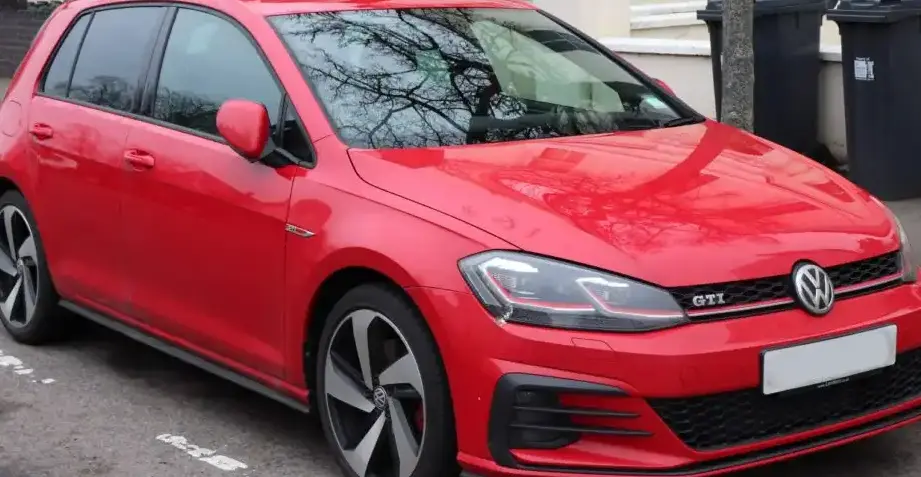
The Volkswagen Golf VII 1.6 TDI DSG, launched in June 2013 and continuing through April 2017, represented a significant entry point into the seventh-generation Golf range, particularly in European markets. Positioned as a fuel-efficient and practical option, it catered to drivers prioritizing economy and usability over outright performance. This variant utilized a 1.6-liter turbocharged diesel engine paired with Volkswagen’s dual-clutch DSG (Direct-Shift Gearbox) automatic transmission. It was a key model in the Golf VII lineup, which was based on the modular transverse matrix (MQB) platform, offering improvements in space, weight reduction, and technology compared to its predecessor.
Powertrain & Engine Architecture
The Golf VII 1.6 TDI DSG is powered by a 1.6-liter, four-cylinder diesel engine, designated with engine codes CRKB and CXXB. This engine employs a common rail direct injection system, injecting fuel directly into the combustion chamber at high pressure for enhanced efficiency and reduced emissions. A turbocharger, coupled with an intercooler, further boosts performance by increasing air intake. The engine generates 110 horsepower between 3200 and 4000 rpm, and 250 Nm (184 lb-ft) of torque from 1500 to 3000 rpm. The torque curve is notably flat, providing responsive power delivery in typical driving scenarios. To meet Euro 6 emission standards, the engine incorporates a diesel particulate filter (DPF). The engine is mated to Volkswagen’s 7-speed DSG dual-clutch transmission, known for its quick and smooth gear changes, contributing to both performance and fuel economy. The DSG offers both automatic and manual shifting modes, allowing drivers to tailor their driving experience.
Driving Characteristics
The 1.6 TDI DSG version of the Golf VII provides a comfortable and refined driving experience. While not designed for sporty performance, it delivers sufficient power for everyday commuting and longer trips. Acceleration from 0 to 100 km/h (0-62 mph) takes approximately 10.5 seconds, with a top speed of 195 km/h (121 mph). The DSG transmission ensures seamless gear transitions, and the engine’s torque provides adequate power for overtaking. Compared to more powerful Golf models like the GTI or those with larger diesel engines, the 1.6 TDI feels less spirited. However, its fuel efficiency is a major benefit. The DSG’s gear ratios are optimized for both fuel economy and drivability, with taller gears for relaxed cruising and shorter gears for quicker acceleration when needed. The suspension is tuned for comfort, providing a smooth ride on most road surfaces.
Equipment & Trim Levels
The Golf VII 1.6 TDI DSG generally came equipped with a solid set of standard features. These typically included air conditioning, power windows, central locking, a touchscreen infotainment system, and alloy wheels. Safety features like ABS, ESP (Electronic Stability Program), and multiple airbags were also standard. Depending on the market and optional packages chosen, additional features could include parking sensors, automatic headlights and wipers, cruise control, and upgraded infotainment systems with navigation. Interior upholstery was usually cloth, with leather or Alcantara options available at an extra cost. This variant generally occupied a mid-range position in the Golf VII lineup, offering a good balance of features and affordability.
Chassis & Braking
The Golf VII 1.6 TDI DSG features a MacPherson strut front suspension and a multi-link rear suspension. This configuration balances ride comfort and handling. The front brakes are ventilated discs, while the rear brakes are solid discs. ABS (Anti-lock Braking System) is standard, improving braking performance and stability. The steering system is a rack-and-pinion type with electric power assistance, providing precise and responsive steering feel. The chassis is designed to minimize weight, enhancing fuel efficiency and handling. Suspension components are tuned to match the weight and power characteristics of the 1.6 TDI engine, delivering a comfortable and controlled ride.
Market Reception & Comparison
The Golf VII 1.6 TDI DSG received generally positive reviews from automotive critics. It was praised for its fuel efficiency, comfortable ride, and refined driving experience. Some critics noted the engine’s lack of performance compared to higher-powered Golf variants. Compared to the 1.4 TSI petrol engine, the 1.6 TDI offered better fuel economy but less spirited acceleration. When compared to other diesel Golf models, such as the 2.0 TDI, it provided a more affordable entry point but with reduced power and performance. The DSG transmission was also a highlight, offering smooth and efficient gear changes. In terms of reliability, the 1.6 TDI engine proved to be generally robust, though owners should prioritize maintaining the DPF system to prevent potential issues.
Legacy
The Volkswagen Golf VII 1.6 TDI DSG remains a popular choice in the used car market, particularly for buyers seeking a fuel-efficient and reliable compact hatchback. The 1.6 TDI engine, while not the most powerful, has proven durable and relatively inexpensive to maintain. The DSG transmission, when properly maintained, is also known for its longevity. However, potential buyers should be aware of the importance of regular servicing, including oil changes and DPF maintenance. The Golf VII’s overall build quality and modern features continue to make it a desirable option, and its reputation for reliability ensures it remains a competitive choice in the used car market.