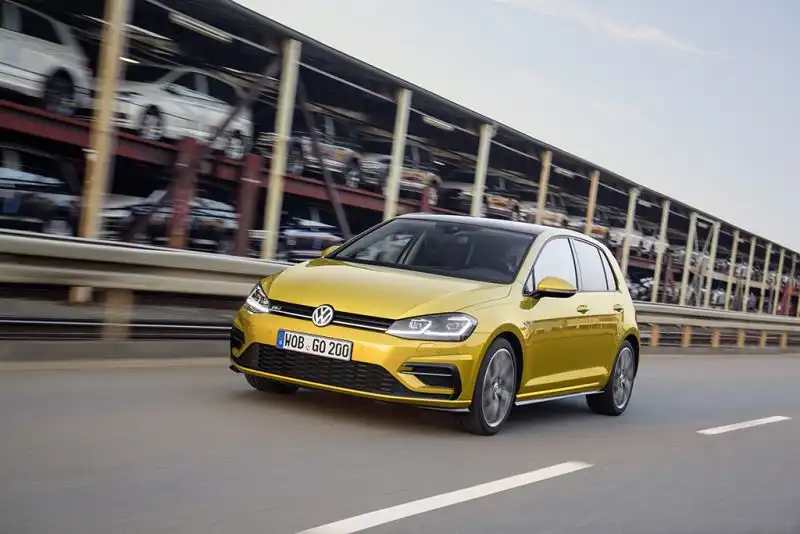
The Volkswagen Golf VII, specifically the 5-door hatchback produced from 2017 to 2020 following a mid-cycle facelift, represented a significant evolution of Volkswagen’s iconic compact car. Among the various engine and transmission combinations offered, the 1.4 TSI producing 147 horsepower was a popular choice, positioned as a strong mid-range option balancing performance, fuel efficiency, and affordability. This variant utilized Volkswagen’s well-regarded turbocharged engine technology and was primarily sold in European and Asian markets, though limited numbers were available in North America as well. It built upon the foundation of the Mk7 Golf (internally designated the 5G platform), known for its refinement and practicality.
Technical Specifications
| Brand | Volkswagen |
| Model | Golf |
| Generation | Golf VII (5-door, facelift 2017) |
| Type (Engine) | 1.4 TSI (147 Hp) |
| Start of production | 2017 |
| End of production | 2020 |
| Powertrain Architecture | Internal Combustion engine |
| Body type | Hatchback |
| Seats | 5 |
| Doors | 5 |
| Fuel consumption (urban) | 8.2 l/100 km (28.7 US mpg, 34.4 UK mpg, 12.2 km/l) |
| Fuel consumption (extra urban) | 6.3 l/100 km (37.3 US mpg, 44.8 UK mpg, 15.9 km/l) |
| Fuel consumption (combined) | 7.4 l/100 km (31.8 US mpg, 38.2 UK mpg, 13.5 km/l) |
| Fuel Type | Petrol (Gasoline) |
| Weight-to-power ratio | 9.1 kg/Hp, 110 Hp/tonne |
| Weight-to-torque ratio | 5.3 kg/Nm, 187.1 Nm/tonne |
| Power | 147 Hp @ 5000 rpm |
| Power per litre | 105.4 Hp/l |
| Torque | 250 Nm @ 1500-3500 rpm (184.39 lb.-ft. @ 1500-3500 rpm) |
| Engine layout | Front, Transverse |
| Engine Model/Code | DGXA |
| Engine displacement | 1395 cm3 (85.13 cu. in.) |
| Number of cylinders | 4 |
| Engine configuration | Inline |
| Cylinder Bore | 74.5 mm (2.93 in.) |
| Piston Stroke | 80 mm (3.15 in.) |
| Compression ratio | 10:1 |
| Number of valves per cylinder | 4 |
| Fuel injection system | Direct injection |
| Engine aspiration | Turbocharger, Intercooler |
| Valvetrain | DOHC |
| Engine oil capacity | 4 l (4.23 US qt | 3.52 UK qt) |
| Coolant | 10 l (10.57 US qt | 8.8 UK qt) |
| Kerb Weight | 1336 kg (2945.38 lbs.) |
| Max. weight | 1860 kg (4100.6 lbs.) |
| Max load | 524 kg (1155.22 lbs.) |
| Trunk (boot) space – minimum | 493 l (17.41 cu. ft.) |
| Trunk (boot) space – maximum | 1521 l (53.71 cu. ft.) |
| Fuel tank capacity | 50 l (13.21 US gal | 11 UK gal) |
| Length | 4258 mm (167.64 in.) |
| Width | 1799 mm (70.83 in.) |
| Height | 1477 mm (58.15 in.) |
| Wheelbase | 2637 mm (103.82 in.) |
| Front track | 1549 mm (60.98 in.) |
| Rear (Back) track | 1520 mm (59.84 in.) |
| Ride height (ground clearance) | 137 mm (5.39 in.) |
| Drag coefficient (Cd) | 0.29 |
| Minimum turning circle (turning diameter) | 10.9 m (35.76 ft.) |
| Drivetrain Architecture | The Internal combustion engine (ICE) drives the front wheels of the vehicle. |
| Drive wheel | Front wheel drive |
| Number of gears and type of gearbox | 6 gears, manual transmission |
| Front suspension | Independent type McPherson |
| Rear suspension | Independent multi-link suspension |
| Front brakes | Ventilated discs, 287×25 mm |
| Rear brakes | Disc, 272×10 mm |
| Assisting systems | ABS (Anti-lock braking system) |
| Steering type | Steering rack and pinion |
| Power steering | Electric Steering |
| Tires size | 205/55 R16 |
| Wheel rims size | 6.5J x 16 |
Powertrain & Engine Architecture
The heart of this Golf variant is the 1.4-liter TSI (Turbocharged Stratified Injection) engine, specifically the DGXA engine code. This engine is a four-cylinder, inline configuration, featuring direct fuel injection and a turbocharger with an intercooler. Direct injection allows for precise fuel delivery, improving efficiency and reducing emissions. The turbocharger, a key component, forces more air into the cylinders, boosting power output. The engine utilizes a dual overhead camshaft (DOHC) valvetrain with four valves per cylinder, optimizing airflow for enhanced performance. The 1.4 TSI engine is known for its responsiveness and relatively smooth operation. The 6-speed manual transmission was standard, offering precise gear changes and driver engagement. The engine’s electronic engine management system carefully controls fuel injection, ignition timing, and turbocharger boost to optimize performance and fuel economy.
Driving Characteristics
The 147 horsepower and 250 Nm (184 lb-ft) of torque provided by the 1.4 TSI engine, coupled with the 6-speed manual transmission, delivered a balanced driving experience. Acceleration from 0 to 60 mph was typically around 8.8 seconds, making it suitable for everyday driving and occasional highway passing. While not as quick as the higher-performance Golf models like the GTI, the 1.4 TSI offered sufficient power for most drivers. The manual transmission allowed for good control over the engine’s power band, and the gear ratios were well-suited for both city and highway driving. Compared to the 1.0 TSI entry-level engine, the 1.4 TSI provided a noticeable increase in power and responsiveness. It also felt more refined than the diesel options, offering a smoother and quieter driving experience.
Equipment & Trim Levels
The 1.4 TSI variant typically came equipped with a solid set of standard features. These included air conditioning, power windows and mirrors, a touchscreen infotainment system with Bluetooth connectivity, and alloy wheels. Higher trim levels, such as Comfortline and Highline, added features like automatic climate control, parking sensors, a larger touchscreen display, and upgraded interior upholstery. Optional extras included a panoramic sunroof, adaptive cruise control, and a premium sound system. Interior upholstery was typically cloth, with leather options available on higher trims. The dashboard layout was clean and functional, with a focus on ergonomics.
Chassis & Braking
The Golf VII utilized an independent suspension system, with McPherson struts at the front and a multi-link setup at the rear. This provided a comfortable ride and good handling characteristics. The front brakes were ventilated discs, while the rear brakes were solid discs. ABS (Anti-lock Braking System) was standard, enhancing safety during emergency braking. The steering was electric power-assisted, providing a light and precise feel. The chassis was designed to be rigid and lightweight, contributing to the car’s overall handling and efficiency.
Market Reception & Comparison
The 1.4 TSI Golf VII was generally well-received by automotive critics. It was praised for its balanced performance, fuel efficiency, and comfortable ride. Fuel economy figures of around 32-38 mpg (combined) were considered competitive for its class. Compared to the 1.0 TSI, the 1.4 TSI offered a significant performance upgrade without a substantial increase in fuel consumption. The diesel variants, while offering excellent fuel economy, were often criticized for their higher maintenance costs and potential emissions issues. The 1.4 TSI struck a good balance between these factors, making it a popular choice for many buyers.
Legacy
The 1.4 TSI engine proved to be a reliable and durable powertrain when properly maintained. While some early versions of the TSI engines experienced issues with carbon buildup on the intake valves, these were largely addressed in later iterations. Today, used Golf VII 1.4 TSI models are readily available and generally offer good value for money. Regular maintenance, including oil changes and spark plug replacements, is crucial for ensuring long-term reliability. The Golf VII, and particularly the 1.4 TSI variant, remains a popular choice for those seeking a practical, efficient, and enjoyable compact car.