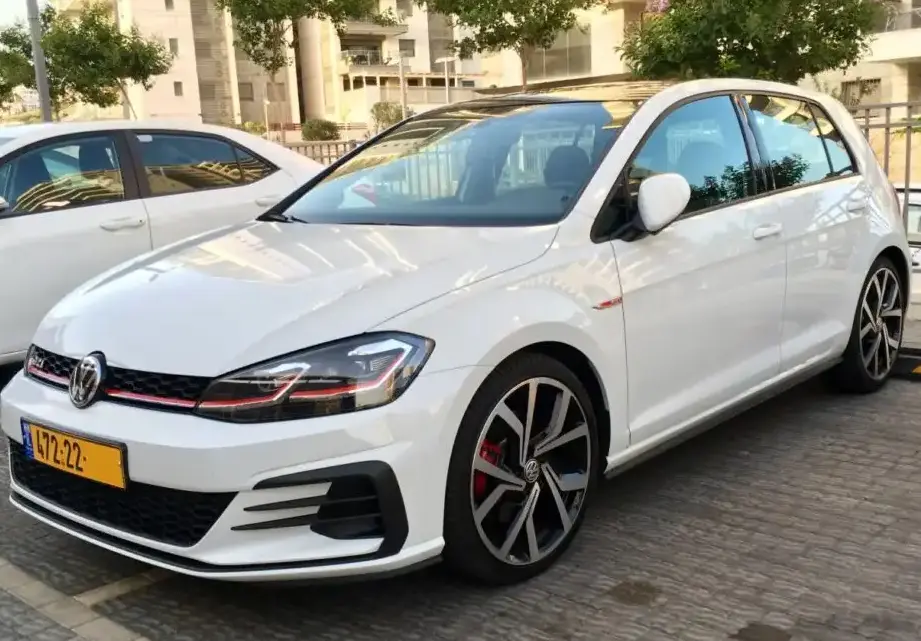
The Volkswagen Golf VII, specifically the 5-door hatchback produced during the 2017-2018 model years, represented a significant evolution of the iconic Golf lineage. The GTI 2.0 TSI (220 hp) variant, equipped with a dual-clutch DSG transmission, occupied a sweet spot in the lineup, offering a compelling blend of performance, practicality, and technology. This facelifted version of the Mk7 Golf, internally designated the 5G, built upon the success of its predecessor with refined styling, updated infotainment, and enhanced driver assistance systems. It served as a key model for Volkswagen in the European and North American markets, appealing to enthusiasts seeking a sporty yet versatile compact car.
Technical Specifications
| Brand | Volkswagen |
| Model | Golf |
| Generation | Golf VII (5-door, facelift 2017) |
| Type (Engine) | GTI 2.0 TSI (220 Hp) DSG |
| Start of production | 2017 |
| End of production | 2018 |
| Powertrain Architecture | Internal Combustion engine |
| Body type | Hatchback |
| Seats | 5 |
| Doors | 5 |
| Fuel consumption (economy) – urban (EPA) | 9.8 l/100 km (24 US mpg, 28.8 UK mpg, 10.2 km/l) |
| Fuel consumption (economy) – extra urban (EPA) | 7.4 l/100 km (31.8 US mpg, 38.2 UK mpg, 13.5 km/l) |
| Fuel consumption (economy) – combined (EPA) | 8.7 l/100 km (27 US mpg, 32.5 UK mpg, 11.5 km/l) |
| Fuel Type | Petrol (Gasoline) |
| Weight-to-power ratio | 6.5 kg/Hp, 155 Hp/tonne |
| Weight-to-torque ratio | 4.1 kg/Nm, 246.7 Nm/tonne |
| Power | 220 Hp @ 4700 rpm |
| Power per litre | 110.9 Hp/l |
| Torque | 350 Nm @ 1500 rpm (258.15 lb.-ft. @ 1500 rpm) |
| Engine layout | Front, Transverse |
| Engine Model/Code | EA888 / CXCB |
| Engine displacement | 1984 cm3 (121.07 cu. in.) |
| Number of cylinders | 4 |
| Engine configuration | Inline |
| Cylinder Bore | 82.5 mm (3.25 in.) |
| Piston Stroke | 92.8 mm (3.65 in.) |
| Compression ratio | 9.6:1 |
| Number of valves per cylinder | 4 |
| Fuel injection system | Direct injection |
| Engine aspiration | Turbocharger, Intercooler |
| Valvetrain | DOHC |
| Engine oil capacity | 5.7 l (6.02 US qt | 5.02 UK qt) |
| Coolant | 8 l (8.45 US qt | 7.04 UK qt) |
| Kerb Weight | 1419 kg (3128.36 lbs.) |
| Max. weight | 1950 kg (4299.01 lbs.) |
| Max load | 531 kg (1170.65 lbs.) |
| Trunk (boot) space – minimum | 380 l (13.42 cu. ft.) |
| Trunk (boot) space – maximum | 1270 l (44.85 cu. ft.) |
| Fuel tank capacity | 50 l (13.21 US gal | 11 UK gal) |
| Length | 4268 mm (168.03 in.) |
| Width | 1799 mm (70.83 in.) |
| Width including mirrors | 2027 mm (79.8 in.) |
| Height | 1467 mm (57.76 in.) |
| Wheelbase | 2631 mm (103.58 in.) |
| Front track | 1538 mm (60.55 in.) |
| Rear (Back) track | 1516 mm (59.69 in.) |
| Ride height (ground clearance) | 129 mm (5.08 in.) |
| Drag coefficient (Cd) | 0.31 |
| Minimum turning circle (turning diameter) | 10.9 m (35.76 ft.) |
| Drivetrain Architecture | The Internal combustion engine (ICE) drives the front wheels of the vehicle. |
| Drive wheel | Front wheel drive |
| Number of gears and type of gearbox | 6 gears, automatic transmission DSG |
| Front suspension | Independent, type McPherson with coil spring and anti-roll bar |
| Rear suspension | Independent multi-link spring suspension with stabilizer |
| Front brakes | Ventilated discs, 312×30 mm |
| Rear brakes | Disc, 272×10 mm |
| Assisting systems | ABS (Anti-lock braking system) |
| Steering type | Steering rack and pinion |
| Power steering | Electric Steering |
| Tires size | 225/40 R18 |
| Wheel rims size | 7.5J x 18 |
Powertrain & Engine Architecture
At the heart of the Golf VII GTI 2.0 TSI DSG lies the EA888 engine, specifically the CXCB variant. This 1984cc (121.07 cu. in.) turbocharged and direct-injected inline-four engine was a cornerstone of Volkswagen’s performance strategy. The engine featured a cast iron block and an aluminum cylinder head, incorporating double overhead camshafts (DOHC) and four valves per cylinder. Direct injection, coupled with a sophisticated turbocharging system and intercooler, allowed for precise fuel delivery and optimized air intake, resulting in a responsive and efficient power output. The 220 horsepower peak arrived at 4700 rpm, while the 350 Nm (258.15 lb.-ft.) of torque was readily available from just 1500 rpm. The dual-clutch DSG (Direct-Shift Gearbox) transmission, a 6-speed unit in this application, provided incredibly quick and smooth gear changes, enhancing both acceleration and fuel economy. The DSG’s programming was tuned for a balance between sporty performance and everyday drivability.
Driving Characteristics
The Golf GTI 2.0 TSI DSG offered a noticeably different driving experience compared to the base Golf models or even the manual transmission GTI variants. The DSG transmission eliminated the need for clutch operation, resulting in seamless acceleration and a more relaxed driving experience, particularly in urban traffic. While the manual GTI offered a more engaging feel for driving enthusiasts, the DSG version provided quicker acceleration times due to its lightning-fast shifts. The power delivery was linear and predictable, with the turbocharger providing a noticeable boost in mid-range acceleration. The suspension, tuned for a balance between comfort and handling, provided a composed ride even on less-than-perfect road surfaces. The steering was precise and well-weighted, offering good feedback to the driver.
Equipment & Trim Levels
The GTI 2.0 TSI DSG typically came well-equipped as standard. Key features included sport seats upholstered in the classic GTI plaid fabric, a leather-wrapped multi-function steering wheel, automatic climate control, and a touchscreen infotainment system with Apple CarPlay and Android Auto compatibility. Optional extras included adaptive dampers (DCC), a panoramic sunroof, and upgraded sound systems. The interior trim was typically finished with brushed aluminum accents, adding a touch of sophistication to the sporty cabin. The 2017 facelift brought improvements to the infotainment system, with a larger touchscreen and enhanced connectivity features.
Chassis & Braking
The Golf GTI’s chassis was designed to handle the increased power output of the 2.0 TSI engine. The front suspension utilized a McPherson strut design with coil springs and an anti-roll bar, while the rear suspension employed a more sophisticated multi-link setup, also with a stabilizer bar. This configuration provided excellent handling and stability. The braking system consisted of ventilated discs at the front and solid discs at the rear, providing ample stopping power. ABS (Anti-lock Braking System) was standard, enhancing safety in emergency braking situations. The GTI also featured a slightly lowered ride height compared to the standard Golf, further improving its handling characteristics.
Market Reception & Comparison
The Golf VII GTI 2.0 TSI DSG was widely praised by automotive critics for its blend of performance, practicality, and refinement. It was often lauded as a benchmark in the hot hatch segment. Compared to the lower-powered Golf variants, the GTI offered a significant performance upgrade, while remaining relatively fuel-efficient. The DSG transmission was generally well-received, although some enthusiasts preferred the engagement of a manual gearbox. In terms of reliability, the EA888 engine proved to be generally robust, although some owners reported issues with the DSG transmission, particularly early units. Fuel economy figures were respectable, averaging around 27 US mpg in combined driving conditions.
Legacy
The Volkswagen Golf VII GTI 2.0 TSI DSG remains a popular choice in the used car market. Its combination of performance, practicality, and build quality has ensured its enduring appeal. The EA888 engine, in this configuration, is known for its reliability and tunability, making it a favorite among enthusiasts. While the DSG transmission requires regular maintenance, it generally proves to be a durable and efficient component. The Golf VII GTI continues to be regarded as a modern classic, representing a high point in the evolution of the hot hatch.