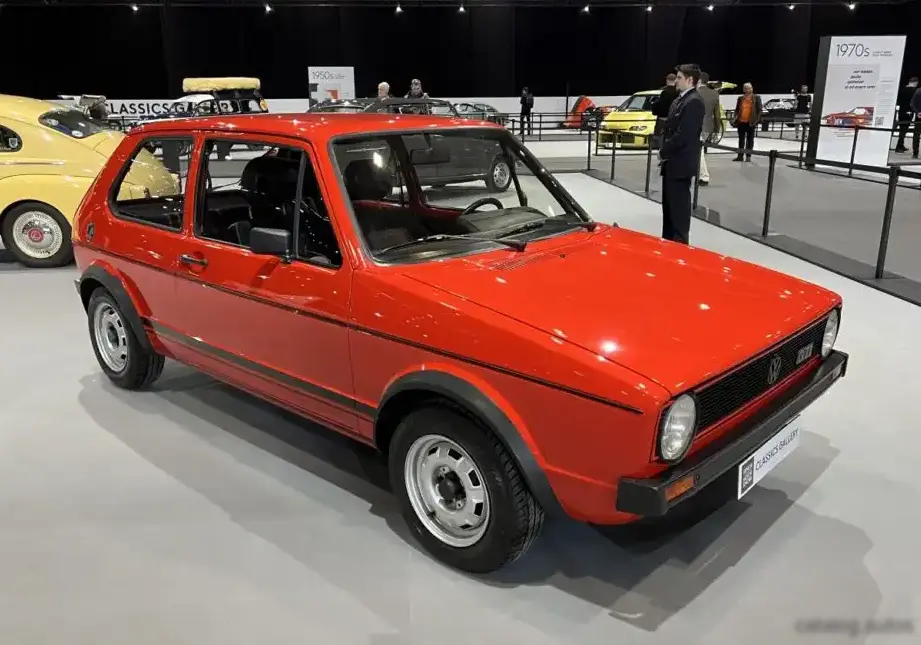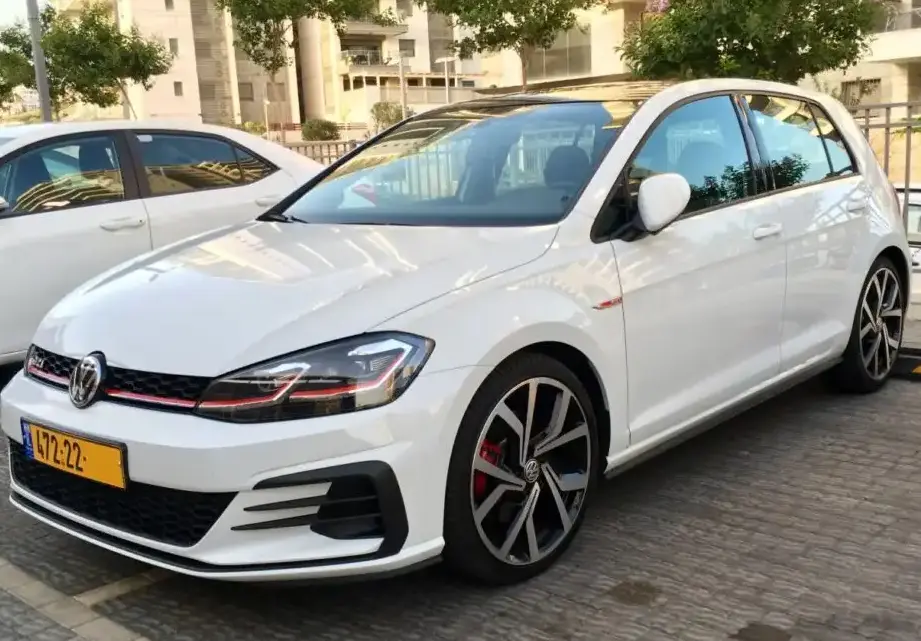
The Volkswagen Golf VII, specifically the 5-door hatchback produced during the 2017-2018 facelift, represented a significant evolution of the iconic Golf lineage. Within this generation, the GTI 2.0 TSI variant, equipped with a 230 horsepower turbocharged engine and a dual-clutch DSG (Direct-Shift Gearbox) transmission, occupied a sweet spot in the performance-oriented trim levels. Positioned above the base Golf models and below the more focused Golf R, the 230 hp GTI aimed to deliver a blend of everyday usability, engaging driving dynamics, and accessible performance. Production of this specific configuration spanned from February 2017 to May 2018, building upon the foundation of the A7 (Golf VII) platform, also known as the PQ25.
Technical Specifications
| Brand | Volkswagen |
| Model | Golf |
| Generation | Golf VII (5-door, facelift 2017) |
| Type (Engine) | GTI 2.0 TSI (230 Hp) DSG |
| Start of production | February, 2017 |
| End of production | May, 2018 |
| Powertrain Architecture | Internal Combustion engine |
| Body type | Hatchback |
| Seats | 5 |
| Doors | 5 |
| Fuel consumption (urban) | 8.1-8.2 l/100 km (29 – 28.7 US mpg) |
| Fuel consumption (extra urban) | 5.3-5.4 l/100 km (44.4 – 43.6 US mpg) |
| Fuel consumption (combined) | 6.3-6.4 l/100 km (37.3 – 36.8 US mpg) |
| CO2 emissions | 145-148 g/km |
| Fuel Type | Petrol (Gasoline) |
| Acceleration 0 – 100 km/h | 6.4 sec |
| Acceleration 0 – 62 mph | 6.4 sec |
| Acceleration 0 – 60 mph | 6.1 sec |
| Maximum speed | 248 km/h (154.1 mph) |
| Emission standard | Euro 6 |
| Weight-to-power ratio | 5.8 kg/Hp |
| Weight-to-torque ratio | 3.8 kg/Nm |
| Power | 230 Hp @ 4700-6200 rpm |
| Torque | 350 Nm @ 1500-4600 rpm (258.15 lb.-ft. @ 1500-4600 rpm) |
| Engine layout | Front, Transverse |
| Engine Model/Code | EA888 / CHHA, CXDB |
| Engine displacement | 1984 cm3 (121.07 cu. in.) |
| Number of cylinders | 4 |
| Engine configuration | Inline |
| Cylinder Bore | 82.5 mm (3.25 in.) |
| Piston Stroke | 92.8 mm (3.65 in.) |
| Compression ratio | 9.6:1 |
| Number of valves per cylinder | 4 |
| Fuel injection system | Direct injection and Multi-port manifold injection |
| Engine aspiration | Turbocharger, Intercooler |
| Valvetrain | DOHC |
| Engine oil capacity | 5.7 l (6.02 US qt | 5.02 UK qt) |
| Kerb Weight | 1341 kg (2956.4 lbs.) |
| Max. weight | 1870 kg (4122.64 lbs.) |
| Max load | 529 kg (1166.25 lbs.) |
| Trunk (boot) space – minimum | 380 l (13.42 cu. ft.) |
| Trunk (boot) space – maximum | 1270 l (44.85 cu. ft.) |
| Fuel tank capacity | 50 l (13.21 US gal | 11 UK gal) |
| Max. roof load | 75 kg (165.35 lbs.) |
| Permitted trailer load with brakes (8%) | 1800 kg (3968.32 lbs.) |
| Permitted trailer load with brakes (12%) | 1600 kg (3527.4 lbs.) |
| Permitted trailer load without brakes | 690 kg (1521.19 lbs.) |
| Permitted towbar download | 80 kg (176.37 lbs.) |
| Length | 4268 mm (168.03 in.) |
| Width | 1799 mm (70.83 in.) |
| Width including mirrors | 2027 mm (79.8 in.) |
| Height | 1482 mm (58.35 in.) |
| Wheelbase | 2626 mm (103.39 in.) |
| Front track | 1527-1550 mm (60.12 – 61.02 in.) |
| Rear track | 1503-1521 mm (59.17 – 59.88 in.) |
| Ride height (ground clearance) | 133 mm (5.24 in.) |
| Minimum turning circle | 10.9 m (35.76 ft.) |
| Drivetrain Architecture | Front wheel drive |
| Number of gears and type of gearbox | 6 gears, automatic transmission DSG |
| Front suspension | Independent, type McPherson with coil spring and anti-roll bar |
| Rear suspension | Independent multi-link spring suspension with stabilizer |
| Front brakes | Ventilated discs |
| Rear brakes | Disc |
| Assisting systems | ABS (Anti-lock braking system) |
| Steering type | Steering rack and pinion |
| Power steering | Electric Steering |
| Tires size | 225/45 R17; 225/40 R18; 225/35 R19 |
| Wheel rims size | 7.5J x 17; 7.5J x 18; 7.5J x 19 |
Powertrain & Engine Architecture
The heart of the Golf VII GTI 2.0 TSI (230 Hp) DSG is the EA888 engine, specifically the CHHA or CXDB code variants. This 1.984-liter (121.07 cubic inches) inline-four cylinder engine utilizes direct fuel injection combined with multi-port manifold injection, a setup designed to optimize both power and efficiency. The engine features a single turbocharger with an intercooler, boosting output to 230 horsepower at 4700-6200 rpm and 350 Nm (258.15 lb.-ft.) of torque between 1500-4600 rpm. A compression ratio of 9.6:1 is employed. The dual overhead camshafts (DOHC) control four valves per cylinder, contributing to the engine’s responsiveness. The DSG 6-speed dual-clutch transmission provides rapid and smooth gear changes, enhancing the driving experience. This transmission is known for its efficiency and ability to shift quickly, contributing to the car’s acceleration performance.
Driving Characteristics
The 230 hp GTI with the DSG transmission delivers a noticeably brisk driving experience. Acceleration from 0 to 60 mph takes approximately 6.1 seconds, and 0-100 km/h in 6.4 seconds, making it a genuinely quick hatchback. The DSG transmission’s programming prioritizes quick shifts during spirited driving, while offering smooth and comfortable gear changes in normal driving conditions. Compared to the manual transmission versions of the same engine, the DSG offers slightly quicker acceleration due to the elimination of driver-induced shift delays. However, some enthusiasts prefer the greater control offered by a manual gearbox. Compared to lower-powered Golf variants, the GTI 2.0 TSI provides significantly more responsive acceleration and a more engaging driving experience. The gear ratios in the DSG are optimized for both acceleration and fuel efficiency, providing a good balance between performance and economy.
Equipment & Trim Levels
The GTI 2.0 TSI (230 Hp) DSG typically came well-equipped as standard. Features included sport seats upholstered in the classic GTI plaid fabric, a leather-wrapped multi-function steering wheel, automatic climate control, and a touchscreen infotainment system with Apple CarPlay and Android Auto compatibility. Optional extras included adaptive dampers (DCC), a panoramic sunroof, and upgraded sound systems. The interior trim generally featured red accents, a hallmark of the GTI model. Exterior styling cues included unique GTI bumpers, side skirts, and a rear spoiler, along with distinctive alloy wheel designs.
Chassis & Braking
The Golf VII GTI utilizes an independent McPherson strut suspension at the front and a multi-link suspension at the rear, providing a comfortable yet controlled ride. Stabilizer bars are fitted to both axles to reduce body roll during cornering. Braking duties are handled by ventilated discs at the front and solid discs at the rear, providing ample stopping power. The ABS (Anti-lock Braking System) is standard, enhancing safety and stability. The chassis is tuned to provide a balance between sporty handling and everyday comfort.
Market Reception & Comparison
The Golf VII GTI 2.0 TSI (230 Hp) DSG was generally well-received by automotive critics. It was praised for its blend of performance, practicality, and refinement. Fuel economy was considered respectable for a performance hatchback, with combined figures ranging from 6.3 to 6.4 l/100 km (37.3 – 36.8 US mpg). Compared to the Golf GTI Performance Pack (which offered more power), the 230 hp version offered a more accessible price point and was considered a better all-rounder for everyday use. Reliability was generally good, although like any turbocharged engine, regular maintenance is crucial.
Legacy
The EA888 engine, in its various iterations, has proven to be a robust and reliable powerplant. The DSG transmission, while requiring more specialized maintenance than a traditional automatic, is also generally durable when properly serviced. Today, the Golf VII GTI 2.0 TSI (230 Hp) DSG remains a popular choice in the used car market, offering a compelling combination of performance, practicality, and value. Its continued desirability is a testament to the enduring appeal of the Golf GTI and the quality of its engineering.