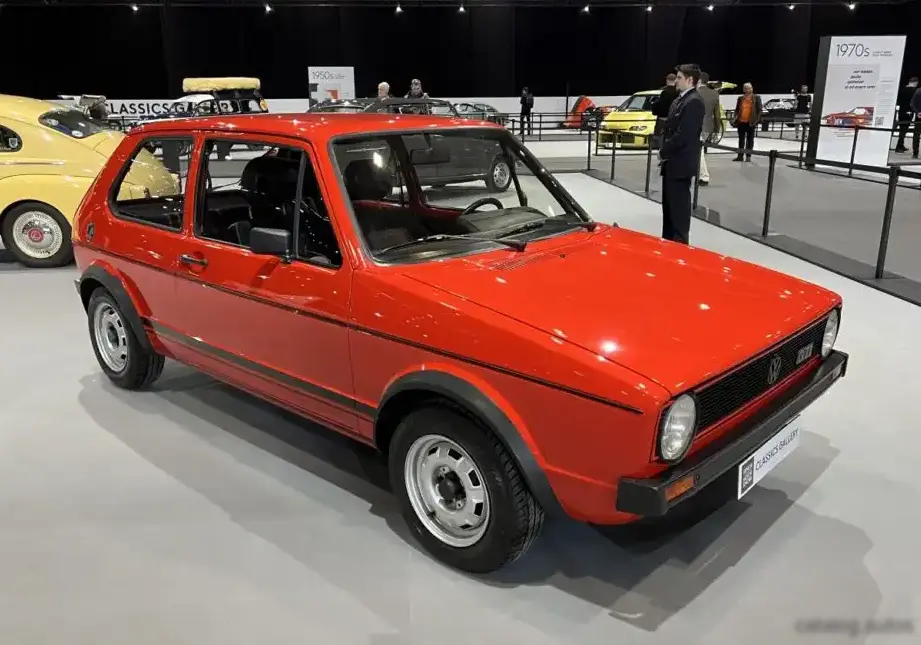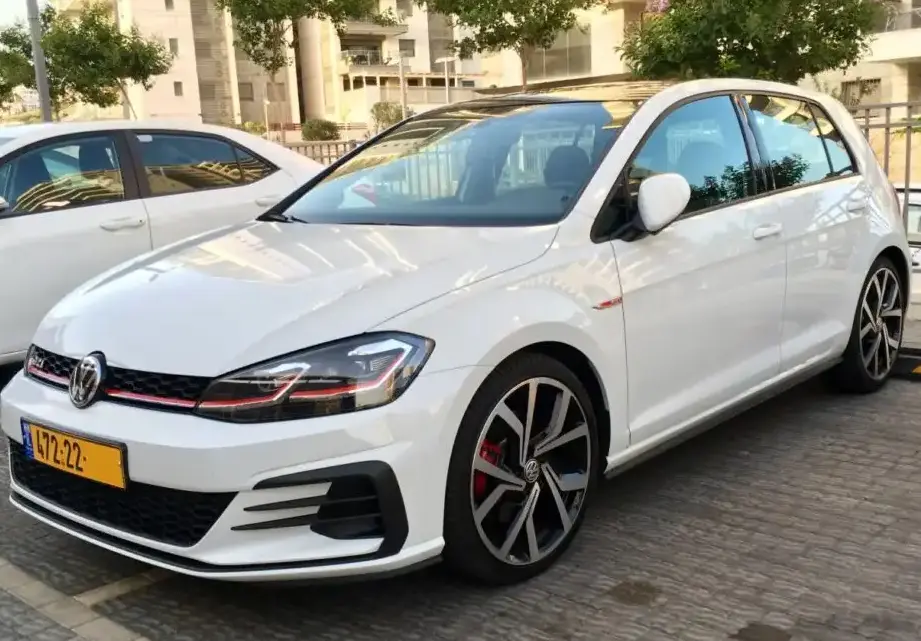
The Volkswagen Golf VII, specifically the 5-door hatchback produced during the 2017 facelift and continuing through 2019, represented a significant evolution of the iconic Golf lineage. Within this generation, the GTI Performance 2.0 TSI (245 Hp) DSG OPF variant occupied a performance-oriented niche, positioned above the standard GTI but below the more extreme GTI TCR. Introduced in December 2018 and concluding production in December 2019, this model aimed to deliver a compelling blend of everyday usability, sporty driving dynamics, and modern technology. It was primarily marketed in Europe and other global markets where the Golf has a strong presence, offering a refined hot hatch experience.
Technical Specifications
| Brand | Volkswagen |
| Model | Golf |
| Generation | Golf VII (5-door, facelift 2017) |
| Type (Engine) | GTI Performance 2.0 TSI (245 Hp) DSG OPF |
| Start of production | December, 2018 |
| End of production | December, 2019 |
| Powertrain Architecture | Internal Combustion engine |
| Body type | Hatchback |
| Seats | 5 |
| Doors | 5 |
| Fuel consumption at Low speed (WLTP) | 10.7 l/100 km (22 US mpg, 26.4 UK mpg, 9.3 km/l) |
| Fuel consumption at Medium speed (WLTP) | 7.3 l/100 km (32.2 US mpg, 38.7 UK mpg, 13.7 km/l) |
| Fuel consumption at high speed (WLTP) | 6.3 l/100 km (37.3 US mpg, 44.8 UK mpg, 15.9 km/l) |
| Fuel consumption at very high speed (WLTP) | 7.2 l/100 km (32.7 US mpg, 39.2 UK mpg, 13.9 km/l) |
| Combined fuel consumption (WLTP) | 7.4 l/100 km (31.8 US mpg, 38.2 UK mpg, 13.5 km/l) |
| CO2 emissions (WLTP) | 169 g/km |
| Fuel consumption (economy) – urban (NEDC) | 7.3-7.5 l/100 km (32.2 – 31.4 US mpg, 38.7 – 37.7 UK mpg, 13.7 – 13.3 km/l) |
| Fuel consumption (economy) – extra urban (NEDC) | 5.5-5.6 l/100 km (42.8 – 42 US mpg, 51.4 – 50.4 UK mpg, 18.2 – 17.9 km/l) |
| Fuel consumption (economy) – combined (NEDC) | 6.2-6.3 l/100 km (37.9 – 37.3 US mpg, 45.6 – 44.8 UK mpg, 16.1 – 15.9 km/l) |
| CO2 emissions (NEDC) | 140-143 g/km |
| Fuel Type | Petrol (Gasoline) |
| Acceleration 0 – 100 km/h | 6.3 sec |
| Acceleration 0 – 62 mph | 6.3 sec |
| Acceleration 0 – 60 mph | 6 sec (Calculated) |
| Maximum speed | 250 km/h (155.34 mph) |
| Emission standard | Euro 6d-TEMP-EVAP-ISC |
| Weight-to-power ratio | 5.6 kg/Hp, 178.8 Hp/tonne |
| Weight-to-torque ratio | 3.7 kg/Nm, 270.1 Nm/tonne |
| Power | 245 Hp @ 5000-6200 rpm |
| Power per litre | 123.5 Hp/l |
| Torque | 370 Nm @ 1600-4300 rpm (272.9 lb.-ft. @ 1600-4300 rpm) |
| Engine layout | Front, Transverse |
| Engine Model/Code | EA888 / DKTB |
| Engine displacement | 1984 cm3 (121.07 cu. in.) |
| Number of cylinders | 4 |
| Engine configuration | Inline |
| Cylinder Bore | 82.5 mm (3.25 in.) |
| Piston Stroke | 92.8 mm (3.65 in.) |
| Compression ratio | 9.6:1 |
| Number of valves per cylinder | 4 |
| Fuel injection system | Direct injection |
| Engine aspiration | Turbocharger, Intercooler |
| Valvetrain | DOHC |
| Engine oil capacity | 5.7 l (6.02 US qt, 5.02 UK qt) |
| Kerb Weight | 1370 kg (3020.33 lbs.) |
| Max. weight | 1920 kg (4232.88 lbs.) |
| Max load | 550 kg (1212.54 lbs.) |
| Trunk (boot) space – minimum | 380 l (13.42 cu. ft.) |
| Trunk (boot) space – maximum | 1270 l (44.85 cu. ft.) |
| Fuel tank capacity | 50 l (13.21 US gal, 11 UK gal) |
| Max. roof load | 75 kg (165.35 lbs.) |
| Permitted trailer load with brakes (8%) | 1800 kg (3968.32 lbs.) |
| Permitted trailer load with brakes (12%) | 1600 kg (3527.4 lbs.) |
| Permitted trailer load without brakes | 720 kg (1587.33 lbs.) |
| Permitted towbar download | 80 kg (176.37 lbs.) |
| Length | 4268 mm (168.03 in.) |
| Width | 1799 mm (70.83 in.) |
| Width including mirrors | 2027 mm (79.8 in.) |
| Height | 1482 mm (58.35 in.) |
| Wheelbase | 2626 mm (103.39 in.) |
| Front track | 1527-1550 mm (60.12 – 61.02 in.) |
| Rear (Back) track | 1503-1521 mm (59.17 – 59.88 in.) |
| Ride height (ground clearance) | 133 mm (5.24 in.) |
| Minimum turning circle (turning diameter) | 10.9 m (35.76 ft.) |
| Drivetrain Architecture | Front wheel drive |
| Number of gears and type of gearbox | 7 gears, automatic transmission DSG |
| Front suspension | Independent, type McPherson with coil spring and anti-roll bar |
| Rear suspension | Independent multi-link spring suspension with stabilizer |
| Front brakes | Ventilated discs |
| Rear brakes | Disc |
| Assisting systems | ABS (Anti-lock braking system) |
| Steering type | Steering rack and pinion |
| Power steering | Electric Steering |
| Tires size | 225/45 R17; 225/40 R18; 225/35 R19 |
| Wheel rims size | 7.5J x 17; 7.5J x 18; 7.5J x 19 |
INTRODUCTION
The Golf VII GTI Performance, introduced as part of the facelifted Golf range, built upon the already successful GTI formula by offering increased power and enhanced performance features. The “OPF” designation in the name indicates the inclusion of a gasoline particulate filter, a feature increasingly common in European markets to meet stricter emissions regulations. This variant was designed to appeal to enthusiasts seeking a more engaging driving experience than the standard GTI, while still maintaining the Golf’s reputation for practicality and refinement. It slotted into the lineup as a step up from the standard 230 hp GTI, offering a noticeable performance boost without reaching the more focused and expensive GTI TCR.
Powertrain & Engine Architecture
At the heart of the GTI Performance lies the EA888 2.0-liter turbocharged four-cylinder engine, specifically coded DKTB. This engine is a direct-injection unit, utilizing a sophisticated fuel system to optimize combustion efficiency and power delivery. The EA888 engine family is known for its robust construction and tuning potential. The DKTB version benefits from a larger turbocharger and revised engine mapping compared to the standard GTI, resulting in an output of 245 horsepower at 5000-6200 rpm and 370 Nm (272.9 lb.-ft.) of torque available from 1600-4300 rpm. The engine features a dual overhead camshaft (DOHC) valvetrain with four valves per cylinder, contributing to its high-revving nature. Paired with the engine is a 7-speed dual-clutch transmission (DSG), providing rapid and seamless gear changes. The DSG transmission is electronically controlled and offers both automatic and manual shift modes, allowing the driver to tailor the driving experience to their preferences.
Driving Characteristics
The GTI Performance 2.0 TSI DSG OPF delivers a noticeably more spirited driving experience than the standard GTI. The increased power and torque, combined with the quick-shifting DSG transmission, result in a 0-62 mph (0-100 km/h) acceleration time of 6.3 seconds. The DSG transmission’s programming is tuned for performance, holding gears longer and downshifting more aggressively than in the standard GTI. The chassis is also subtly revised, with a slightly stiffer suspension setup to improve handling and reduce body roll. While the ride quality is firmer than the standard GTI, it remains comfortable enough for everyday use. The steering is precise and well-weighted, providing good feedback to the driver. The front-wheel-drive layout, while capable, can exhibit some torque steer under hard acceleration, particularly on slippery surfaces.
Equipment & Trim Levels
The GTI Performance typically came equipped with a comprehensive list of standard features, including sport seats upholstered in the classic “Clark” plaid fabric, stainless steel pedal caps, and a leather-wrapped steering wheel. Infotainment was typically handled by Volkswagen’s Composition Media or Discover Pro system, featuring a touchscreen display, navigation, and smartphone integration. Optional extras included adaptive chassis control (DCC), which allowed the driver to adjust the suspension stiffness, and a panoramic sunroof. Exterior styling cues included unique 18-inch alloy wheels, red brake calipers, and a subtle rear spoiler.
Chassis & Braking
The GTI Performance utilizes an independent suspension setup at all four corners. The front suspension employs a McPherson strut design with coil springs and an anti-roll bar, while the rear features a multi-link setup, also with coil springs and an anti-roll bar. This configuration provides a good balance of ride comfort and handling performance. Braking duties are handled by ventilated discs at the front and solid discs at the rear. The anti-lock braking system (ABS) and electronic stability control (ESC) are standard features, providing enhanced safety and control. The brake system is generally well-suited to the car’s performance capabilities, offering strong stopping power and good pedal feel.
Market Reception & Comparison
The GTI Performance was generally well-received by automotive critics, who praised its increased performance, engaging driving dynamics, and refined interior. Compared to the standard GTI, the Performance model offered a significant step up in terms of acceleration and handling. However, it also came with a higher price tag. Compared to the GTI TCR, the Performance model offered a slightly less extreme driving experience but was more affordable and arguably more practical for everyday use. Fuel economy was comparable to the standard GTI, with combined WLTP figures around 7.4 l/100 km (31.8 US mpg). Reliability was generally good, consistent with the Golf’s reputation for build quality.
Legacy
The GTI Performance 2.0 TSI DSG OPF remains a popular choice in the used car market, appealing to enthusiasts seeking a well-rounded and engaging hot hatch. The EA888 engine is known for its durability and tunability, making it a relatively reliable powertrain. Regular maintenance, including oil changes and timely replacement of wear items, is crucial to ensure long-term reliability. The inclusion of the gasoline particulate filter (OPF) has raised some concerns about potential long-term issues, but these have generally been minimal. The GTI Performance represents a sweet spot in the Golf VII range, offering a compelling blend of performance, practicality, and refinement.