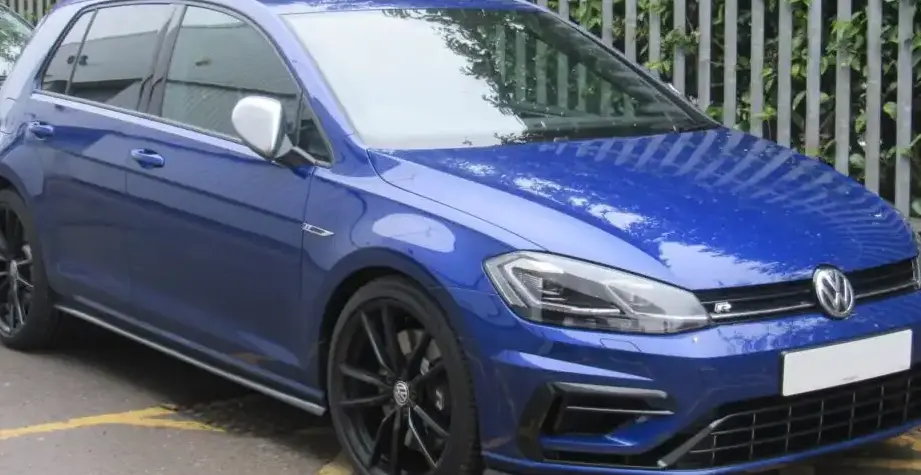
The Volkswagen Golf VII R, specifically the 5-door hatchback produced from 2018 to 2021 following the 2017 facelift, represents the high-performance pinnacle of the seventh-generation Golf lineup. Positioned as the flagship model, the R distinguishes itself with a potent 2.0-liter turbocharged engine, a sophisticated all-wheel-drive system (4MOTION), and a quick-shifting dual-clutch transmission (DSG). This variant built upon the success of previous ‘R’ models, offering a compelling blend of everyday usability and exhilarating performance, primarily targeted at enthusiasts seeking a premium hot hatch experience. It was a key model for Volkswagen in the European and North American markets, competing with vehicles like the Audi S3, BMW M140i, and Ford Focus RS.
Technical Specifications
| Brand | Volkswagen |
| Model | Golf |
| Generation | Golf VII (5-door, facelift 2017) |
| Type (Engine) | R 2.0 TSI (288 Hp) 4MOTION DSG |
| Start of production | September, 2018 |
| End of production | 2021 |
| Powertrain Architecture | Internal Combustion engine |
| Body type | Hatchback |
| Seats | 5 |
| Doors | 5 |
| Fuel consumption (economy) – urban (EPA) | 10.2 l/100 km (23.1 US mpg, 27.7 UK mpg, 9.8 km/l) |
| Fuel consumption (economy) – extra urban (EPA) | 7.8 l/100 km (30.2 US mpg, 36.2 UK mpg, 12.8 km/l) |
| Fuel consumption (economy) – combined (EPA) | 9 l/100 km (26.1 US mpg, 31.4 UK mpg, 11.1 km/l) |
| Fuel Type | Petrol (Gasoline) |
| Weight-to-power ratio | 5.3 kg/Hp, 188.2 Hp/tonne |
| Weight-to-torque ratio | 4 kg/Nm, 248.4 Nm/tonne |
| Power | 288 Hp @ 5400-6200 rpm |
| Power per litre | 145.2 Hp/l |
| Torque | 380 Nm @ 1800-5500 rpm (280.27 lb.-ft. @ 1800-5500 rpm) |
| Engine layout | Front, Transverse |
| Engine Model/Code | EA888 / DLRA |
| Engine displacement | 1984 cm3 (121.07 cu. in.) |
| Number of cylinders | 4 |
| Engine configuration | Inline |
| Cylinder Bore | 82.5 mm (3.25 in.) |
| Piston Stroke | 92.8 mm (3.65 in.) |
| Compression ratio | 9.6:1 |
| Number of valves per cylinder | 4 |
| Fuel injection system | Direct injection |
| Engine aspiration | Turbocharger, Intercooler |
| Valvetrain | DOHC |
| Engine oil capacity | 5.7 l (6.02 US qt | 5.02 UK qt) |
| Coolant | 10 l (10.57 US qt | 8.8 UK qt) |
| Kerb Weight | 1530 kg (3373.07 lbs.) |
| Max. weight | 2020 kg (4453.34 lbs.) |
| Max load | 490 kg (1080.27 lbs.) |
| Trunk (boot) space – minimum | 343 l (12.11 cu. ft.) |
| Trunk (boot) space – maximum | 1233 l (43.54 cu. ft.) |
| Fuel tank capacity | 55 l (14.53 US gal | 12.1 UK gal) |
| Length | 4276 mm (168.35 in.) |
| Width | 1799 mm (70.83 in.) |
| Height | 1436 mm (56.54 in.) |
| Wheelbase | 2630 mm (103.54 in.) |
| Front track | 1541 mm (60.67 in.) |
| Rear (Back) track | 1515 mm (59.65 in.) |
| Ride height (ground clearance) | 122 mm (4.8 in.) |
| Drag coefficient (Cd) | 0.32 |
| Minimum turning circle (turning diameter) | 10.9 m (35.76 ft.) |
| Drivetrain Architecture | All wheel drive (4×4). ICE drives front wheels, rear wheels driven via clutch. |
| Number of gears and type of gearbox | 7 gears, automatic transmission DSG |
| Front suspension | Independent, McPherson with coil spring and anti-roll bar |
| Rear suspension | Independent multi-link spring suspension with stabilizer |
| Front brakes | Ventilated discs, 340×30 mm |
| Rear brakes | Ventilated discs, 310×23 mm |
| Assisting systems | ABS (Anti-lock braking system) |
| Steering type | Steering rack and pinion |
| Power steering | Electric Steering |
| Tires size | 225/40 R18; 235/35 R19 |
| Wheel rims size | 7.5J x 18; 8J x 19 |
Powertrain & Engine Architecture
At the heart of the Golf VII R lies the EA888 2.0-liter inline-four cylinder engine, specifically the DLRA variant. This engine is a direct-injection, turbocharged powerplant known for its responsiveness and tunability. The EA888 features a cast iron block with an aluminum cylinder head, incorporating double overhead camshafts (DOHC) and four valves per cylinder. The turbocharger, coupled with an intercooler, delivers significant boost, contributing to the engine’s high specific output. The direct injection system ensures precise fuel delivery, optimizing combustion efficiency and reducing emissions. The engine is paired with a seven-speed dual-clutch transmission (DSG), which provides incredibly fast and smooth gear changes. This DSG unit is specifically tuned for the R model to handle the increased torque output and provide a more engaging driving experience. The 4MOTION all-wheel-drive system utilizes a Haldex multi-plate clutch to distribute power between the front and rear axles, enhancing traction and stability, particularly in adverse weather conditions or during spirited driving.
Driving Characteristics
The Golf VII R with the 288 hp engine and DSG transmission delivers a remarkably balanced driving experience. Acceleration is brisk, with 0-60 mph times typically around 4.6 seconds. The DSG transmission contributes to this performance, offering near-instantaneous shifts and keeping the engine within its optimal power band. Compared to lower-powered Golf variants, the R provides significantly more urgency and responsiveness. While the manual transmission offered in some markets provided a more raw connection, the DSG offered superior speed and convenience. The 4MOTION system provides excellent grip, allowing for confident cornering and acceleration even on slippery surfaces. The steering is precise and well-weighted, providing good feedback to the driver. The suspension is firm but not overly harsh, striking a good balance between comfort and handling. The gear ratios in the DSG are optimized for both acceleration and fuel efficiency, although the combined fuel economy of 9 l/100 km (26.1 US mpg) reflects the performance-oriented nature of the vehicle.
Equipment & Trim Levels
The Golf VII R came generously equipped as standard. Key features included sport seats upholstered in cloth and Alcantara, a leather-wrapped steering wheel, stainless steel pedal caps, and unique ‘R’ badging both inside and out. The infotainment system typically featured a touchscreen display with navigation, Apple CarPlay, and Android Auto compatibility. Optional extras included adaptive dampers (DCC), a panoramic sunroof, premium sound system, and full leather upholstery. The exterior styling was also enhanced with a more aggressive front bumper, side skirts, a rear diffuser, and quad exhaust outlets. The interior trim was typically dark-toned, with accents in blue stitching to emphasize the ‘R’ model’s sporty character.
Chassis & Braking
The Golf VII R benefits from a specially tuned chassis designed to handle the increased power and performance. The suspension features stiffer springs and dampers compared to standard Golf models, along with a thicker stabilizer bar. The braking system is upgraded with larger ventilated discs on all four wheels (340mm front, 310mm rear) and upgraded calipers, providing excellent stopping power and fade resistance. The standard tires were typically high-performance summer tires, contributing to the car’s impressive grip levels. The electronic stability control (ESC) system is also calibrated to allow for a more dynamic driving experience, permitting a degree of controlled oversteer.
Market Reception & Comparison
The Golf VII R was widely praised by automotive critics for its performance, handling, and practicality. It was consistently ranked among the best hot hatches on the market. Compared to the standard Golf, the R offered a significant step up in performance and refinement. Compared to other high-performance hatchbacks, such as the Ford Focus RS, the Golf R was often lauded for its more balanced and predictable handling, as well as its more comfortable ride. While the Focus RS offered a more visceral and engaging driving experience, the Golf R provided a more refined and sophisticated package. Fuel economy was generally competitive within its class, although it was naturally lower than that of less powerful Golf variants. Reliability was generally good, although some owners reported minor issues with the DSG transmission.
Legacy
The Golf VII R has established itself as a highly desirable used car, retaining its value well due to its performance, reputation, and relative rarity. The EA888 engine, while requiring regular maintenance, is generally considered robust and reliable. The DSG transmission, if properly maintained with regular fluid changes, is also generally dependable. The Golf VII R represents a sweet spot in the Golf lineage, offering a compelling combination of performance, practicality, and refinement that continues to appeal to enthusiasts today. It solidified the ‘R’ badge as a symbol of Volkswagen’s performance engineering prowess and paved the way for the even more potent Golf R models that followed.