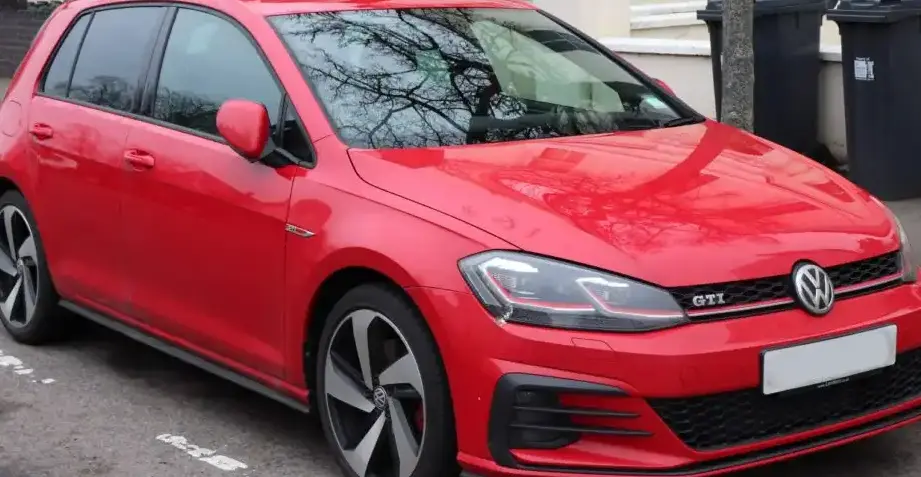
The Volkswagen Golf VII GTI 2.0 TSI (220 hp) DSG, produced from March 2013 to February 2017, represents a significant iteration of Volkswagen’s iconic hot hatchback. Positioned as a performance-oriented variant within the seventh-generation Golf (5-door) lineup, it offered a compelling blend of power, practicality, and technology. This model sat firmly in the mid-to-upper range of the Golf VII offerings, bridging the gap between the more economical trims and the even more focused performance models like the Golf R. It was primarily marketed towards driving enthusiasts seeking a refined yet engaging daily driver, particularly in European and North American markets.
Technical Specifications
| Brand | Volkswagen |
| Model | Golf |
| Generation | Golf VII (5-door) |
| Type (Engine) | GTI 2.0 TSI (220 Hp) DSG |
| Start of production | March, 2013 |
| End of production | February, 2017 |
| Powertrain Architecture | Internal Combustion engine |
| Body type | Hatchback |
| Seats | 5 |
| Doors | 5 |
| Fuel consumption (economy) – urban (NEDC) | 8.1 l/100 km (29 US mpg, 34.9 UK mpg, 12.3 km/l) |
| Fuel consumption (economy) – extra urban (NEDC) | 5.3 l/100 km (44.4 US mpg, 53.3 UK mpg, 18.9 km/l) |
| Fuel consumption (economy) – combined (NEDC) | 6.3-6.4 l/100 km (37.3 – 36.8 US mpg, 44.8 – 44.1 UK mpg, 15.9 – 15.6 km/l) |
| CO2 emissions (NEDC) | 145-148 g/km |
| Fuel Type | Petrol (Gasoline) |
| Acceleration 0 – 100 km/h | 6.5 sec |
| Acceleration 0 – 62 mph | 6.5 sec |
| Acceleration 0 – 60 mph | 6.2 sec |
| Maximum speed | 244 km/h (151.61 mph) |
| Emission standard | Euro 6 |
| Weight-to-power ratio | 6 kg/Hp, 166 Hp/tonne |
| Weight-to-torque ratio | 3.8 kg/Nm, 264.2 Nm/tonne |
| Power | 220 Hp @ 4500-6200 rpm |
| Power per litre | 110.9 Hp/l |
| Torque | 350 Nm @ 1500-4400 rpm (258.15 lb.-ft. @ 1500-4400 rpm) |
| Engine layout | Front, Transverse |
| Engine Model/Code | EA888 / CHHB |
| Engine displacement | 1984 cm3 (121.07 cu. in.) |
| Number of cylinders | 4 |
| Engine configuration | Inline |
| Cylinder Bore | 82.5 mm (3.25 in.) |
| Piston Stroke | 92.8 mm (3.65 in.) |
| Compression ratio | 9.6:1 |
| Number of valves per cylinder | 4 |
| Fuel injection system | Direct injection and Multi-port manifold injection |
| Engine aspiration | Turbocharger, Intercooler |
| Valvetrain | DOHC |
| Engine oil capacity | 5.7 l (6.02 US qt | 5.02 UK qt) |
| Kerb Weight | 1325 kg (2921.12 lbs.) |
| Max. weight | 1840 kg (4056.51 lbs.) |
| Max load | 515 kg (1135.38 lbs.) |
| Trunk (boot) space – minimum | 380 l (13.42 cu. ft.) |
| Trunk (boot) space – maximum | 1270 l (44.85 cu. ft.) |
| Fuel tank capacity | 50 l (13.21 US gal | 11 UK gal) |
| Max. roof load | 75 kg (165.35 lbs.) |
| Permitted trailer load with brakes (8%) | 1800 kg (3968.32 lbs.) |
| Permitted trailer load with brakes (12%) | 1600 kg (3527.4 lbs.) |
| Permitted trailer load without brakes | 680 kg (1499.14 lbs.) |
| Permitted towbar download | 80 kg (176.37 lbs.) |
| Length | 4268 mm (168.03 in.) |
| Width | 1799 mm (70.83 in.) |
| Height | 1442 mm (56.77 in.) |
| Wheelbase | 2631 mm (103.58 in.) |
| Front track | 1538 mm (60.55 in.) |
| Rear (Back) track | 1516 mm (59.69 in.) |
| Ride height (ground clearance) | 133 mm (5.24 in.) |
| Minimum turning circle (turning diameter) | 10.9 m (35.76 ft.) |
| Front suspension | Independent, type McPherson with coil spring and anti-roll bar |
| Rear suspension | Independent multi-link spring suspension with stabilizer |
| Front brakes | Ventilated discs |
| Rear brakes | Disc |
| Number of gears and type of gearbox | 6 gears, automatic transmission DSG |
Powertrain & Engine Architecture
At the heart of the Golf VII GTI 2.0 TSI DSG lies the EA888 engine, specifically the CHHB variant. This 1.984-liter, turbocharged, direct-injection four-cylinder engine was a cornerstone of Volkswagen’s performance strategy. The CHHB engine featured a sophisticated combination of technologies, including direct fuel injection, variable valve timing on both intake and exhaust camshafts, and an integrated intercooler to manage intake air temperatures. The turbocharger itself was a twin-scroll unit, designed to minimize turbo lag and provide a more responsive driving experience. The engine’s output of 220 horsepower and 258 lb-ft of torque was a substantial increase over earlier Golf GTI models. Paired with the engine was the 6-speed DSG (Direct-Shift Gearbox), a dual-clutch transmission known for its rapid and smooth gear changes. The DSG allowed for both fully automatic operation and manual gear selection via steering wheel-mounted paddles or the gear selector.
Driving Characteristics
The Golf VII GTI 2.0 TSI DSG delivered a refined yet engaging driving experience. The DSG transmission contributed to brisk acceleration, with 0-60 mph times consistently around 6.2 seconds. While not as raw or visceral as a manual transmission, the DSG offered a level of convenience and performance that appealed to a broad range of drivers. The engine’s torque curve was relatively flat, providing strong pull throughout the rev range. Compared to the base Golf models, the GTI offered significantly improved handling thanks to its sport-tuned suspension and standard XDS+ electronic differential lock, which minimized understeer during cornering. Compared to the higher-output Golf GTI Performance Pack (with 230 hp), the 220 hp version felt slightly less urgent in acceleration, but the difference was often subtle in everyday driving.
Equipment & Trim Levels
The GTI 2.0 TSI DSG came standard with a comprehensive list of features. Interior appointments included sport seats upholstered in the classic GTI “Clark” plaid fabric, a leather-wrapped steering wheel, and aluminum pedal caps. Standard technology included a touchscreen infotainment system with Bluetooth connectivity, automatic climate control, and a suite of safety features such as ABS, traction control, and multiple airbags. Optional extras included features like a panoramic sunroof, navigation system, adaptive cruise control, and premium sound system. The GTI trim level was visually distinguished by its unique front bumper with integrated fog lights, red brake calipers, a rear spoiler, and dual exhaust outlets.
Chassis & Braking
The Golf VII GTI featured an independent suspension setup at all four corners. The front suspension utilized a McPherson strut design with coil springs and an anti-roll bar, while the rear employed a multi-link setup, also with coil springs and a stabilizer bar. This configuration provided a good balance between ride comfort and handling precision. Braking duties were handled by ventilated disc brakes at the front and solid discs at the rear. The GTI’s braking system was generally considered to be effective and provided ample stopping power for spirited driving.
Market Reception & Comparison
The Golf VII GTI 2.0 TSI DSG was widely praised by automotive critics for its blend of performance, practicality, and refinement. It consistently received positive reviews for its responsive engine, engaging handling, and comfortable interior. Compared to rivals like the Ford Focus ST and the Renault Mégane RS, the Golf GTI was often seen as a more well-rounded and sophisticated option. Fuel economy was also a strong point, with combined fuel consumption figures in the range of 37-38 mpg. Reliability was generally good, although some owners reported minor issues with the DSG transmission.
Legacy
The Golf VII GTI 2.0 TSI DSG has proven to be a durable and reliable performance car. On the used car market, these models continue to hold their value relatively well, reflecting their strong reputation and desirability. The EA888 engine, in particular, is known for its robustness and tunability, making it a popular choice for enthusiasts seeking to modify their vehicles. The Golf VII GTI represents a high point in the evolution of the Golf GTI, offering a compelling combination of performance, practicality, and technology that continues to appeal to drivers today.