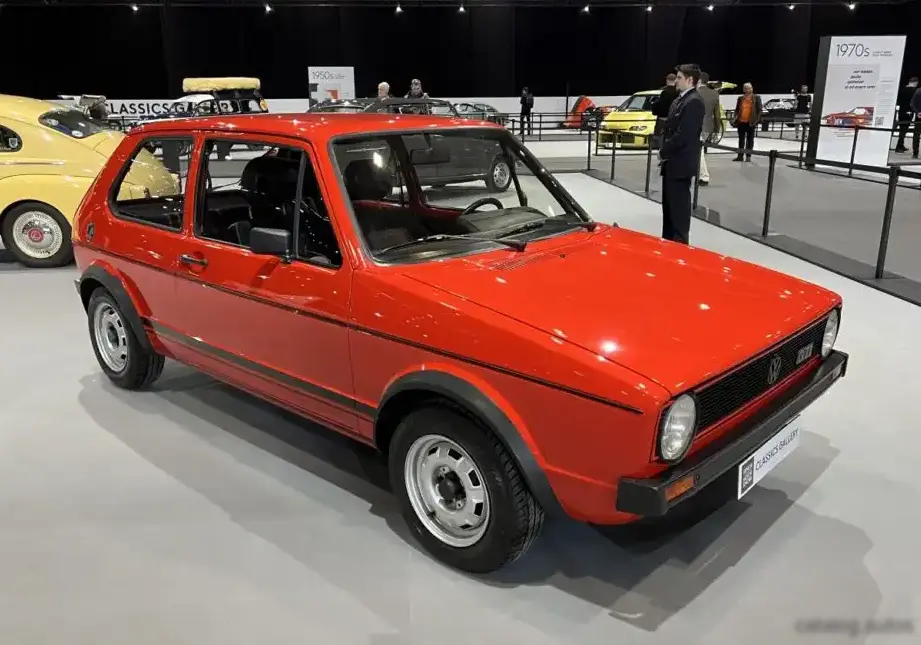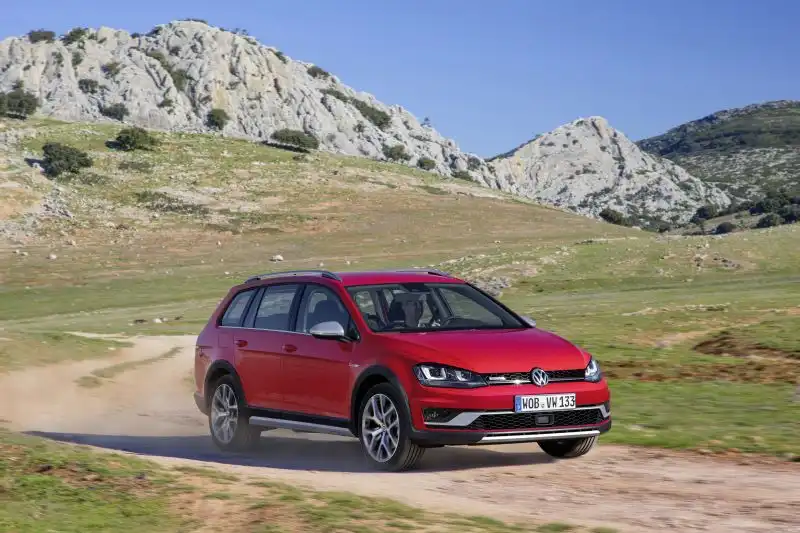
The Volkswagen Golf VII Alltrack 1.6 TDI 4MOTION, produced from June 2013 to April 2017, represents Volkswagen’s foray into the compact crossover segment, blending the practicality of a station wagon with the all-weather capability of all-wheel drive. Positioned as a more rugged and versatile alternative to the standard Golf VII estate, the Alltrack aimed to appeal to drivers seeking a vehicle capable of handling diverse terrains and weather conditions. This specific variant, powered by a 1.6-liter turbocharged diesel engine producing 110 horsepower and paired with a six-speed manual transmission, served as the entry point into the Alltrack range, offering a balance of fuel efficiency and usability. It was part of the broader Golf VII (Mk7) lineup, built on the modular transverse matrix (MQB) platform – designated 5G – which underpinned numerous Volkswagen Group vehicles.
Technical Specifications
| Brand | Volkswagen |
| Model | Golf |
| Generation | Golf VII Alltrack |
| Type (Engine) | 1.6 TDI (110 Hp) 4MOTION |
| Start of production | June, 2013 |
| End of production | April, 2017 |
| Powertrain Architecture | Internal Combustion engine |
| Body type | Station wagon (estate), Crossover |
| Seats | 5 |
| Doors | 5 |
| Fuel consumption (urban) | 5.7 l/100 km (41.3 US mpg, 49.6 UK mpg, 17.5 km/l) |
| Fuel consumption (extra urban) | 4.3 l/100 km (54.7 US mpg, 65.7 UK mpg, 23.3 km/l) |
| Fuel consumption (combined) | 4.8 l/100 km (49 US mpg, 58.9 UK mpg, 20.8 km/l) |
| CO2 emissions | 124 g/km |
| Fuel Type | Diesel |
| Acceleration 0 – 100 km/h | 12.1 sec |
| Acceleration 0 – 62 mph | 12.1 sec |
| Acceleration 0 – 60 mph | 11.5 sec |
| Maximum speed | 187 km/h (116.2 mph) |
| Emission standard | Euro 6 |
| Weight-to-power ratio | 14 kg/Hp, 71.2 Hp/tonne |
| Weight-to-torque ratio | 6.2 kg/Nm, 161.9 Nm/tonne |
| Power | 110 Hp @ 3200-4000 rpm |
| Power per litre | 68.8 Hp/l |
| Torque | 250 Nm @ 1500-3000 rpm (184.39 lb.-ft. @ 1500-3000 rpm) |
| Engine layout | Front, Transverse |
| Engine Model/Code | CRKB, CXXB |
| Engine displacement | 1598 cm3 (97.52 cu. in.) |
| Number of cylinders | 4 |
| Engine configuration | Inline |
| Number of valves per cylinder | 4 |
| Fuel injection system | Diesel Commonrail |
| Engine aspiration | Turbocharger, Intercooler |
| Engine oil capacity | 4.7 l (4.97 US qt | 4.14 UK qt) |
| Kerb Weight | 1544 kg (3403.94 lbs.) |
| Max. weight | 2040 kg (4497.43 lbs.) |
| Max load | 496 kg (1093.49 lbs.) |
| Trunk (boot) space – minimum | 605 l (21.37 cu. ft.) |
| Trunk (boot) space – maximum | 1620 l (57.21 cu. ft.) |
| Fuel tank capacity | 55 l (14.53 US gal | 12.1 UK gal) |
| Length | 4578 mm (180.24 in.) |
| Width | 1799 mm (70.83 in.) |
| Height | 1515 mm (59.65 in.) |
| Wheelbase | 2630 mm (103.54 in.) |
| Front track | 1546 mm (60.87 in.) |
| Rear (Back) track | 1517 mm (59.72 in.) |
| Minimum turning circle | 10.9 m (35.76 ft.) |
| Drive wheel | All wheel drive (4×4) |
| Number of gears | 6 gears, manual transmission |
| Front brakes | Ventilated discs |
| Assisting systems | ABS (Anti-lock braking system) |
| Steering type | Steering rack and pinion |
| Tires size | 205/55 R17 |
| Wheel rims size | 6.5J x 17 |
Powertrain & Engine Architecture
The heart of the Golf VII Alltrack 1.6 TDI 4MOTION is the CRKB or CXXB engine code, a 1.6-liter inline-four cylinder diesel engine. This engine utilizes a common rail direct injection system, delivering fuel directly into the combustion chamber at extremely high pressure for improved efficiency and reduced emissions. A turbocharger with an intercooler is employed to boost power output, providing increased torque across a broad rev range. The engine features four valves per cylinder, contributing to improved breathing and overall performance. The 1.6 TDI engine was known for its relatively quiet operation and decent fuel economy, but it wasn’t a powerhouse. The six-speed manual transmission was the standard offering for this variant, providing drivers with full control over gear selection. The transmission’s gear ratios were tuned for a balance of fuel efficiency and usability, with a relatively long final drive to aid in highway cruising.
Driving Characteristics
The 110 horsepower and 250 Nm (184 lb-ft) of torque delivered by the 1.6 TDI engine provided adequate, but not exhilarating, performance. Acceleration from 0-60 mph took around 11.5 seconds, and top speed was limited to 116 mph. In real-world driving, the engine felt most comfortable in the mid-range, offering sufficient power for overtaking and maintaining highway speeds. Compared to the more powerful 2.0 TDI variants, the 1.6 TDI felt noticeably slower, particularly when fully loaded or tackling steep inclines. However, the 4MOTION all-wheel-drive system provided excellent traction in adverse conditions, making it a capable performer in rain, snow, or on unpaved roads. The manual transmission offered a precise and engaging driving experience, although the shift linkage wasn’t as sporty as some competitors.
Equipment & Trim Levels
The Golf VII Alltrack 1.6 TDI 4MOTION typically came equipped with a generous level of standard features. These included air conditioning, a touchscreen infotainment system, alloy wheels, and a multi-function steering wheel. Safety features such as ABS, electronic stability control, and multiple airbags were also standard. Interior upholstery was typically cloth, with optional upgrades to leather available. Common optional extras included a panoramic sunroof, navigation system, parking sensors, and adaptive cruise control. The Alltrack trim level itself added unique exterior styling cues, such as black plastic cladding around the wheel arches and sills, giving it a more rugged appearance.
Chassis & Braking
The Golf VII Alltrack featured a fully independent suspension system, with MacPherson struts at the front and a multi-link setup at the rear. This provided a comfortable ride quality and good handling characteristics. The 4MOTION all-wheel-drive system utilized a Haldex clutch to distribute torque between the front and rear axles as needed, providing optimal traction in various conditions. Braking duties were handled by ventilated discs at the front and solid discs at the rear. ABS (Anti-lock Braking System) was standard, ensuring safe and controlled braking performance. Stabilizer bars were fitted to both the front and rear axles to reduce body roll during cornering.
Market Reception & Comparison
The Golf VII Alltrack 1.6 TDI 4MOTION was generally well-received by automotive critics. It was praised for its practicality, fuel efficiency, and all-weather capability. However, some reviewers noted that the 1.6 TDI engine felt underpowered, particularly when compared to the more potent diesel options available in the Golf range. Compared to the 2.0 TDI models, the 1.6 TDI offered lower running costs but sacrificed performance. Against competitors like the Skoda Octavia Scout or Audi A4 Allroad, the Golf Alltrack offered a more compact and agile driving experience, but often at a slightly higher price point.
Legacy
The 1.6 TDI engine, while not known for being a performance standout, proved to be relatively reliable in the Golf VII Alltrack. However, like many modern diesel engines, it was susceptible to issues with the diesel particulate filter (DPF) if not driven on longer journeys regularly. In the used car market, the Golf VII Alltrack 1.6 TDI 4MOTION represents a good value proposition for buyers seeking a practical, fuel-efficient, and capable all-weather vehicle. Its combination of space, versatility, and all-wheel-drive capability continues to make it a popular choice among those who need a vehicle that can handle a variety of tasks and conditions.