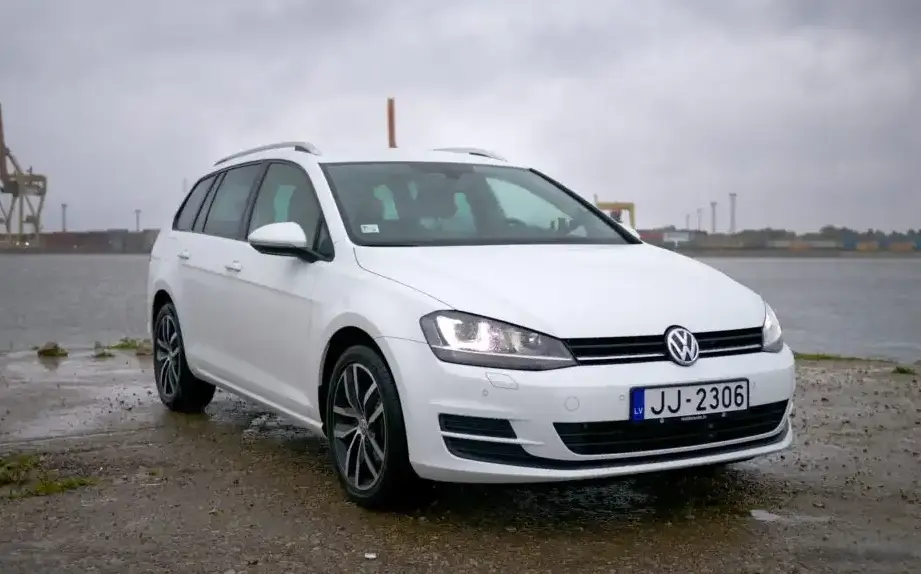
The Volkswagen Golf VII Variant 1.2 TSI (85 hp) was a station wagon (estate) model produced between August 2012 and March 2017. Positioned as an entry-level offering within the broader Golf VII Variant range, it aimed to provide a practical and fuel-efficient option for families and individuals needing increased cargo space. This variant was primarily sold in the European market, where compact wagons remain highly popular. It formed part of the seventh generation of the Golf, known internally as the A7 platform, which brought significant advancements in technology, safety, and efficiency compared to its predecessor.
Technical Specifications
| Brand | Volkswagen |
| Model | Golf |
| Generation | Golf VII Variant |
| Type (Engine) | 1.2 TSI (85 Hp) |
| Start of production | August, 2012 |
| End of production | March, 2017 |
| Powertrain Architecture | Internal Combustion engine |
| Body type | Station wagon (estate) |
| Seats | 5 |
| Doors | 5 |
| Fuel consumption (urban) | 6 l/100 km (39.2 US mpg, 47.1 UK mpg, 16.7 km/l) |
| Fuel consumption (extra urban) | 4.3 l/100 km (54.7 US mpg, 65.7 UK mpg, 23.3 km/l) |
| Fuel consumption (combined) | 5 l/100 km (47 US mpg, 56.5 UK mpg, 20 km/l) |
| Fuel Type | Petrol (Gasoline) |
| Acceleration 0 – 100 km/h | 12.6 sec |
| Acceleration 0 – 62 mph | 12.6 sec |
| Acceleration 0 – 60 mph | 12 sec |
| Maximum speed | 180 km/h (111.85 mph) |
| Weight-to-power ratio | 15.1 kg/Hp, 66.1 Hp/tonne |
| Weight-to-torque ratio | 8 kg/Nm, 124.5 Nm/tonne |
| Power | 85 Hp @ 4300-5300 rpm |
| Power per litre | 71 Hp/l |
| Torque | 160 Nm @ 1400-3500 rpm (118.01 lb.-ft. @ 1400-3500 rpm) |
| Engine layout | Front, Transverse |
| Engine Model/Code | CJZB, CYVA |
| Engine displacement | 1197 cm3 (73.05 cu. in.) |
| Number of cylinders | 4 |
| Engine configuration | Inline |
| Fuel injection system | Direct injection |
| Engine aspiration | Turbocharger, Intercooler |
| Engine oil capacity | 4 l (4.23 US qt | 3.52 UK qt) |
| Kerb Weight | 1285 kg (2832.94 lbs.) |
| Max. weight | 1820 kg (4012.41 lbs.) |
| Max load | 535 kg (1179.47 lbs.) |
| Trunk (boot) space – minimum | 605 l (21.37 cu. ft.) |
| Trunk (boot) space – maximum | 1620 l (57.21 cu. ft.) |
| Fuel tank capacity | 50 l (13.21 US gal | 11 UK gal) |
| Length | 4562 mm (179.61 in.) |
| Width | 1799 mm (70.83 in.) |
| Height | 1481 mm (58.31 in.) |
| Wheelbase | 2635 mm (103.74 in.) |
| Front track | 1549 mm (60.98 in.) |
| Rear (Back) track | 1520 mm (59.84 in.) |
| Minimum turning circle | 10.9 m (35.76 ft.) |
| Drivetrain Architecture | The Internal combustion engine (ICE) drives the front wheels of the vehicle. |
| Drive wheel | Front wheel drive |
| Number of gears and type of gearbox | 5 gears, manual transmission |
| Assisting systems | ABS (Anti-lock braking system) |
| Steering type | Steering rack and pinion |
Powertrain & Engine Architecture
The heart of the Golf VII Variant 1.2 TSI was the CJZB or CYVA engine code, a 1.2-liter turbocharged inline-four cylinder gasoline engine. This engine was part of Volkswagen’s EA111 engine family, known for its compact size and efficiency. It utilized direct fuel injection (FSI) and a single turbocharger with an intercooler to boost power and torque. The direct injection system allowed for precise fuel delivery, improving combustion efficiency and reducing emissions. The engine featured a timing chain, intended to offer greater durability compared to timing belts. The 85 hp output was achieved between 4300 and 5300 rpm, while peak torque of 160 Nm (118 lb-ft) was available from a low 1400 rpm, providing reasonable responsiveness for everyday driving. The engine was paired with a five-speed manual transmission, which was the standard offering for this variant. While a seven-speed dual-clutch transmission (DSG) was available on higher-spec Golf VII Variants, it wasn’t typically offered with the 1.2 TSI 85 hp engine.
Driving Characteristics
The 1.2 TSI 85 hp engine, coupled with the manual transmission, provided adequate, but not exhilarating, performance. Acceleration from 0 to 100 km/h (0-62 mph) took approximately 12.6 seconds, and top speed was limited to 180 km/h (112 mph). The engine’s turbocharger provided a noticeable boost in power during acceleration, but it wasn’t particularly strong. The five-speed gearbox was well-matched to the engine’s characteristics, offering reasonable gear spacing for both city and highway driving. Compared to the more powerful 1.4 TSI or diesel variants, the 1.2 TSI felt noticeably slower, especially when fully loaded or tackling steep inclines. However, its strength lay in its fuel efficiency and ease of driving. The relatively low power output and well-chosen gear ratios made it a forgiving engine for less experienced drivers.
Equipment & Trim Levels
The 1.2 TSI 85 hp variant typically represented the entry point into the Golf VII Variant range. Standard equipment generally included air conditioning, power windows, central locking, a basic audio system with USB connectivity, and ABS brakes. Safety features such as front and side airbags were also standard. Interior upholstery was typically cloth, and the dashboard featured a functional, if somewhat basic, design. Optional extras included alloy wheels, a more advanced infotainment system with touchscreen display, parking sensors, and cruise control. Higher trim levels, such as Trendline and Comfortline, added more features as standard, but the 1.2 TSI engine remained available as a cost-effective option even on these trims.
Chassis & Braking
The Golf VII Variant featured independent suspension at the front, typically utilizing MacPherson struts, and a multi-link rear suspension. This setup provided a good balance between ride comfort and handling. The 1.2 TSI variant, being the entry-level model, often came equipped with smaller wheels and narrower tires, which contributed to a slightly softer ride. Braking systems typically consisted of disc brakes at the front and drum brakes at the rear. ABS (Anti-lock Braking System) was standard. Stabilizer bars were fitted to both the front and rear axles to reduce body roll during cornering. The suspension tuning was geared towards comfort and practicality rather than outright sportiness.
Market Reception & Comparison
The Golf VII Variant 1.2 TSI 85 hp was generally well-received as a practical and economical family car. Critics praised its fuel efficiency and comfortable ride, but noted its lack of outright performance. Compared to the more powerful Golf variants, such as the 1.4 TSI or the diesel models, the 1.2 TSI offered a lower price point but compromised on performance. Fuel economy was a key selling point, with combined fuel consumption figures around 5 liters per 100 kilometers (47 US mpg). Reliability was generally good, although some owners reported minor issues with the turbocharger and fuel injection system. The 1.2 TSI was often seen as a sensible choice for drivers prioritizing fuel economy and practicality over performance.
Legacy
The 1.2 TSI engine, while not the most powerful option in the Golf VII Variant lineup, proved to be a relatively reliable and fuel-efficient powerplant. In the used car market, these variants are often attractively priced, making them a good option for budget-conscious buyers. The engine’s relatively simple design and readily available parts contribute to reasonable maintenance costs. However, potential buyers should be aware of the possibility of turbocharger issues and ensure that the engine has been properly maintained. The Golf VII Variant 1.2 TSI remains a popular choice for those seeking a practical, economical, and comfortable station wagon.