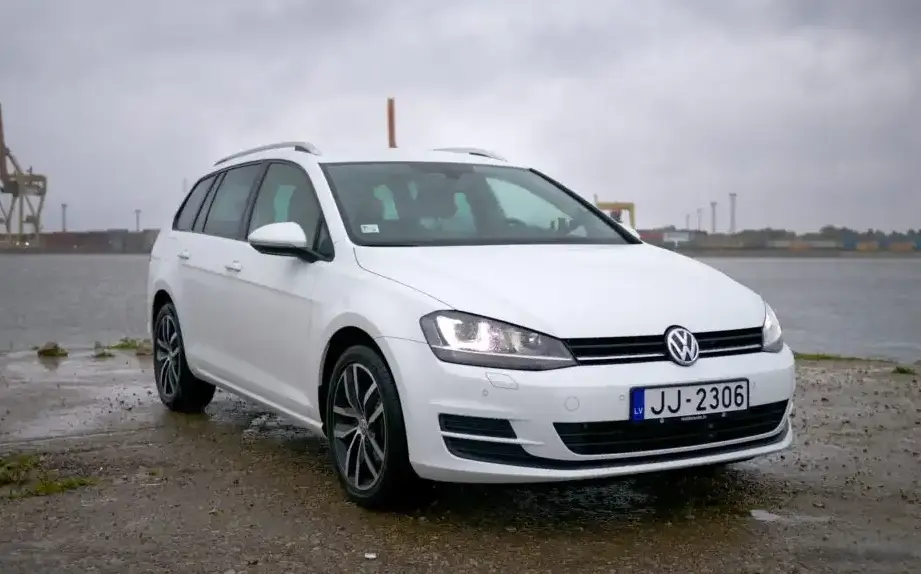
The Volkswagen Golf VII Variant 1.4 TSI (125 hp) represents a compelling blend of practicality and efficiency within the seventh generation Golf lineup. Produced from April 2014 to 2017, this variant occupied a key position as an entry-to-mid-range offering in the Golf Variant (estate) range, appealing to buyers seeking a spacious and economical family vehicle. It was built on the Volkswagen Group’s MQB (Modular Transverse Matrix) platform, specifically the A3 variant, shared with models like the Audi A3 and SEAT Leon ST. This platform allowed for a flexible and efficient manufacturing process, contributing to the Golf Variant’s competitive pricing and packaging.
Technical Specifications
| Brand | Volkswagen |
| Model | Golf |
| Generation | Golf VII Variant |
| Type (Engine) | 1.4 TSI (125 Hp) |
| Start of production | April, 2014 |
| End of production | 2017 |
| Powertrain Architecture | Internal Combustion engine |
| Body type | Station wagon (estate) |
| Seats | 5 |
| Doors | 5 |
| Fuel consumption (urban) | 7.0 – 6.9 l/100 km (33.6 – 34.1 US mpg) |
| Fuel consumption (extra urban) | 4.5 – 4.4 l/100 km (52.3 – 53.5 US mpg) |
| Fuel consumption (combined) | 5.4 – 5.3 l/100 km (43.6 – 44.4 US mpg) |
| CO2 emissions | 125 – 123 g/km |
| Fuel Type | Petrol (Gasoline) |
| Acceleration 0 – 100 km/h | 9.5 sec |
| Acceleration 0 – 62 mph | 9.5 sec |
| Acceleration 0 – 60 mph | 9 sec |
| Maximum speed | 205 km/h (127.38 mph) |
| Emission standard | Euro 6 |
| Weight-to-power ratio | 10 kg/Hp |
| Weight-to-torque ratio | 6.2 kg/Nm |
| Power | 125 Hp @ 5000-6000 rpm |
| Torque | 200 Nm @ 1400-4000 rpm (147.51 lb.-ft. @ 1400-4000 rpm) |
| Engine layout | Front, Transverse |
| Engine Model/Code | CZCA, CZDD |
| Engine displacement | 1395 cm3 (85.13 cu. in.) |
| Number of cylinders | 4 |
| Engine configuration | Inline |
| Number of valves per cylinder | 4 |
| Fuel injection system | Direct injection |
| Engine aspiration | Turbocharger, Intercooler |
| Engine oil capacity | 4 l (4.23 US qt | 3.52 UK qt) |
| Kerb Weight | 1247 kg (2749.16 lbs.) |
| Max. weight | 1880 kg (4144.69 lbs.) |
| Max load | 633 kg (1395.53 lbs.) |
| Trunk (boot) space – minimum | 605 l (21.37 cu. ft.) |
| Trunk (boot) space – maximum | 1620 l (57.21 cu. ft.) |
| Fuel tank capacity | 50 l (13.21 US gal | 11 UK gal) |
| Max. roof load | 75 kg (165.35 lbs.) |
| Permitted trailer load with brakes (8%) | 1700 kg (3747.86 lbs.) |
| Permitted trailer load with brakes (12%) | 1400 kg (3086.47 lbs.) |
| Permitted trailer load without brakes | 660 kg (1455.05 lbs.) |
| Permitted towbar download | 80 kg (176.37 lbs.) |
| Length | 4562 mm (179.61 in.) |
| Width | 1799 mm (70.83 in.) |
| Width including mirrors | 2027 mm (79.8 in.) |
| Height | 1481 mm (58.31 in.) |
| Wheelbase | 2635 mm (103.74 in.) |
| Front track | 1549 mm (60.98 in.) |
| Rear (Back) track | 1520 mm (59.84 in.) |
| Ride height (ground clearance) | 140 mm (5.51 in.) |
| Minimum turning circle (turning diameter) | 10.9 m (35.76 ft.) |
| Drivetrain Architecture | Front wheel drive |
| Number of gears and type of gearbox | 6 gears, manual transmission |
| Front brakes | Ventilated discs |
| Rear brakes | Disc |
| Assisting systems | ABS (Anti-lock braking system) |
| Steering type | Steering rack and pinion |
| Power steering | Electric Steering |
| Tires size | 205/55 R16; 225/45 R17 |
| Wheel rims size | 6.5J x 16; 7J x 17 |
Powertrain & Engine Architecture
At the heart of the Golf VII Variant 1.4 TSI (125 hp) lies the EA211 engine family, specifically the CZCA or CZDD engine code depending on the specific market and year of production. This 1.4-liter inline-four cylinder engine utilizes direct fuel injection and a turbocharger with an intercooler to deliver a balance of power and efficiency. The direct injection system, operating at pressures up to 150 bar, ensures precise fuel delivery and optimized combustion. The engine features four valves per cylinder and a timing chain, contributing to its durability and reduced maintenance requirements. The turbocharger provides a boost in power, overcoming the limitations of the relatively small displacement. This engine was designed to meet stringent Euro 6 emissions standards. The 6-speed manual transmission was standard, offering precise gear changes and contributing to the car’s overall driving experience.
Driving Characteristics
The 125 hp output, coupled with 200 Nm (147 lb-ft) of torque, provided adequate performance for everyday driving. Acceleration from 0 to 60 mph took approximately 9.5 seconds, and the top speed was around 127 mph. While not a particularly sporty configuration, the 1.4 TSI offered sufficient power for highway cruising and overtaking maneuvers. The manual transmission allowed for driver engagement, but the gear ratios were tuned for fuel economy rather than outright acceleration. Compared to the more powerful 1.8 TSI or diesel variants, the 1.4 TSI felt less responsive, particularly at higher speeds or when fully loaded. However, its lighter weight and efficient engine contributed to better fuel economy.
Equipment & Trim Levels
The Golf VII Variant 1.4 TSI (125 hp) typically came equipped with a reasonable level of standard features. These included air conditioning, power windows, central locking, a touchscreen infotainment system, and alloy wheels. Higher trim levels, such as Comfortline or Highline, added features like automatic climate control, parking sensors, cruise control, and upgraded upholstery. Optional extras included a panoramic sunroof, navigation system, and advanced driver-assistance systems like adaptive cruise control and lane-keeping assist. Interior upholstery was typically cloth, with leather options available on higher trims.
Chassis & Braking
The Golf VII Variant featured a MacPherson strut front suspension and a multi-link rear suspension, providing a comfortable and controlled ride. The suspension was tuned to balance handling and comfort, making it suitable for both city driving and long-distance journeys. Braking duties were handled by ventilated discs at the front and solid discs at the rear. Anti-lock Braking System (ABS) was standard, enhancing safety and stability during emergency braking. The steering was electrically assisted, providing a light and precise feel.
Market Reception & Comparison
The Golf VII Variant 1.4 TSI (125 hp) was generally well-received by automotive critics. It was praised for its practicality, fuel efficiency, and comfortable ride. However, some reviewers noted that the engine could feel underpowered, especially when the car was fully loaded. Compared to the 1.8 TSI variant, the 1.4 TSI offered lower running costs but sacrificed some performance. The diesel variants, such as the 1.6 TDI and 2.0 TDI, provided even better fuel economy but came with a higher purchase price and potential concerns about diesel emissions. The 1.4 TSI struck a good balance between affordability, efficiency, and usability, making it a popular choice for families and commuters.
Legacy
The EA211 1.4 TSI engine, in general, has proven to be a relatively reliable powertrain, although some early versions were prone to issues with the timing chain tensioner. Regular maintenance, including oil changes and timing chain inspections, is crucial for ensuring long-term reliability. In the used car market, the Golf VII Variant 1.4 TSI (125 hp) remains a popular choice due to its affordability, practicality, and fuel efficiency. It represents a well-rounded package for buyers seeking a versatile and economical estate car.