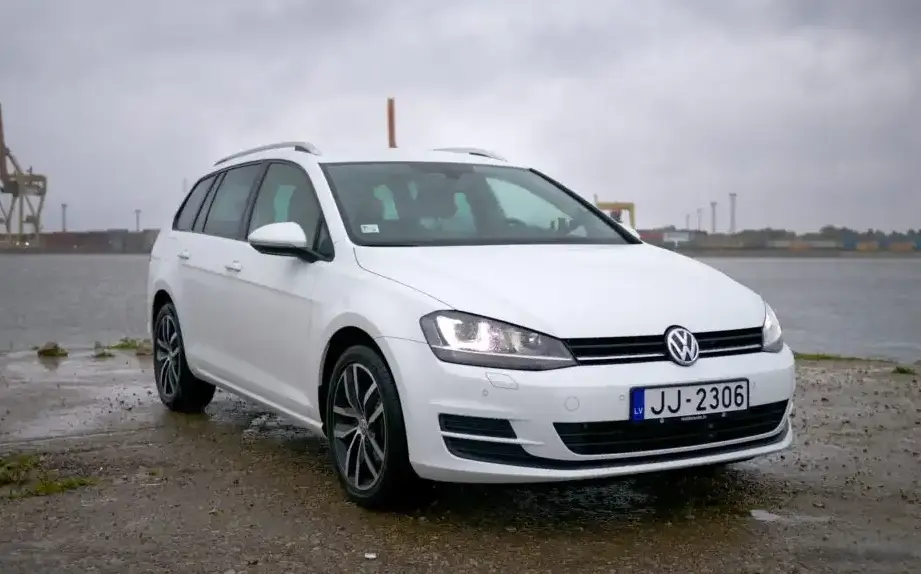
The Volkswagen Golf VII Variant 2.0 TDI, producing 150 horsepower, was a popular configuration within the seventh generation Golf range, specifically the Variant (estate/station wagon) body style. Production ran from May 2013 to April 2014. This model occupied a mid-range position in the Golf VII Variant lineup, offering a balance between fuel efficiency, performance, and practicality for European buyers. It was designed to appeal to families and individuals needing a versatile vehicle with reasonable running costs. The Golf VII platform (A7) represented a significant evolution for Volkswagen’s best-selling model, incorporating advancements in technology, safety, and build quality.
Technical Specifications
| Brand | Volkswagen |
| Model | Golf |
| Generation | Golf VII Variant |
| Type (Engine) | 2.0 TDI (150 Hp) |
| Start of production | May, 2013 |
| End of production | April, 2014 |
| Powertrain Architecture | Internal Combustion engine |
| Body type | Station wagon (estate) |
| Seats | 5 |
| Doors | 5 |
| Fuel consumption (urban) | 5.1 l/100 km (46.1 US mpg, 55.4 UK mpg, 19.6 km/l) |
| Fuel consumption (extra urban) | 3.7 l/100 km (63.6 US mpg, 76.3 UK mpg, 27 km/l) |
| Fuel consumption (combined) | 4.2 l/100 km (56 US mpg, 67.3 UK mpg, 23.8 km/l) |
| Fuel Type | Diesel |
| Acceleration 0 – 100 km/h | 8.9 sec |
| Acceleration 0 – 62 mph | 8.9 sec |
| Acceleration 0 – 60 mph | 8.5 sec |
| Maximum speed | 218 km/h (135.46 mph) |
| Weight-to-power ratio | 9.6 kg/Hp, 104.5 Hp/tonne |
| Weight-to-torque ratio | 4.5 kg/Nm, 222.8 Nm/tonne |
| Power | 150 Hp @ 3500-4000 rpm |
| Power per litre | 76.2 Hp/l |
| Torque | 320 Nm @ 1750-3000 rpm (236.02 lb.-ft. @ 1750-3000 rpm) |
| Engine layout | Front, Transverse |
| Engine Model/Code | CRBC, CRLB |
| Engine displacement | 1968 cm3 (120.09 cu. in.) |
| Number of cylinders | 4 |
| Engine configuration | Inline |
| Fuel injection system | Diesel Commonrail |
| Engine aspiration | Turbocharger, Intercooler |
| Engine oil capacity | 4.7 l (4.97 US qt | 4.14 UK qt) |
| Kerb Weight | 1436 kg (3165.84 lbs.) |
| Max. weight | 1970 kg (4343.11 lbs.) |
| Max load | 534 kg (1177.27 lbs.) |
| Trunk (boot) space – minimum | 605 l (21.37 cu. ft.) |
| Trunk (boot) space – maximum | 1620 l (57.21 cu. ft.) |
| Fuel tank capacity | 50 l (13.21 US gal | 11 UK gal) |
| Length | 4562 mm (179.61 in.) |
| Width | 1799 mm (70.83 in.) |
| Height | 1481 mm (58.31 in.) |
| Wheelbase | 2635 mm (103.74 in.) |
| Front track | 1549 mm (60.98 in.) |
| Rear (Back) track | 1520 mm (59.84 in.) |
| Minimum turning circle | 10.9 m (35.76 ft.) |
| Drivetrain Architecture | Front wheel drive |
| Number of gears | 6 gears, manual transmission |
| Assisting systems | ABS (Anti-lock braking system) |
Powertrain & Engine Architecture
The heart of the Golf VII Variant 2.0 TDI (150 Hp) is the Volkswagen Group’s common rail direct injection diesel engine. The CRBC and CRLB engine codes represent variations of this 2.0-liter four-cylinder unit. These engines utilized a turbocharger with an intercooler to boost power and efficiency. The common rail system, operating at very high pressures, allowed for precise fuel metering and optimized combustion. The engine featured four valves per cylinder and a timing belt. The 150 horsepower output was achieved through careful calibration of the engine management system, balancing performance with fuel economy and emissions. The engine was transversely mounted in the front of the vehicle, driving the front wheels. The six-speed manual transmission was the standard offering, providing a good balance of fuel efficiency and driver control.
Driving Characteristics
The 2.0 TDI 150 hp variant offered a respectable driving experience. Acceleration from 0-60 mph in around 8.5 seconds was adequate for everyday driving and overtaking maneuvers. The engine delivered a broad torque curve, with 320 Nm (236 lb-ft) available from 1750-3000 rpm, providing strong pulling power in most situations. Compared to the lower-powered 1.6 TDI models, the 2.0 TDI offered noticeably more responsiveness. However, it didn’t possess the outright performance of the Golf GTD or the petrol-powered GTI. The six-speed manual transmission was well-matched to the engine, with gear ratios optimized for both fuel efficiency and performance. The suspension provided a comfortable ride, while still offering reasonable handling characteristics.
Equipment & Trim Levels
The Golf VII Variant 2.0 TDI (150 Hp) typically came equipped with a solid base level of features. Standard equipment often included air conditioning, alloy wheels, a touchscreen infotainment system, and various safety features like ABS, ESP (Electronic Stability Program), and multiple airbags. Higher trim levels, such as ‘Comfortline’ and ‘Highline’, added features like automatic climate control, parking sensors, cruise control, and upgraded interior upholstery. Optional extras included a panoramic sunroof, navigation system, and leather seats. Interior materials were generally of good quality, reflecting Volkswagen’s reputation for build quality. The dashboard layout was clean and functional, with intuitive controls.
Chassis & Braking
The Golf VII Variant featured a MacPherson strut front suspension and a multi-link rear suspension. This setup provided a good balance of ride comfort and handling precision. The braking system typically consisted of ventilated front disc brakes and drum brakes on the rear wheels. ABS (Anti-lock Braking System) and ESP (Electronic Stability Program) were standard features, enhancing safety and stability. The steering was precise and well-weighted, providing good feedback to the driver. Stabilizer bars were fitted to both the front and rear axles to reduce body roll during cornering.
Market Reception & Comparison
The Golf VII Variant 2.0 TDI (150 Hp) was well-received by automotive critics and consumers alike. It was praised for its fuel efficiency, practicality, and comfortable ride. Compared to the lower-powered diesel variants, the 2.0 TDI offered a noticeable performance improvement, making it a more appealing option for drivers who frequently travel long distances or carry heavy loads. Fuel economy figures of around 4.2 l/100 km (56 US mpg) were highly competitive in its class. Reliability was generally good, although some owners reported issues with the diesel particulate filter (DPF) system, a common concern with modern diesel engines.
Legacy
The 2.0 TDI engine, in various iterations, proved to be a durable and reliable powerplant. The Golf VII Variant 2.0 TDI (150 Hp) remains a popular choice in the used car market today, offering a compelling combination of practicality, fuel efficiency, and affordability. While newer Golf models have introduced more advanced technologies, the seventh-generation Golf Variant continues to be a well-regarded vehicle, known for its build quality and versatility. The CRBC and CRLB engine codes are generally considered robust, provided they have been properly maintained. Regular servicing, including oil changes and DPF regeneration, is crucial for ensuring the long-term reliability of this powertrain.