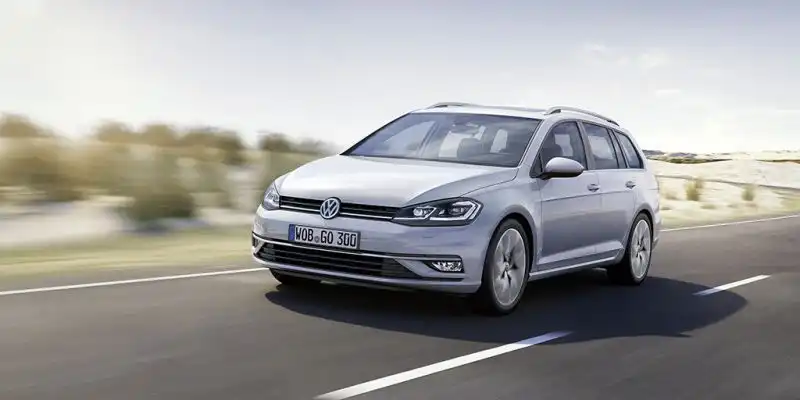
The Volkswagen Golf VII Variant 1.4 TSI (147 hp) Automatic, produced from 2017 to 2020, represents a popular configuration within the facelifted seventh generation of Volkswagen’s iconic Golf model line. This variant, a five-door station wagon (estate) positioned as a mid-range offering, aimed to balance fuel efficiency, practicality, and reasonable performance for the European market and beyond. It built upon the success of the Golf VII platform (A7), known for its refinement and versatility, and offered a compelling alternative to traditional hatchbacks for families and those requiring increased cargo capacity. The “Variant” designation signifies the estate body style, differentiating it from the standard hatchback.
Technical Specifications
| Brand | Volkswagen |
| Model | Golf |
| Generation | Golf VII Variant (facelift 2017) |
| Type (Engine) | 1.4 TSI (147 Hp) Automatic |
| Start of production | 2017 |
| End of production | 2020 |
| Powertrain Architecture | Internal Combustion engine |
| Body type | Station wagon (estate) |
| Seats | 5 |
| Doors | 5 |
| Fuel consumption (urban) | 8.6 l/100 km (27.4 US mpg) |
| Fuel consumption (extra urban) | 6.5 l/100 km (36.2 US mpg) |
| Fuel consumption (combined) | 7.6 l/100 km (30.9 US mpg) |
| Fuel Type | Petrol (Gasoline) |
| Weight-to-power ratio | 9.6 kg/Hp |
| Weight-to-torque ratio | 5.7 kg/Nm |
| Power | 147 Hp @ 5000 rpm |
| Power per litre | 105.4 Hp/l |
| Torque | 250 Nm @ 1500 rpm (184.39 lb.-ft. @ 1500 rpm) |
| Engine layout | Front, Transverse |
| Engine Model/Code | DGXA |
| Engine displacement | 1395 cm3 (85.13 cu. in.) |
| Number of cylinders | 4 |
| Engine configuration | Inline |
| Cylinder Bore | 74.5 mm (2.93 in.) |
| Piston Stroke | 80.01 mm (3.15 in.) |
| Compression ratio | 10:1 |
| Number of valves per cylinder | 4 |
| Fuel injection system | Direct injection |
| Engine aspiration | Turbocharger, Intercooler |
| Valvetrain | DOHC |
| Engine oil capacity | 4 l (4.23 US qt | 3.52 UK qt) |
| Coolant capacity | 10 l (10.57 US qt | 8.8 UK qt) |
| Kerb Weight | 1415 kg (3119.54 lbs.) |
| Max. weight | 1930 kg (4254.92 lbs.) |
| Max load | 515 kg (1135.38 lbs.) |
| Trunk (boot) space – minimum | 861 l (30.41 cu. ft.) |
| Trunk (boot) space – maximum | 1883 l (66.5 cu. ft.) |
| Fuel tank capacity | 50 l (13.21 US gal | 11 UK gal) |
| Length | 4562 mm (179.61 in.) |
| Width | 1799 mm (70.83 in.) |
| Height | 1481 mm (58.31 in.) |
| Wheelbase | 2629 mm (103.5 in.) |
| Front track | 1549 mm (60.98 in.) |
| Rear track | 1520 mm (59.84 in.) |
| Drag coefficient (Cd) | 0.31 |
| Minimum turning circle | 10.9 m (35.76 ft.) |
| Drivetrain | Front wheel drive |
| Number of gears | 8 |
| Gearbox type | Automatic transmission |
| Front suspension | Independent type McPherson |
| Rear suspension | Independent multi-link suspension |
| Front brakes | Disc |
| Rear brakes | Disc |
| Steering type | Steering rack and pinion |
| Power steering | Electric Steering |
| Tires size | 205/55 R16 |
| Wheel rims size | 16 |
Powertrain & Engine Architecture
At the heart of the Golf VII Variant 1.4 TSI Automatic lies the DGXA engine code, a 1.4-liter turbocharged inline-four cylinder gasoline engine. This engine is a member of Volkswagen’s EA211 engine family, known for its compact design and efficiency. The DGXA utilizes direct fuel injection (DFI) and a turbocharger with an intercooler to deliver a balance of power and fuel economy. The DFI system precisely meters fuel directly into the combustion chamber, improving combustion efficiency and reducing emissions. The engine features a dual overhead camshaft (DOHC) valvetrain with four valves per cylinder, optimizing airflow for enhanced performance. The 147 hp output is achieved at 5000 rpm, while peak torque of 250 Nm (184 lb-ft) is available from a low 1500 rpm, providing good responsiveness in everyday driving situations. Paired with this engine is an 8-speed automatic transmission (typically Aisin’s AQ280), chosen for its smooth shifting and contribution to fuel efficiency. This transmission offers a wide range of gear ratios, optimizing engine speed for both acceleration and cruising.
Driving Characteristics
The 1.4 TSI Automatic variant delivers a comfortable and refined driving experience. While not a performance-oriented model, the 147 hp engine provides adequate power for typical commuting and highway driving. Acceleration is respectable, though noticeably slower than the more powerful Golf variants like the GTI or those equipped with larger engines. The 8-speed automatic transmission contributes to smooth gear changes, and the low-end torque from the turbocharger ensures decent responsiveness in urban environments. The automatic transmission’s programming prioritizes fuel efficiency, which can sometimes result in slightly hesitant downshifts when quick acceleration is needed. Compared to the manual transmission versions of the 1.4 TSI, the automatic offers greater convenience, particularly in stop-and-go traffic, but sacrifices some driver engagement and potentially a slight improvement in fuel economy.
Equipment & Trim Levels
The Golf VII Variant 1.4 TSI Automatic typically came equipped with a solid base level of features. Standard equipment often included air conditioning, a touchscreen infotainment system with Bluetooth connectivity, alloy wheels, and a suite of safety features such as ABS, electronic stability control, and multiple airbags. Higher trim levels, such as Comfortline or Highline, added features like automatic climate control, parking sensors, a larger infotainment screen, and upgraded interior materials. Optional extras included a panoramic sunroof, navigation system, adaptive cruise control, and leather upholstery. Interior upholstery was typically cloth on base models, with leather options available on higher trims. The dashboard layout followed the Golf VII’s clean and functional design, with a focus on ergonomics and ease of use.
Chassis & Braking
The Golf VII Variant 1.4 TSI Automatic utilizes an independent McPherson strut suspension at the front and an independent multi-link suspension at the rear. This suspension setup provides a good balance of ride comfort and handling. The suspension components were tuned to accommodate the vehicle’s weight and provide stable handling characteristics. Braking duties are handled by disc brakes on all four wheels, providing adequate stopping power. Anti-lock Braking System (ABS) and Electronic Stability Control (ESC) are standard features, enhancing safety and control. The steering system is an electric power steering system, offering light and precise steering feel.
Market Reception & Comparison
The Golf VII Variant 1.4 TSI Automatic was generally well-received by automotive critics. It was praised for its practicality, fuel efficiency, and comfortable ride. However, some reviewers noted that the engine could feel underpowered when fully loaded or when tackling steep hills. Compared to the 1.6 TDI diesel variant, the 1.4 TSI offered slightly less fuel economy but provided a more responsive driving experience. Against the more powerful Golf variants, it represented a more affordable entry point into the Golf range, appealing to buyers who prioritized practicality and efficiency over outright performance. Reliability reports generally indicate good long-term reliability for the 1.4 TSI engine and the Aisin automatic transmission, although regular maintenance is crucial.
Legacy
The Golf VII Variant 1.4 TSI Automatic remains a popular choice in the used car market. Its combination of practicality, fuel efficiency, and Volkswagen’s reputation for build quality make it an attractive option for buyers seeking a versatile and reliable estate car. The DGXA engine, while not without its quirks (such as potential carbon buildup on the intake valves), is generally considered durable when properly maintained. The Aisin 8-speed automatic transmission has also proven to be a reliable unit. As a result, well-maintained examples of this variant continue to command reasonable prices and offer a compelling value proposition for buyers looking for a practical and efficient family vehicle.