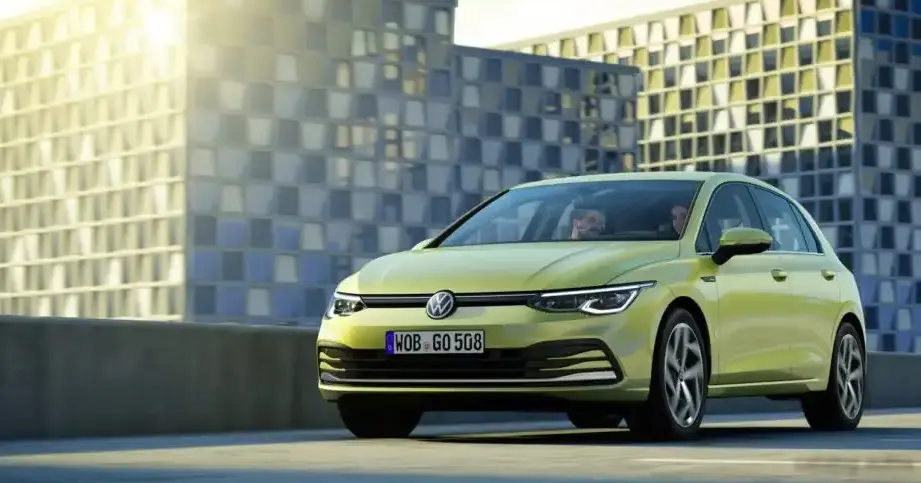
The Volkswagen Golf VIII 2.0 TDI (150 hp) DSG represents a significant iteration in the long-running Golf lineage, produced from 2020 to 2024. Positioned as a mid-range offering within the eighth-generation Golf lineup (internally designated the MK8), this variant combined a fuel-efficient diesel engine with the convenience of a dual-clutch transmission. It aimed to balance performance, economy, and practicality for European drivers, offering a compelling alternative to petrol-powered versions and other diesel trims. The Golf VIII itself builds upon the success of the 7th generation, incorporating updated technology, a revised interior, and a focus on digitalization.
Technical Specifications
| Brand | Volkswagen |
| Model | Golf |
| Generation | Golf VIII |
| Type (Engine) | 2.0 TDI (150 Hp) DSG |
| Start of production | 2020 |
| End of production | 2024 |
| Powertrain Architecture | Internal Combustion engine |
| Body type | Hatchback |
| Seats | 5 |
| Doors | 5 |
| Fuel consumption (urban) | 4.4 l/100 km (53.5 US mpg, 64.2 UK mpg, 22.7 km/l) |
| Fuel consumption (extra urban) | 3.3-3.4 l/100 km (71.3 – 69.2 US mpg, 85.6 – 83.1 UK mpg, 30.3 – 29.4 km/l) |
| Fuel consumption (combined) | 3.7 l/100 km (63.6 US mpg, 76.3 UK mpg, 27 km/l) |
| CO2 emissions | 97-99 g/km |
| Fuel Type | Diesel |
| Acceleration 0 – 100 km/h | 8.8 sec |
| Acceleration 0 – 62 mph | 8.8 sec |
| Acceleration 0 – 60 mph | 8.4 sec |
| Maximum speed | 223 km/h (138.57 mph) |
| Emission standard | Euro 6d – TEMP – EVAP – ISC |
| Weight-to-power ratio | 9.3 kg/Hp, 107.9 Hp/tonne |
| Weight-to-torque ratio | 3.9 kg/Nm, 259 Nm/tonne |
| Power | 150 Hp @ 3500-4000 rpm |
| Power per litre | 76.2 Hp/l |
| Torque | 360 Nm @ 1600-2750 rpm (265.52 lb.-ft. @ 1600-2750 rpm) |
| Engine layout | Front, Transverse |
| Engine Model/Code | EA288 evo / DTSB |
| Engine displacement | 1968 cm3 (120.09 cu. in.) |
| Number of cylinders | 4 |
| Engine configuration | Inline |
| Number of valves per cylinder | 4 |
| Fuel injection system | Diesel Commonrail |
| Engine aspiration | Turbocharger, Intercooler |
| Engine oil capacity | 5.5 l (5.81 US qt | 4.84 UK qt) |
| Coolant capacity | 8 l (8.45 US qt | 7.04 UK qt) |
| Kerb Weight | 1390 kg (3064.43 lbs.) |
| Max. weight | 1960 kg (4321.06 lbs.) |
| Max load | 570 kg (1256.63 lbs.) |
| Trunk (boot) space – minimum | 380 l (13.42 cu. ft.) |
| Trunk (boot) space – maximum | 1237 l (43.68 cu. ft.) |
| Fuel tank capacity | 50 l (13.21 US gal | 11 UK gal) |
| AdBlue tank capacity | 12 l (3.17 US gal | 2.64 UK gal) |
| Max. roof load | 75 kg (165.35 lbs.) |
| Permitted trailer load with brakes (8%) | 1800 kg (3968.32 lbs.) |
| Permitted trailer load with brakes (12%) | 1600 kg (3527.4 lbs.) |
| Permitted trailer load without brakes | 730 kg (1609.37 lbs.) |
| Permitted towbar download | 80 kg (176.37 lbs.) |
| Length | 4284 mm (168.66 in.) |
| Width | 1789 mm (70.43 in.) |
| Height | 1456 mm (57.32 in.) |
| Wheelbase | 2636 mm (103.78 in.) |
| Front track | 1549 mm (60.98 in.) |
| Rear track | 1519 mm (59.8 in.) |
| Drag coefficient (Cd) | 0.275 |
| Drivetrain Architecture | Front wheel drive |
| Number of gears and type of gearbox | 7 gears, automatic transmission DSG |
| Front suspension | Independent, type McPherson with coil spring and anti-roll bar, Wishbone |
| Rear suspension | Independent multi-link suspension |
| Front brakes | Ventilated discs |
| Rear brakes | Disc |
Powertrain & Engine Architecture
At the heart of the Golf VIII 2.0 TDI DSG lies the EA288 evo series diesel engine, specifically the DTSB variant. This 1968cc inline-four cylinder engine utilizes a common rail direct injection system, delivering fuel at extremely high pressures for optimized combustion. The engine features a turbocharger with an intercooler, enhancing power output and efficiency. The EA288 evo incorporates advanced technologies like a closed crankcase ventilation system and a diesel particulate filter (DPF) to meet stringent Euro 6d emission standards. The engine produces 150 horsepower at 3500-4000 rpm and a substantial 360 Nm (265.52 lb-ft) of torque between 1600 and 2750 rpm. This torque band provides strong pulling power across a wide range of engine speeds. Paired with the engine is a 7-speed dual-clutch transmission (DSG), known for its quick and smooth gear changes. The DSG allows for both fully automatic operation and manual gear selection via steering wheel-mounted paddles or the gear selector.
Driving Characteristics
The 2.0 TDI DSG offers a refined and capable driving experience. The readily available torque from the diesel engine provides brisk acceleration, with a 0-60 mph time of around 8.4 seconds. While not a sports car, the Golf VIII 2.0 TDI DSG feels responsive in everyday driving situations, making overtaking and merging onto highways effortless. The DSG transmission contributes to smooth gear changes, enhancing comfort and efficiency. Compared to the lower-powered 1.6 TDI variants, the 2.0 TDI offers a noticeable performance boost. However, it doesn’t match the outright speed of the petrol-powered GTI models. The DSG transmission, while efficient, can sometimes exhibit slight hesitation at low speeds, a characteristic common to some DSG units. The gear ratios are tuned for a balance between fuel economy and performance, prioritizing mid-range acceleration over outright top-end speed.
Equipment & Trim Levels
The Golf VIII 2.0 TDI DSG typically came equipped with a generous amount of standard features. These included air conditioning, a touchscreen infotainment system with Apple CarPlay and Android Auto compatibility, LED headlights, and a suite of safety features such as automatic emergency braking and lane departure warning. Higher trim levels, such as Style and R-Line, added features like larger alloy wheels, a digital cockpit (replacing traditional gauges with a customizable display), adaptive cruise control, and premium interior upholstery. Optional extras included a panoramic sunroof, a premium sound system, and parking assist features.
Chassis & Braking
The Golf VIII utilizes an independent suspension setup, with a McPherson strut front suspension and a multi-link rear suspension. This configuration provides a comfortable ride quality while maintaining good handling characteristics. The chassis is relatively lightweight, contributing to the car’s agility. Braking duties are handled by ventilated discs at the front and solid discs at the rear. Anti-lock braking system (ABS) and electronic stability control (ESC) are standard features, enhancing safety and control. The steering is electrically assisted, providing a precise and responsive feel.
Market Reception & Comparison
The Golf VIII 2.0 TDI DSG was generally well-received by automotive critics. It was praised for its fuel efficiency, comfortable ride, and refined driving experience. However, some critics noted the complexity of the infotainment system and the occasional hesitation of the DSG transmission. Compared to the 1.6 TDI variant, the 2.0 TDI offered a significant performance upgrade, making it a more appealing option for drivers who frequently travel long distances or carry passengers. The 2.0 TDI also offered better fuel economy than the petrol-powered Golf models, particularly in mixed driving conditions. Reliability has been generally good, although some owners have reported issues with the DPF system, a common concern with modern diesel engines.
Legacy
The Volkswagen Golf VIII 2.0 TDI DSG represents a well-rounded and practical choice in the compact hatchback segment. The EA288 evo engine, when properly maintained, is known for its durability and longevity. The DSG transmission, while potentially requiring more frequent servicing than a traditional automatic, offers a smooth and efficient driving experience. On the used car market, these models hold their value reasonably well, reflecting the Golf’s reputation for quality and reliability. As emissions regulations continue to tighten, the future of diesel engines remains uncertain, but the Golf VIII 2.0 TDI DSG remains a capable and efficient option for those seeking a practical and economical hatchback.