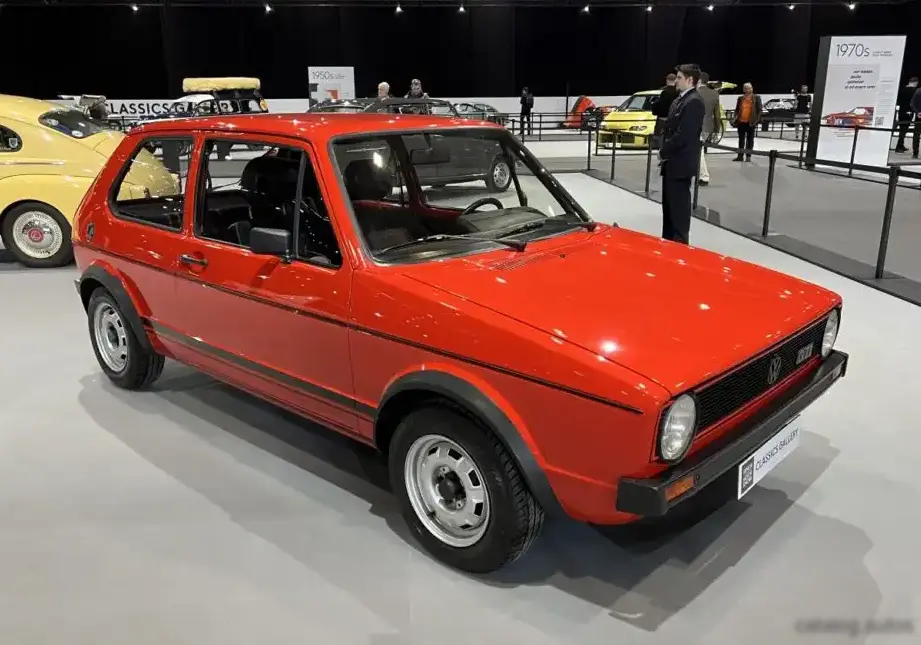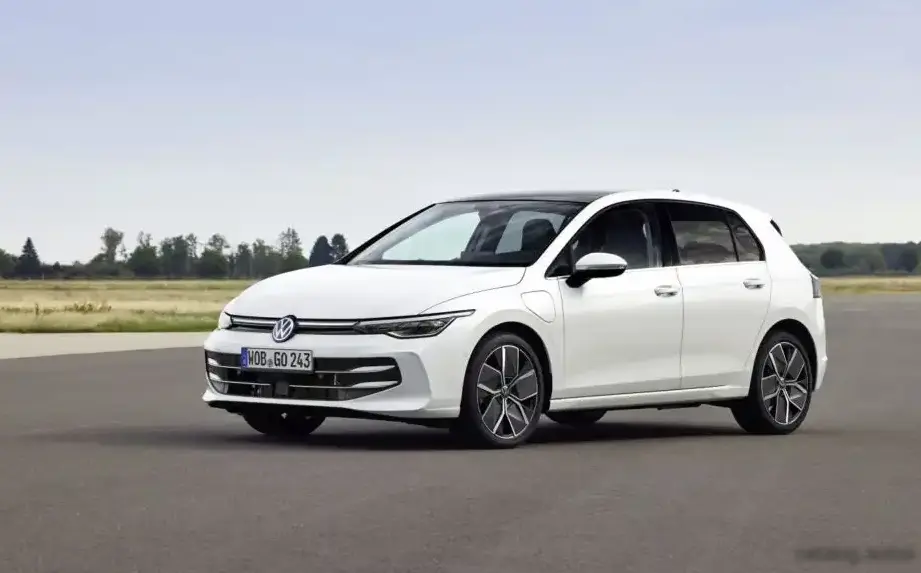
The Volkswagen Golf VIII, specifically the 2.0 TDI variant producing 116 horsepower, represents a significant iteration in the long-running Golf lineage. Introduced with the 2024 facelift, this model builds upon the foundation of the Golf VIII (introduced in 2019), which itself rides on the MQB Evo platform – an evolution of the widely-used MQB architecture. This particular engine and trim level is positioned as a fuel-efficient and practical option within the Golf VIII range, appealing to buyers prioritizing economy and everyday usability over outright performance. It serves as a core offering in European markets, where diesel engines continue to hold a substantial share due to their fuel efficiency and torque characteristics.
Technical Specifications
| Brand | Volkswagen |
| Model | Golf |
| Generation | Golf VIII (facelift 2024) |
| Type (Engine) | 2.0 TDI (116 Hp) |
| Start of production | 2024 |
| Powertrain Architecture | Internal Combustion engine |
| Body type | Hatchback |
| Seats | 5 |
| Doors | 5 |
| Fuel consumption at Low speed (WLTP) | 6.3 l/100 km (37.3 US mpg, 44.8 UK mpg, 15.9 km/l) |
| Fuel consumption at Medium speed (WLTP) | 4.2-4.3 l/100 km (56 – 54.7 US mpg, 67.3 – 65.7 UK mpg, 23.8 – 23.3 km/l) |
| Fuel consumption at high speed (WLTP) | 3.6-3.8 l/100 km (65.3 – 61.9 US mpg, 78.5 – 74.3 UK mpg, 27.8 – 26.3 km/l) |
| Fuel consumption at very high speed (WLTP) | 4.3-4.5 l/100 km (54.7 – 52.3 US mpg, 65.7 – 62.8 UK mpg, 23.3 – 22.2 km/l) |
| Combined fuel consumption (WLTP) | 4.3-4.5 l/100 km (54.7 – 52.3 US mpg, 65.7 – 62.8 UK mpg, 23.3 – 22.2 km/l) |
| CO2 emissions (WLTP) | 114-117 g/km |
| Fuel Type | Diesel |
| Acceleration 0 – 100 km/h | 10.2 sec |
| Acceleration 0 – 62 mph | 10.2 sec |
| Acceleration 0 – 60 mph | 9.7 sec |
| Maximum speed | 202 km/h (125.52 mph) |
| Emission standard | Euro 6 EA |
| Weight-to-power ratio | 11.3 kg/Hp, 88.2 Hp/tonne |
| Weight-to-torque ratio | 4.4 kg/Nm, 228.1 Nm/tonne |
| Power | 116 Hp |
| Power per litre | 58.9 Hp/l |
| Torque | 300 Nm @ 1600-2500 rpm (221.27 lb.-ft. @ 1600-2500 rpm) |
| Engine layout | Front, Transverse |
| Engine Model/Code | EA288 evo |
| Engine displacement | 1968 cm3 (120.09 cu. in.) |
| Number of cylinders | 4 |
| Engine configuration | Inline |
| Cylinder Bore | 81 mm (3.19 in.) |
| Piston Stroke | 95.5 mm (3.76 in.) |
| Number of valves per cylinder | 4 |
| Fuel injection system | Diesel Commonrail |
| Engine aspiration | Turbocharger, Intercooler |
| Valvetrain | DOHC |
| Engine systems | Start & Stop System, Particulate filter |
| Kerb Weight | 1315 kg (2899.08 lbs.) |
| Max. weight | 1890 kg (4166.74 lbs.) |
| Max load | 575 kg (1267.66 lbs.) |
| Trunk (boot) space – minimum | 381 l (13.45 cu. ft.) |
| Trunk (boot) space – maximum | 1237 l (43.68 cu. ft.) |
| Fuel tank capacity | 45 l (11.89 US gal, 9.9 UK gal) |
| Permitted trailer load with brakes (8%) | 1800 kg (3968.32 lbs.) |
| Permitted trailer load with brakes (12%) | 1500 kg (3306.93 lbs.) |
| Permitted trailer load without brakes | 690 kg (1521.19 lbs.) |
| Permitted towbar download | 80 kg (176.37 lbs.) |
| Length | 4282 mm (168.58 in.) |
| Width | 1789 mm (70.43 in.) |
| Width including mirrors | 2073 mm (81.61 in.) |
| Height | 1483 mm (58.39 in.) |
| Wheelbase | 2620 mm (103.15 in.) |
| Front track | 1534-1550 mm (60.39 – 61.02 in.) |
| Rear (Back) track | 1502-1518 mm (59.13 – 59.76 in.) |
| Minimum turning circle | 11.1 m (36.42 ft.) |
| Approach angle | 14° |
| Departure angle | 16° |
| Ramp-over angle | 11° |
| Drivetrain Architecture | Front wheel drive |
| Drive wheel | Front wheel drive |
| Number of gears and type of gearbox | 6 gears, manual transmission |
| Front suspension | Independent, type McPherson with coil spring and anti-roll bar |
| Front brakes | Ventilated discs |
| Rear brakes | Disc |
| Assisting systems | ABS (Anti-lock braking system) |
| Steering type | Steering rack and pinion |
| Power steering | Electric Steering |
| Tires size | 195/65 R15; 205/55 R16; 225/45 R17; 225/40 R18 |
| Wheel rims size | 6J x 15; 7J x 16; 7.5J x 17; 7.5J x 18 |
Powertrain & Engine Architecture
The heart of this Golf variant is the EA288 evo 2.0-liter four-cylinder diesel engine. This engine is a common sight in the Volkswagen Group’s European lineup, known for its balance of efficiency and torque. The ‘evo’ designation signifies the latest iteration of the EA288, incorporating improvements for reduced emissions and enhanced fuel economy. It utilizes a common-rail direct injection system, delivering fuel at extremely high pressures for optimized combustion. The engine also features a turbocharger with an intercooler, boosting power output and improving throttle response. The valvetrain employs a dual overhead camshaft (DOHC) configuration with four valves per cylinder, contributing to efficient gas exchange. The engine is transversely mounted at the front of the vehicle, driving the front wheels. A diesel particulate filter (DPF) is standard, crucial for meeting stringent Euro 6 emissions standards. The 6-speed manual transmission is the standard offering, chosen for its simplicity and efficiency.
Driving Characteristics
The 116 horsepower and 300 Nm (221 lb-ft) of torque provide adequate, though not exhilarating, performance. Acceleration from 0-100 km/h (0-62 mph) takes around 10.2 seconds. The engine’s strength lies in its mid-range torque, making it well-suited for everyday driving and overtaking maneuvers. Compared to higher-output Golf variants like the GTI or R, this 2.0 TDI feels noticeably less powerful. However, it offers a more relaxed driving experience, with less need for frequent gear changes. The manual transmission provides a direct connection to the engine, allowing for precise control, but the gear ratios are tuned for fuel efficiency rather than outright performance. Compared to the 1.5 TSI petrol engine, the 2.0 TDI offers superior fuel economy and a broader torque curve, but lacks the petrol engine’s responsiveness.
Equipment & Trim Levels
The 2.0 TDI 116 hp typically comes with a solid base level of equipment. Standard features generally include air conditioning, a touchscreen infotainment system with Apple CarPlay and Android Auto compatibility, LED headlights, and a suite of safety features like ABS, ESC, and multiple airbags. Higher trim levels add features such as automatic climate control, larger infotainment screens, adaptive cruise control, and parking sensors. Interior upholstery is typically cloth, with options for leather or Alcantara available on higher trims. The dashboard layout is consistent across the Golf VIII range, featuring a digital instrument cluster (Digital Cockpit) on many models.
Chassis & Braking
The Golf VIII utilizes an independent McPherson strut suspension setup at the front, providing a comfortable and controlled ride. The rear suspension varies depending on the trim level and engine output; this 116 hp variant typically features a multi-link rear suspension. Braking is handled by ventilated discs at the front and solid discs at the rear. ABS (Anti-lock Braking System) is standard, along with ESC (Electronic Stability Control). The steering is an electric power-assisted rack and pinion system, offering precise and responsive handling.
Market Reception & Comparison
The 2.0 TDI 116 hp Golf VIII has been well-received in European markets as a practical and economical choice. Critics have praised its fuel efficiency and comfortable ride, but some have noted its lack of outright performance compared to more powerful Golf variants. Compared to the petrol-powered Golf models, the TDI offers significantly better fuel economy, particularly on longer journeys. However, it typically commands a slightly higher purchase price. Reliability has generally been good, with the EA288 engine proving to be a durable and dependable unit.
Legacy
The EA288 engine family has a long and established track record within the Volkswagen Group. This specific 2.0 TDI configuration, while not the most powerful in the Golf VIII lineup, represents a well-engineered and efficient powertrain. In the used car market, these models are likely to hold their value due to their fuel economy and reputation for reliability. Proper maintenance, including regular oil changes and DPF servicing, is crucial for ensuring the long-term health of this engine. As emissions regulations continue to tighten, diesel engines like this may become less common, potentially increasing the value of well-maintained examples in the future.