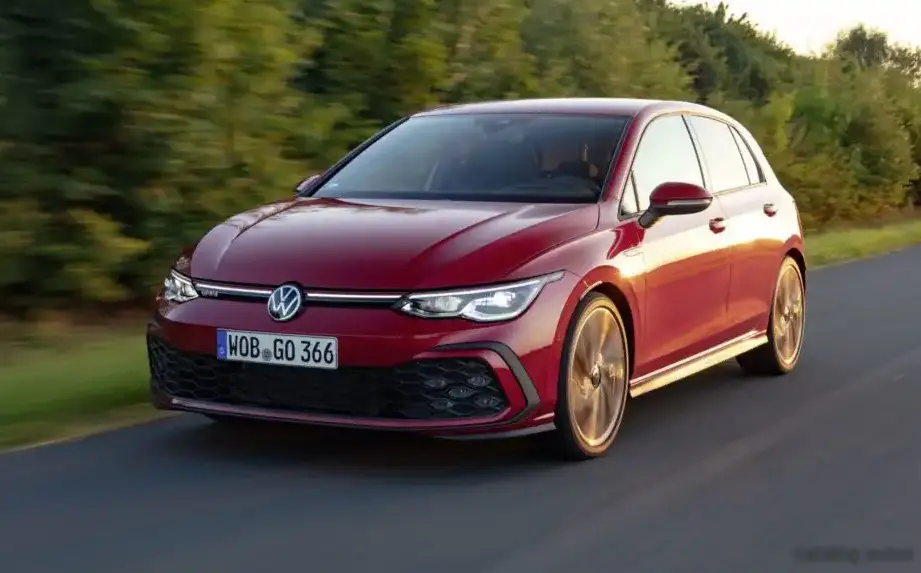
The Volkswagen Golf VIII GTI 2.0 TSI (245 Hp) represents a significant iteration in the long and storied history of the Golf GTI. Introduced in 2020 as part of the eighth-generation Golf lineup (Mk8), this variant aimed to blend performance with everyday usability, continuing the GTI’s tradition as a hot hatchback benchmark. Production continued through 2024, solidifying its place as a popular choice within the Golf VIII range. It sits within the A-segment hatchback class, competing with vehicles like the Honda Civic Si, Hyundai Elantra N, and other performance-oriented compact cars. This specific 245 horsepower version served as the primary GTI offering in many markets, positioned as a step up from the base Golf models and a more accessible entry point into the GTI family compared to more potent, limited-edition versions.
Technical Specifications
| Brand | Volkswagen |
| Model | Golf |
| Generation | Golf VIII |
| Type (Engine) | GTI 2.0 TSI (245 Hp) |
| Start of production | 2020 |
| End of production | 2024 |
| Powertrain Architecture | Internal Combustion engine |
| Body type | Hatchback |
| Seats | 5 |
| Doors | 5 |
| Fuel consumption at Low speed (WLTP) | 10.8 l/100 km (21.8 US mpg, 26.2 UK mpg, 9.3 km/l) |
| Fuel consumption at Medium speed (WLTP) | 7.2 l/100 km (32.7 US mpg, 39.2 UK mpg, 13.9 km/l) |
| Fuel consumption at high speed (WLTP) | 6.4 l/100 km (36.8 US mpg, 44.1 UK mpg, 15.6 km/l) |
| Fuel consumption at very high speed (WLTP) | 7.2 l/100 km (32.7 US mpg, 39.2 UK mpg, 13.9 km/l) |
| Combined fuel consumption (WLTP) | 7.4 l/100 km (31.8 US mpg, 38.2 UK mpg, 13.5 km/l) |
| CO2 emissions (WLTP) | 169 g/km |
| Fuel consumption (economy) – urban (NEDC) | 9 l/100 km (26.1 US mpg, 31.4 UK mpg, 11.1 km/l) |
| Fuel consumption (economy) – extra urban (NEDC) | 5.6 l/100 km (42 US mpg, 50.4 UK mpg, 17.9 km/l) |
| Fuel consumption (economy) – combined (NEDC) | 6.9 l/100 km (34.1 US mpg, 40.9 UK mpg, 14.5 km/l) |
| CO2 emissions (NEDC) | 157 g/km |
| Fuel Type | Petrol (Gasoline) |
| Acceleration 0 – 100 km/h | 6.4 sec |
| Acceleration 0 – 62 mph | 6.4 sec |
| Acceleration 0 – 60 mph | 6.1 sec |
| Maximum speed | 250 km/h (155.34 mph), Electronically limited |
| Emission standard | Euro 6d-ISC-FCM |
| Weight-to-power ratio | 5.5 kg/Hp, 180.9 Hp/tonne |
| Weight-to-torque ratio | 3.7 kg/Nm, 273.3 Nm/tonne |
| Power | 245 Hp @ 5000-6000 rpm |
| Power per litre | 123.5 Hp/l |
| Torque | 370 Nm @ 1600-4300 rpm (272.9 lb.-ft. @ 1600-4300 rpm) |
| Engine layout | Front, Transverse |
| Engine Model/Code | DNPA |
| Engine displacement | 1984 cm3 (121.07 cu. in.) |
| Number of cylinders | 4 |
| Engine configuration | Inline |
| Cylinder Bore | 82.5 mm (3.25 in.) |
| Piston Stroke | 92.8 mm (3.65 in.) |
| Number of valves per cylinder | 4 |
| Fuel injection system | Direct injection |
| Engine aspiration | Turbocharger, Intercooler |
| Valvetrain | DOHC |
| Engine oil capacity | 5.7 l (6.02 US qt | 5.02 UK qt) |
| Kerb Weight | 1354 kg (2985.06 lbs.) |
| Max. weight | 1920 kg (4232.88 lbs.) |
| Max load | 566 kg (1247.82 lbs.) |
| Trunk (boot) space – minimum | 374 l (13.21 cu. ft.) |
| Trunk (boot) space – maximum | 1230 l (43.44 cu. ft.) |
| Max. roof load | 75 kg (165.35 lbs.) |
| Permitted trailer load with brakes (8%) | 1800 kg (3968.32 lbs.) |
| Permitted trailer load with brakes (12%) | 1600 kg (3527.4 lbs.) |
| Permitted trailer load without brakes | 710 kg (1565.28 lbs.) |
| Permitted towbar download | 80 kg (176.37 lbs.) |
| Length | 4287 mm (168.78 in.) |
| Width | 1789 mm (70.43 in.) |
| Width including mirrors | 2073 mm (81.61 in.) |
| Height | 1478 mm (58.19 in.) |
| Wheelbase | 2627 mm (103.43 in.) |
| Front track | 1535-1545 mm (60.43 – 60.83 in.) |
| Rear (Back) track | 1513-1523 mm (59.57 – 59.96 in.) |
| Minimum turning circle (turning diameter) | 10.9 m (35.76 ft.) |
| Drivetrain Architecture | The Internal combustion engine (ICE) drives the front wheels of the vehicle. |
| Drive wheel | Front wheel drive |
| Number of gears and type of gearbox | 6 gears, manual transmission |
| Front suspension | Independent type McPherson, Transverse stabilizer |
| Rear suspension | Independent multi-link suspension, Transverse stabilizer |
| Assisting systems | ABS (Anti-lock braking system) |
| Steering type | Steering rack and pinion |
| Power steering | Electric Steering |
| Tires size | 225/45 R17; 225/40 R18; 235/35 R19 |
| Wheel rims size | 7.5J x 17; 7.5J x 18; 8J x 19 |
Powertrain & Engine Architecture
At the heart of the Golf VIII GTI 2.0 TSI (245 Hp) lies the EA888 2.0-liter turbocharged four-cylinder engine, specifically the DNPA engine code. This engine is a direct-injection powerplant featuring a cast iron block and an aluminum cylinder head. The direct injection system, coupled with a sophisticated turbocharger and intercooler setup, allows for precise fuel delivery and increased air density, contributing to both power and efficiency. The engine utilizes a dual overhead camshaft (DOHC) valvetrain with four valves per cylinder, optimizing gas flow for improved performance. The 245 horsepower output is achieved at 5000-6000 rpm, while the peak torque of 370 Nm (272.9 lb-ft) is available from 1600-4300 rpm, providing a broad and usable powerband. The engine is paired with a 6-speed manual transmission, delivering power to the front wheels. While a 7-speed dual-clutch transmission (DSG) was also available on other GTI trims, the 6-speed manual was a popular choice for enthusiasts seeking a more engaging driving experience.
Driving Characteristics
The 245 hp GTI with the 6-speed manual offers a balanced driving experience. Acceleration from 0-60 mph takes approximately 6.1 seconds, making it a genuinely quick hatchback. The engine’s torque delivery is strong from low revs, providing ample pull for everyday driving and overtaking maneuvers. The manual transmission allows for precise gear selection and a greater sense of control, although the gear ratios are tuned for a blend of performance and fuel economy rather than outright acceleration. Compared to higher-output GTI variants, this version feels slightly less urgent in its acceleration, but it offers a more approachable and forgiving driving experience. The suspension setup provides a comfortable ride quality while still maintaining good body control in corners.
Equipment & Trim Levels
The Golf VIII GTI 2.0 TSI (245 Hp) typically came well-equipped as standard. Key features included sport seats upholstered in the classic GTI “Clark” plaid fabric, a leather-wrapped multi-function steering wheel, stainless steel pedal caps, and ambient lighting. The infotainment system featured a touchscreen display with Apple CarPlay and Android Auto compatibility. Standard safety features included automatic emergency braking, lane departure warning, and adaptive cruise control. Optional extras included a panoramic sunroof, upgraded sound system, and various driver assistance packages. The interior trim generally featured a sporty aesthetic with red accents and GTI-specific badging.
Chassis & Braking
The Golf VIII GTI utilizes an independent suspension setup, with a McPherson strut front suspension and a multi-link rear suspension. This configuration provides a good balance between ride comfort and handling precision. The GTI also benefits from a transverse stabilizer bar on both axles, reducing body roll during cornering. Braking duties are handled by ventilated disc brakes on all four wheels, providing ample stopping power. The ABS (Anti-lock Braking System) is standard, enhancing safety and control during emergency braking situations.
Market Reception & Comparison
The Golf VIII GTI 2.0 TSI (245 Hp) was generally well-received by automotive critics. It was praised for its engaging driving dynamics, comfortable ride quality, and well-equipped interior. Compared to the more powerful GTI variants, this version offered a more accessible price point and a more balanced driving experience. Fuel economy was also a strong point, with combined WLTP figures around 7.4 l/100 km (31.8 US mpg). Some critics noted that the infotainment system could be complex to navigate, and the reliance on touchscreen controls for some functions was a point of contention. However, overall, the GTI 2.0 TSI (245 Hp) was considered a compelling option in the hot hatchback segment.
Legacy
The Golf VIII GTI 2.0 TSI (245 Hp) has proven to be a reliable and durable vehicle. The EA888 engine is known for its robustness, and with regular maintenance, it can provide years of trouble-free service. On the used car market, these models hold their value relatively well, reflecting the GTI’s enduring popularity and reputation. Common maintenance items include oil changes, spark plug replacements, and occasional turbocharger inspections. The 6-speed manual transmission is generally considered reliable, but clutch wear should be monitored, especially for drivers who frequently engage in spirited driving. Overall, the Golf VIII GTI 2.0 TSI (245 Hp) represents a well-rounded and enjoyable hot hatchback that continues to appeal to enthusiasts and everyday drivers alike.