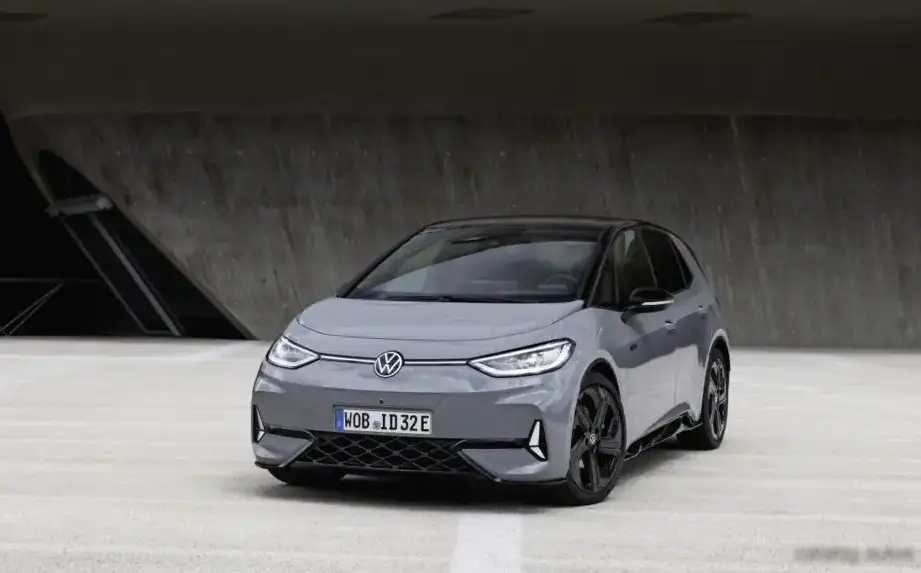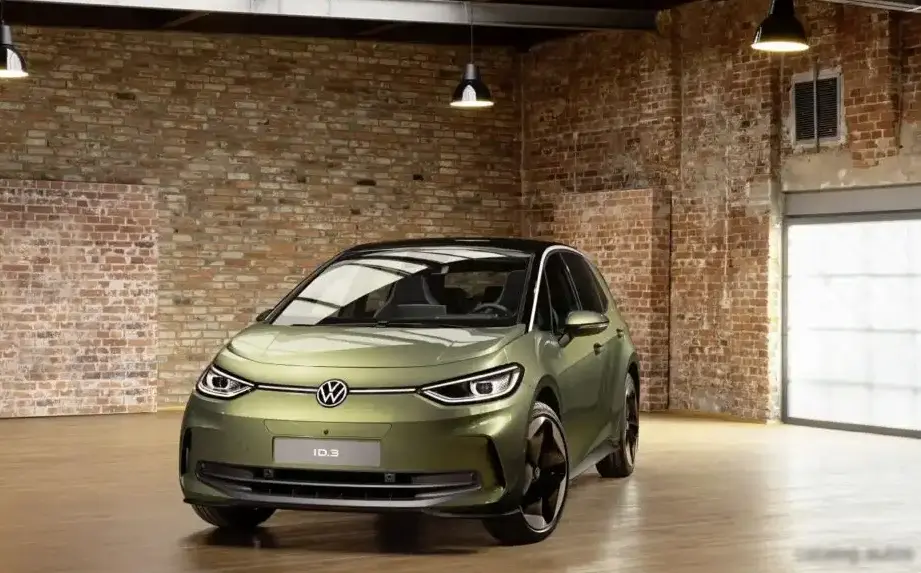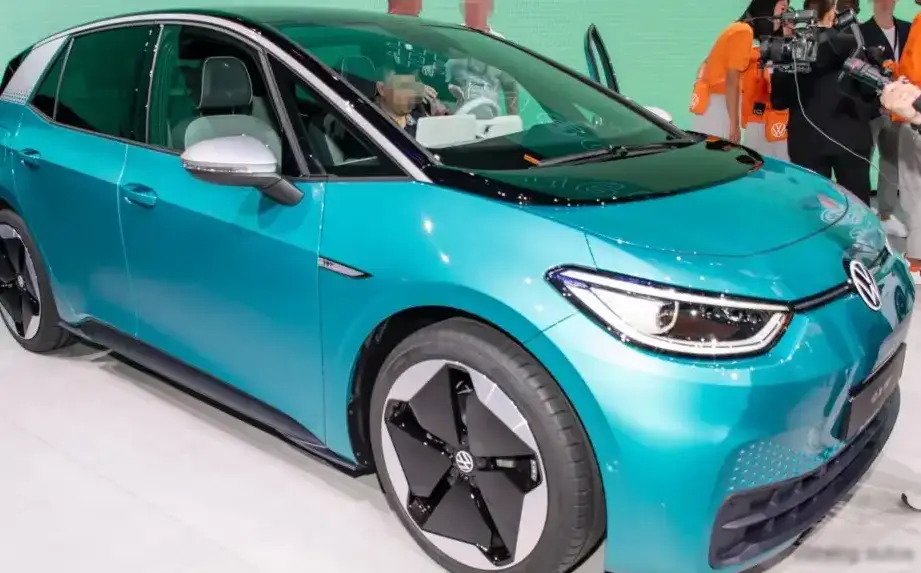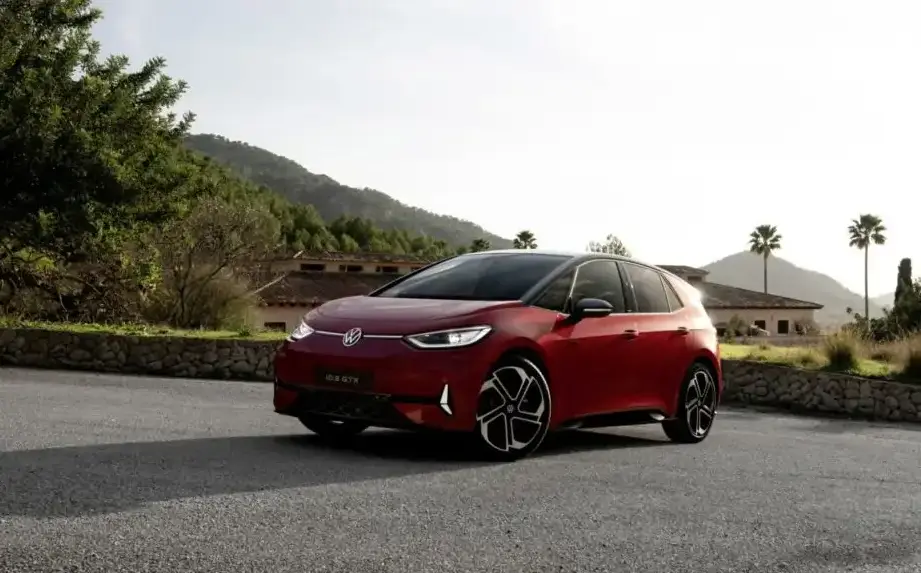
The Volkswagen ID.3 GTX 84 kWh (286 hp) represents the performance-oriented variant of Volkswagen’s all-electric compact hatchback, introduced with the 2023 facelift and entering production in May 2024. Positioned as the top-tier model within the ID.3 range, the GTX offers increased power, a larger battery pack, and a sportier driving experience compared to the standard ID.3 trims. It’s a key component of Volkswagen’s push towards electric mobility, designed to appeal to drivers seeking a blend of practicality, range, and performance in a zero-emission vehicle. The ID.3, in general, is a pivotal model for Volkswagen, representing their first dedicated electric vehicle built on the modular electric drive matrix (MEB) platform.
Technical Specifications
| Brand | Volkswagen |
| Model | ID.3 |
| Generation | ID.3 (facelift 2023) |
| Type (Engine) | GTX 84 kWh (286 Hp) |
| Start of production | May, 2024 |
| Powertrain Architecture | BEV (Electric Vehicle) |
| Body type | Hatchback |
| Seats | 5 |
| Doors | 5 |
| Fuel Type | Electricity |
| Acceleration 0 – 100 km/h | 5.9 sec |
| Acceleration 0 – 62 mph | 5.9 sec |
| Acceleration 0 – 60 mph | 5.6 sec |
| Maximum speed | 180 km/h (111.85 mph) |
| Weight-to-power ratio | 6.7 kg/Hp, 149.7 Hp/tonne |
| Weight-to-torque ratio | 3.5 kg/Nm, 285.3 Nm/tonne |
| Gross battery capacity | 84 kWh |
| Net (usable) battery capacity | 79 kWh |
| Battery voltage | 353 V |
| Battery technology | Lithium nickel manganese cobalt oxides (Li-NMC) |
| Battery location | Below the floor |
| All-electric range (WLTP) | 604 km (375.31 mi) |
| Average Energy consumption (WLTP) | 14.5 kWh/100 km (23.34 kWh/100 mi, 144 MPGe, 6.9 km/kWh, 4.3 mi/kWh) |
| Electric motor power | 286 Hp |
| Electric motor Torque | 545 Nm (401.97 lb.-ft.) |
| Electric motor model/code | APP550 |
| Electric motor location | Rear axle, Transverse |
| Electric motor type | Synchronous |
| System power | 286 Hp |
| System torque | 545 Nm (401.97 lb.-ft.) |
| Kerb Weight | 1910 kg (4210.83 lbs.) |
| Max. weight | 2430 kg (5357.23 lbs.) |
| Max load | 520 kg (1146.4 lbs.) |
| Trunk (boot) space – minimum | 385 l (13.6 cu. ft.) |
| Trunk (boot) space – maximum | 1267 l (44.74 cu. ft.) |
| Length | 4264 mm (167.87 in.) |
| Width | 1809 mm (71.22 in.) |
| Width including mirrors | 2070 mm (81.5 in.) |
| Height | 1564 mm (61.57 in.) |
| Wheelbase | 2770 mm (109.06 in.) |
| Front track | 1537-1549 mm (60.51 – 60.98 in.) |
| Rear (Back) track | 1514-1526 mm (59.61 – 60.08 in.) |
| Drag coefficient (Cd) | 0.274 |
| Minimum turning circle | 10.5 m (34.45 ft.) |
| Approach angle | 14.5° |
| Departure angle | 18° |
| Ramp-over angle | 11.4° |
| Drivetrain Architecture | One electric motor drives the rear wheels. |
| Drive wheel | Rear wheel drive |
| Number of gears | 1 |
| Gearbox type | Automatic transmission |
| Front suspension | Independent, type McPherson with coil spring and anti-roll bar |
| Rear suspension | Independent multi-link spring suspension with stabilizer |
| Front brakes | Ventilated discs |
| Rear brakes | Drum |
| Steering type | Steering rack and pinion |
| Power steering | Electric |
| Tires size | 215/45 R20 |
| Wheel rims size | 8J x 20 |
Powertrain & Engine Architecture
The ID.3 GTX 84 kWh is powered by a single, permanently excited synchronous motor located on the rear axle. This motor delivers 286 horsepower and 545 Nm (401.97 lb-ft) of torque. The motor, designated APP550, is integrated with a single-speed automatic transmission. The 84 kWh battery pack, utilizing Lithium Nickel Manganese Cobalt Oxide (Li-NMC) chemistry, is positioned under the vehicle floor, contributing to a low center of gravity and improved handling. The battery operates at 353 volts and provides a usable capacity of 79 kWh. The GTX benefits from enhanced thermal management for both the battery and motor, allowing for quicker charging times and sustained performance during demanding driving conditions. The vehicle supports DC fast charging, enabling a significant range boost in a relatively short period.
Driving Characteristics
The rear-wheel-drive configuration of the ID.3 GTX provides a different driving feel compared to front-wheel-drive ID.3 models. The increased power and torque result in brisk acceleration, with a 0-60 mph time of around 5.6 seconds. The single-speed transmission offers seamless acceleration, eliminating the need for gear changes. While the instant torque delivery is characteristic of electric vehicles, the GTX’s power output is noticeably higher than the base ID.3 trims, providing a more engaging driving experience. The lower center of gravity, thanks to the battery placement, contributes to improved stability and cornering ability. The GTX’s suspension is tuned for a balance between comfort and sportiness, offering a more controlled ride than the standard ID.3.
Equipment & Trim Levels
The GTX trim level comes standard with a comprehensive suite of features, including a large touchscreen infotainment system with navigation, digital instrument cluster, adaptive cruise control, lane-keeping assist, and automatic emergency braking. Interior appointments include sport seats with unique upholstery, GTX-specific badging, and ambient lighting. Optional extras include a panoramic sunroof, premium sound system, and advanced driver-assistance features like Travel Assist with lane change assist. The exterior styling is also differentiated with unique bumpers, aerodynamic enhancements, and larger alloy wheels.
Chassis & Braking
The ID.3 GTX utilizes an independent McPherson strut suspension at the front and a multi-link suspension at the rear, optimized for the vehicle’s weight and performance characteristics. Ventilated disc brakes are fitted to the front wheels, while the rear wheels employ drum brakes. The braking system is equipped with ABS (Anti-lock Braking System) and electronic stability control. The GTX features an electric power steering system with progressive steering, providing precise and responsive handling. The vehicle rides on 20-inch alloy wheels with 215/45 R20 tires.
Market Reception & Comparison
The ID.3 GTX has been generally well-received by automotive critics, who praise its performance, range, and handling. Compared to the standard ID.3 models, the GTX offers a significant upgrade in power and driving dynamics. Its range of 604 km (375.31 miles) on the WLTP cycle is competitive within the electric hatchback segment. However, some reviewers have noted that the rear drum brakes are a cost-saving measure that doesn’t quite match the performance of the front discs. Compared to other electric hatchbacks like the Hyundai IONIQ 5 or Kia EV6, the ID.3 GTX offers a more traditional hatchback experience, while those competitors emphasize a more crossover-like design.
Legacy
The ID.3 GTX represents an important step in Volkswagen’s transition to electric mobility. The MEB platform and the GTX’s powertrain technology are expected to be utilized in future Volkswagen electric vehicles. The long-term reliability of the APP550 motor and the Li-NMC battery pack remains to be fully assessed, but early reports suggest good durability. On the used car market, the ID.3 GTX is expected to hold its value well due to its performance credentials and the growing demand for electric vehicles. As battery technology continues to improve, the ID.3 GTX will likely become an increasingly attractive option for environmentally conscious drivers seeking a practical and enjoyable electric hatchback.