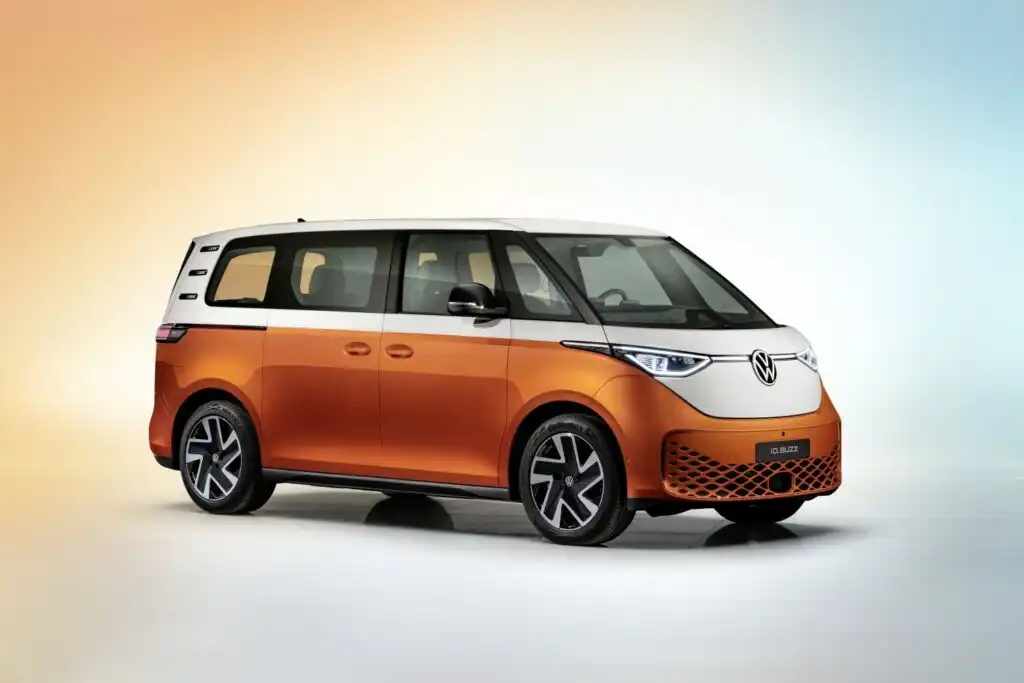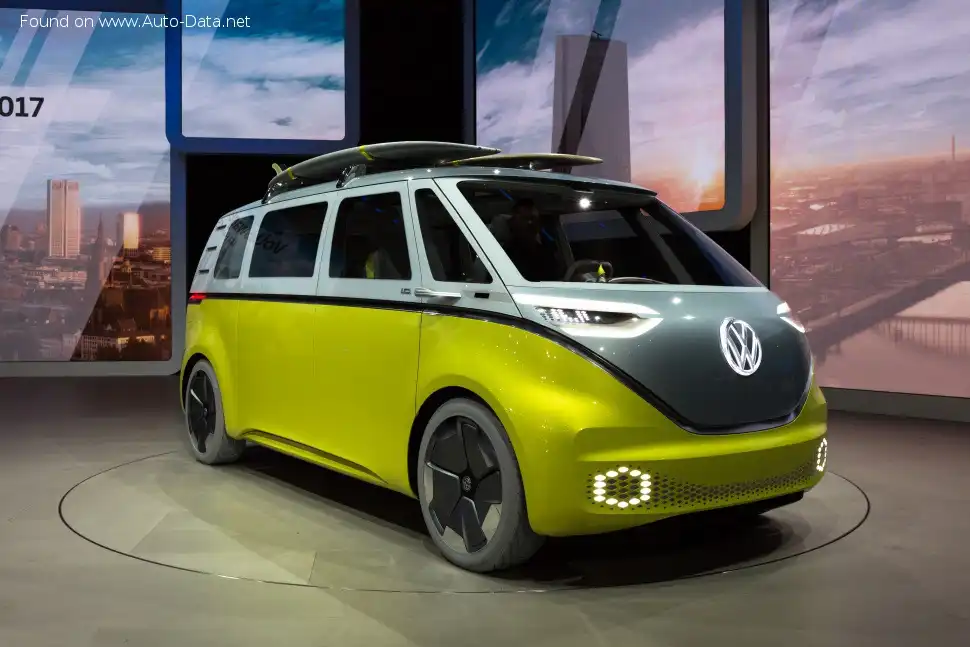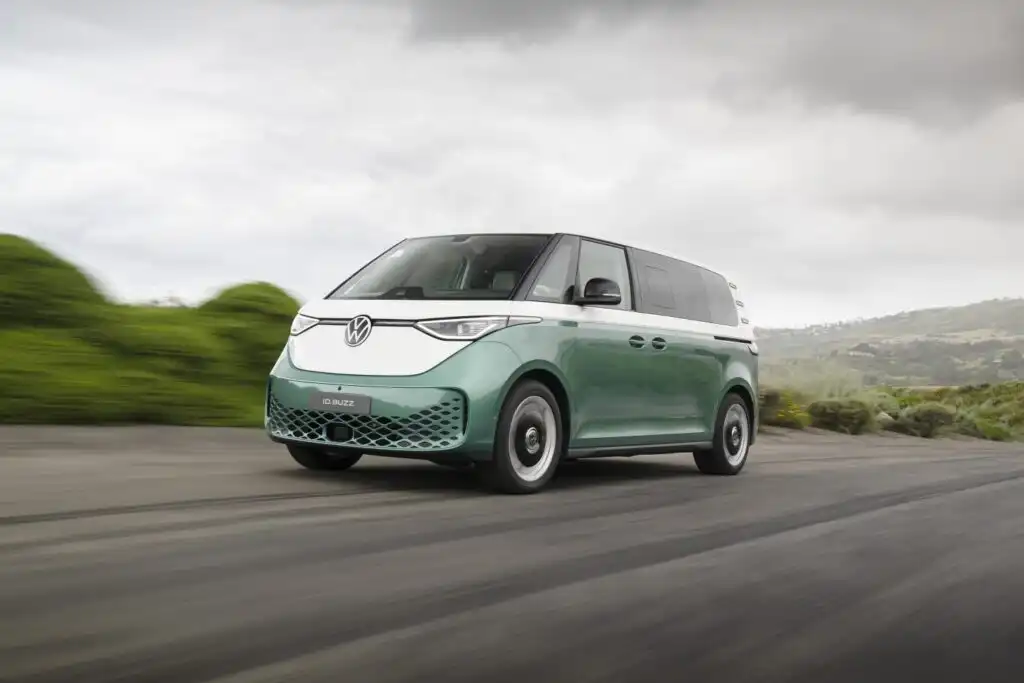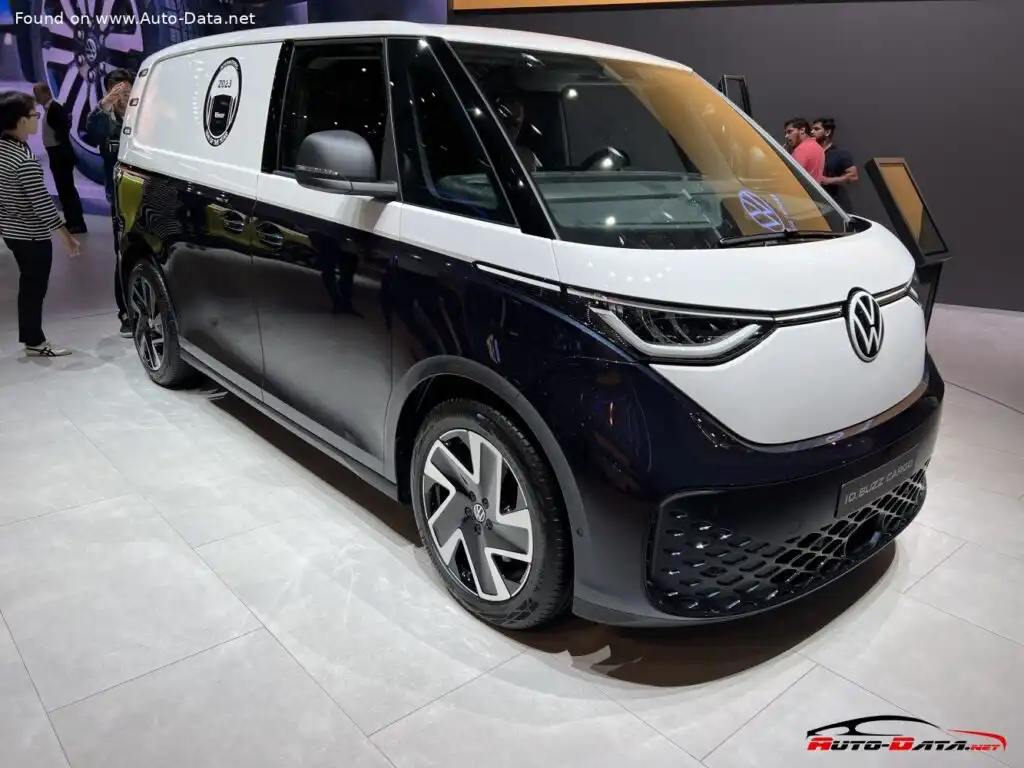
The Volkswagen ID. Buzz Cargo 59 kWh is an all-electric, commercial variant of the ID. Buzz, designed primarily for businesses and tradespeople. Introduced in August 2024, it represents Volkswagen’s entry into the electric light commercial vehicle segment, building upon the retro-inspired design of the original Type 2 (Bus). This specific configuration, equipped with the 59 kWh battery pack and a 170 horsepower electric motor, serves as the entry-level option within the ID. Buzz Cargo lineup, prioritizing affordability and practicality over outright performance. It’s positioned as a direct competitor to other small electric vans like the Citroën ë-Berlingo and Renault Kangoo E-Tech.
Technical Specifications
| Brand | Volkswagen |
| Model | ID. Buzz |
| Generation | ID. Buzz Cargo |
| Type (Engine) | 59 kWh (170 Hp) |
| Start of production | August, 2024 |
| Powertrain Architecture | BEV (Electric Vehicle) |
| Body type | MPV |
| Seats | 3 |
| Doors | 4-5 |
| Fuel Type | Electricity |
| Maximum speed | 145 km/h (90.1 mph) |
| Weight-to-power ratio | 12.9 kg/Hp, 77.7 Hp/tonne |
| Weight-to-torque ratio | 7.1 kg/Nm, 141.6 Nm/tonne |
| Net (usable) battery capacity | 59 kWh |
| Battery technology | Lithium-ion (Li-Ion) |
| Battery location | Below the floor |
| All-electric range (WLTP) | 303-335 km (188.28 – 208.16 mi) |
| Average Energy consumption (WLTP) | 20-22.1 kWh/100 km (32.19 – 35.57 kWh/100 mi) |
| Average Energy consumption (MPGe) | 105 – 95 |
| Average Energy consumption (km/kWh) | 5 – 4.5 |
| Average Energy consumption (mi/kWh) | 3.1 – 2.8 |
| Electric motor power | 170 Hp |
| Electric motor Torque | 310 Nm (228.64 lb.-ft.) |
| Electric motor location | Rear axle, Transverse |
| Electric motor type | Synchronous |
| System power | 170 Hp |
| System torque | 310 Nm (228.64 lb.-ft.) |
| Kerb Weight | 2189 kg (4825.92 lbs.) |
| Max. weight | 3000 kg (6613.87 lbs.) |
| Max load | 811 kg (1787.95 lbs.) |
| Trunk (boot) space – maximum | 3900 l (137.73 cu. ft.) |
| Permitted trailer load with brakes (12%) | 1000 kg (2204.62 lbs.) |
| Permitted trailer load without brakes | 750 kg (1653.47 lbs.) |
| Permitted towbar download | 75 kg (165.35 lbs.) |
| Length | 4712 mm (185.51 in.) |
| Width | 1985 mm (78.15 in.) |
| Width including mirrors | 2212 mm (87.09 in.) |
| Height | 1932 mm (76.06 in.) |
| Wheelbase | 2989 mm (117.68 in.) |
| Front track | 1673 mm (65.87 in.) |
| Rear (Back) track | 1666-1670 mm (65.59 – 65.75 in.) |
| Front overhang | 819 mm (32.24 in.) |
| Rear overhang | 904 mm (35.59 in.) |
| Ride height (ground clearance) | 159 mm (6.26 in.) |
| Minimum turning circle (turning diameter) | 11.1 m (36.42 ft.) |
| Drivetrain Architecture | One electric motor drives the rear wheels. |
| Drive wheel | Rear wheel drive |
| Number of gears and type of gearbox | 1 gears, automatic transmission |
| Front suspension | Independent, type McPherson with coil spring and anti-roll bar |
| Rear suspension | Independent multi-link spring suspension with stabilizer |
| Front brakes | Ventilated discs |
| Rear brakes | Drum |
| Assisting systems | ABS (Anti-lock braking system) |
| Steering type | Steering rack and pinion |
| Power steering | Electric Steering |
| Front wheel tires | 235/60 R18 |
| Rear wheel tires | 255/55 R18 |
| Front wheel rims | 8J x 18 |
| Rear wheel rims | 8.5J x 18 |
Powertrain & Engine Architecture
The ID. Buzz Cargo 59 kWh utilizes a single, rear-mounted synchronous electric motor producing 170 horsepower and 310 Nm (228.64 lb.-ft.) of torque. This motor is powered by a 59 kWh lithium-ion battery pack located under the vehicle floor, contributing to a low center of gravity and maximizing interior space. The battery pack employs an 800-volt architecture, enabling faster charging times when connected to compatible DC fast-charging stations. The vehicle features a single-speed automatic transmission, typical of electric vehicles, delivering seamless acceleration. The motor’s placement and the rear-wheel-drive configuration contribute to a balanced driving experience, although it differs from the front-wheel-drive layout common in many commercial vans.
Driving Characteristics
The 59 kWh ID. Buzz Cargo offers adequate performance for urban and suburban delivery routes. While not as quick as higher-powered variants, the instant torque of the electric motor provides brisk acceleration from a standstill. The single-speed transmission simplifies operation, and the rear-wheel-drive layout offers decent traction. The range of 303-335 km (188-208 miles) on the WLTP cycle is sufficient for many daily tasks, but may require strategic charging for longer journeys. Compared to the larger-battery variants, the 59 kWh model prioritizes affordability over extended range and higher performance.
Equipment & Trim Levels
The ID. Buzz Cargo 59 kWh is generally equipped with a functional, yet basic, interior focused on practicality. Standard features typically include air conditioning, a touchscreen infotainment system with smartphone integration (Apple CarPlay and Android Auto), and a suite of driver-assistance systems such as automatic emergency braking and lane-keeping assist. The cargo area is the primary focus, offering a substantial 3900 liters (137.73 cubic feet) of space. Upholstery is typically durable and easy-to-clean fabric. Optional extras may include upgraded infotainment systems, parking sensors, and adaptive cruise control.
Chassis & Braking
The ID. Buzz Cargo features an independent suspension system – McPherson struts at the front and a multi-link setup at the rear – designed to provide a comfortable ride even when carrying a substantial load. Ventilated disc brakes are used on the front wheels, while the rear utilizes drum brakes, a cost-saving measure for this entry-level variant. An anti-lock braking system (ABS) is standard. The vehicle’s relatively low center of gravity, thanks to the underfloor battery pack, contributes to stable handling.
Market Reception & Comparison
The ID. Buzz Cargo has been generally well-received by critics, praised for its innovative design, spacious interior, and smooth electric powertrain. However, the 59 kWh variant has faced some criticism for its limited range compared to competitors and higher-spec ID. Buzz models. Fuel economy, expressed as energy consumption, is competitive with other electric vans, ranging from 20-22.1 kWh/100 km. Its affordability makes it an attractive option for businesses seeking to transition to an electric fleet, but potential buyers must carefully consider their daily driving needs and charging infrastructure.
Legacy
The ID. Buzz Cargo 59 kWh represents a significant step forward in Volkswagen’s commitment to electric commercial vehicles. While long-term reliability data is still emerging, the electric powertrain is expected to require less maintenance than traditional internal combustion engines. The vehicle’s popularity in the used car market will likely depend on battery health and overall condition. As electric vehicle technology continues to evolve, the ID. Buzz Cargo 59 kWh is poised to become a recognizable and influential model in the electric van segment.