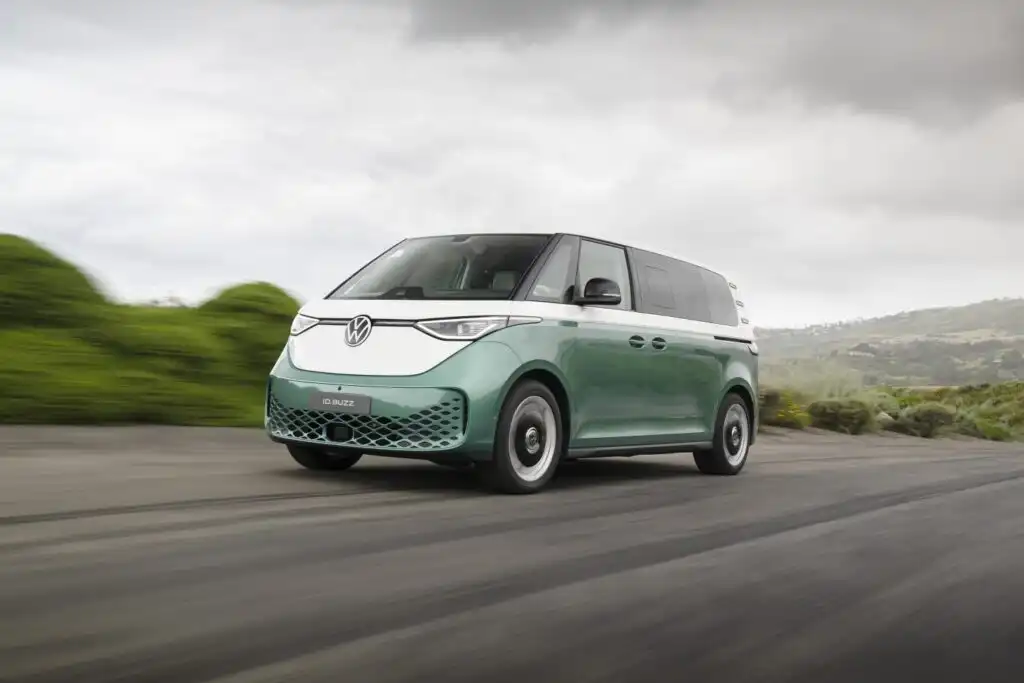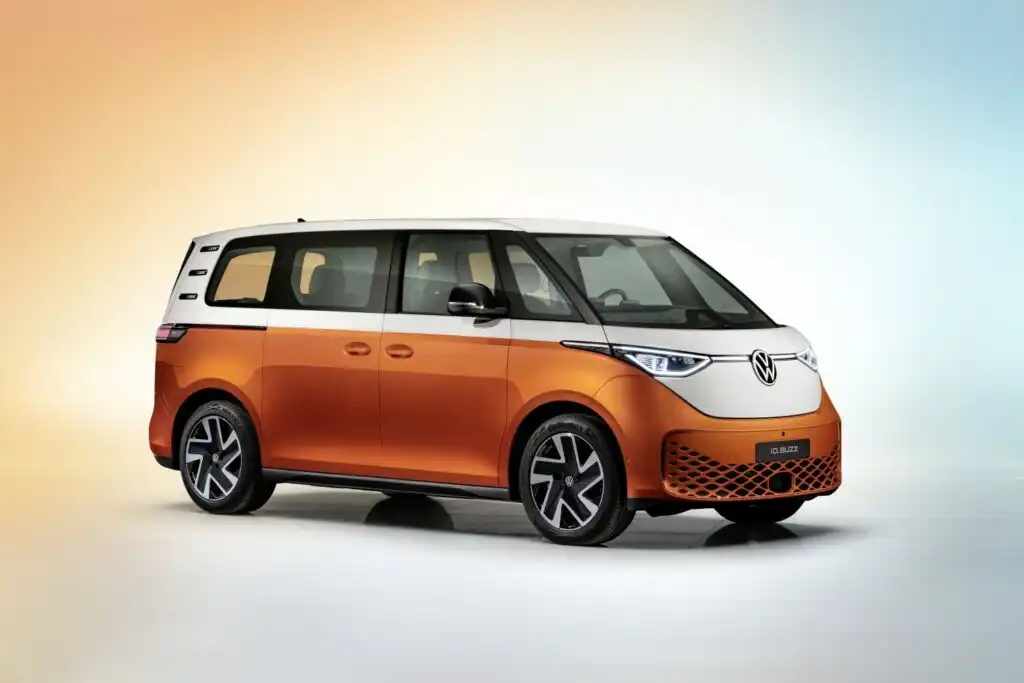
The Volkswagen ID. Buzz GTX 84 kWh (340 Hp) 4MOTION, launched in July 2024, represents a performance-oriented variant of the ID. Buzz, Volkswagen’s modern interpretation of the iconic Type 2 microbus. Positioned as a premium offering within the ID. Buzz lineup, the GTX trim adds a dual-motor all-wheel-drive system and increased power output to the already spacious and technologically advanced electric MPV. It aims to appeal to buyers seeking a blend of practicality, retro styling, and engaging driving dynamics in an electric vehicle package. The ID. Buzz itself is built on the Volkswagen Group’s MEB platform, designed specifically for electric vehicles.
Technical Specifications
| Brand | Volkswagen |
| Model | ID. Buzz |
| Generation | ID. Buzz |
| Type (Engine) | GTX 84 kWh (340 Hp) 4MOTION |
| Start of production | July, 2024 |
| Powertrain Architecture | BEV (Electric Vehicle) |
| Body type | MPV |
| Seats | 5-6 |
| Doors | 5 |
| Fuel Type | Electricity |
| Acceleration 0 – 100 km/h | 6.1 sec |
| Acceleration 0 – 62 mph | 6.1 sec |
| Acceleration 0 – 60 mph | 5.8 sec |
| Maximum speed | 160 km/h (99.42 mph) |
| Weight-to-power ratio | 7.6 kg/Hp, 131.9 Hp/tonne |
| Gross battery capacity | 84 kWh |
| Net (usable) battery capacity | 79 kWh |
| Battery technology | Lithium-ion (Li-Ion) |
| Battery location | Below the floor |
| All-electric range (WLTP) | 400-423 km (248.55 – 262.84 mi) |
| Average Energy consumption (WLTP) | 20.5-21.6 kWh/100 km (32.99 – 34.76 kWh/100 mi) |
| MPGe | 102 – 97 |
| km/kWh | 4.9 – 4.6 |
| mi/kWh | 3 – 2.9 |
| Electric motor 1 power | 286 Hp |
| Electric motor 1 Torque | 560 Nm (413.03 lb.-ft.) |
| Electric motor 1 model/code | APP550 |
| Electric motor 1 location | Rear axle, Transverse |
| Electric motor 1 type | Synchronous |
| Electric motor 2 power | 109 Hp |
| Electric motor 2 Torque | 134 Nm (98.83 lb.-ft.) |
| Electric motor 2 model/code | AKA150 |
| Electric motor 2 location | Front axle, Transverse |
| Electric motor 2 type | Asynchronous |
| System power | 340 Hp |
| Kerb Weight | 2577 kg (5681.31 lbs.) |
| Max. weight | 3125 kg (6889.45 lbs.) |
| Max load | 548 kg (1208.13 lbs.) |
| Trunk (boot) space – minimum | 1121 l (39.59 cu. ft.) |
| Trunk (boot) space – maximum | 2123 l (74.97 cu. ft.) |
| Permitted trailer load with brakes (12%) | 1800 kg (3968.32 lbs.) |
| Permitted trailer load without brakes | 750 kg (1653.47 lbs.) |
| Permitted towbar download | 75 kg (165.35 lbs.) |
| Length | 4712 mm (185.51 in.) |
| Width | 1985 mm (78.15 in.) |
| Width including mirrors | 2211 mm (87.05 in.) |
| Height | 1927 mm (75.87 in.) |
| Wheelbase | 2989 mm (117.68 in.) |
| Front track | 1673-1683 mm (65.87 – 66.26 in.) |
| Rear (Back) track | 1666-1670 mm (65.59 – 65.75 in.) |
| Front overhang | 819 mm (32.24 in.) |
| Rear overhang | 904 mm (35.59 in.) |
| Ride height (ground clearance) | 158 mm (6.22 in.) |
| Minimum turning circle | 11.1 m (36.42 ft.) |
| Front brakes | Ventilated discs |
| Rear brakes | Drum |
| Front tires | 235/50 R20; 235/45 R21 |
| Rear tires | 265/45 R20; 265/40 R21 |
| Front wheel rims | 8J x 20; 8.5J x 21 |
| Rear wheel rims | 10J x 20; 10J x 21 |
| Gearbox | 1 gears, automatic transmission |
Powertrain & Engine Architecture
The ID. Buzz GTX utilizes a dual-motor, all-wheel-drive (4MOTION) powertrain. The rear motor (APP550) is a synchronous motor producing 286 horsepower, while the front motor (AKA150) is an asynchronous motor generating 109 horsepower. Combined, these motors deliver a system output of 340 horsepower and 560 Nm (413 lb-ft) of torque. The 84 kWh lithium-ion battery pack is located under the floor, providing a usable capacity of 79 kWh. The battery supports DC fast charging, allowing for a significant charge in a relatively short period. The single-speed automatic transmission is inherent to the electric powertrain, providing seamless acceleration. The GTX variant benefits from optimized power delivery software compared to standard ID. Buzz models, enhancing responsiveness.
Driving Characteristics
The dual-motor setup of the ID. Buzz GTX provides significantly improved acceleration compared to single-motor variants. The 0-60 mph sprint is achieved in approximately 5.8 seconds. The all-wheel-drive system enhances traction and stability, particularly in adverse weather conditions. While the single-speed transmission simplifies the driving experience, it does mean the absence of traditional gear changes. The GTX’s power delivery is immediate and linear, characteristic of electric motors. The increased weight due to the dual-motor setup and larger battery pack is noticeable, but the added power more than compensates for it, offering a more engaging driving experience than the base ID. Buzz.
Equipment & Trim Levels
The GTX trim level builds upon the already well-equipped ID. Buzz, adding unique styling elements and premium features. Standard equipment includes a large touchscreen infotainment system, digital instrument cluster, and a comprehensive suite of driver-assistance systems. Interior upholstery typically features a combination of leatherette and fabric, with distinctive GTX badging. Optional extras include a panoramic sunroof, premium sound system, and advanced parking assist features. The GTX trim also receives sportier exterior styling cues, such as unique bumpers, alloy wheel designs, and darkened exterior trim.
Chassis & Braking
The ID. Buzz GTX utilizes an independent suspension system, with McPherson struts at the front and a multi-link setup at the rear. Stabilizer bars are included to reduce body roll during cornering. The braking system features ventilated discs at the front and drum brakes at the rear. While the rear drums are a cost-saving measure, they are adequate for the vehicle’s weight and performance. The GTX benefits from a slightly stiffer suspension tuning compared to standard ID. Buzz models, further enhancing handling and stability. Electric power steering provides precise and responsive steering feel.
Market Reception & Comparison
The ID. Buzz GTX has been generally well-received by automotive critics, who praise its blend of practicality, retro styling, and engaging performance. Compared to the standard ID. Buzz, the GTX offers a significant performance upgrade, making it a more appealing option for drivers who prioritize driving dynamics. Fuel economy, expressed as kWh per 100 km, is comparable to other ID. Buzz variants, but the GTX’s increased power output results in slightly lower MPGe figures. The GTX competes with other electric MPVs and SUVs, such as the Tesla Model Y and Hyundai Ioniq 5, offering a unique combination of style and functionality.
Legacy
As a relatively new model, the long-term reliability of the ID. Buzz GTX remains to be seen. However, Volkswagen has a strong track record of building durable and reliable vehicles. The MEB platform, upon which the ID. Buzz is based, has proven to be robust in other Volkswagen Group electric vehicles. The GTX variant is expected to hold its value well in the used car market, due to its desirable combination of performance, features, and styling. The ID. Buzz GTX represents a significant step forward for Volkswagen in the electric vehicle market, offering a compelling alternative to traditional gasoline-powered MPVs.