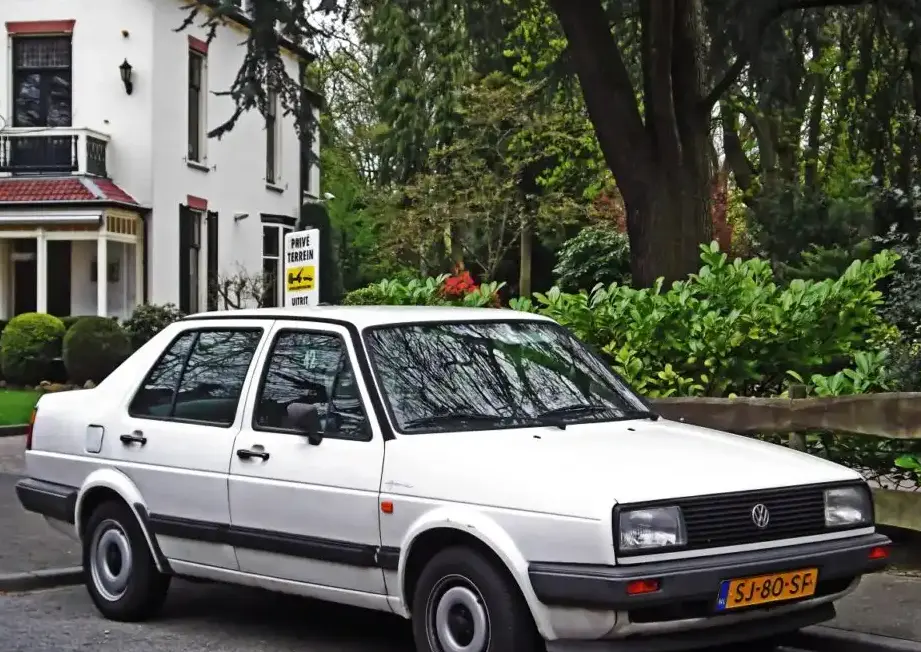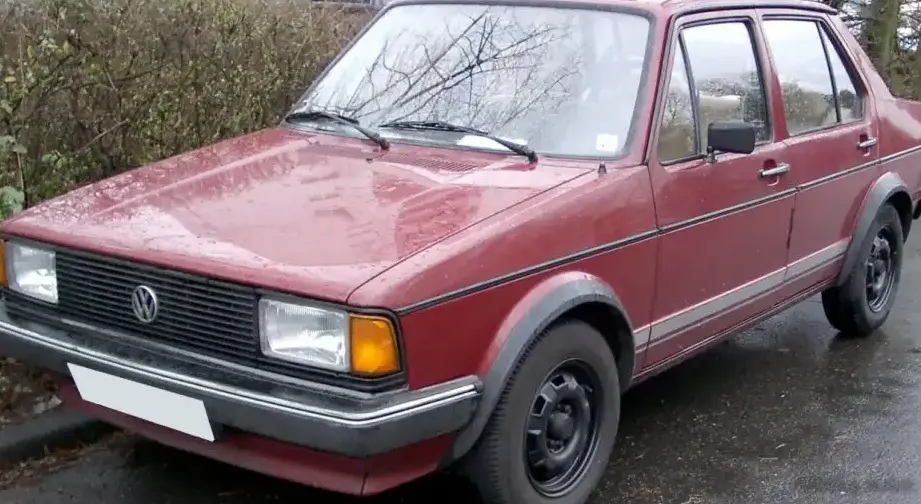
The Volkswagen Jetta I 1.3, producing 60 horsepower, was a foundational model in the first generation of the Jetta (Typ 16), produced between 1979 and 1983. Positioned as the entry-level offering within the Jetta I range, it aimed to provide affordable and economical transportation, building upon the success of the Golf (Rabbit in North America) platform – the 1HX0/A3. This variant was primarily targeted at buyers seeking a practical, fuel-efficient sedan, and represented Volkswagen’s attempt to broaden the appeal of the A2 platform beyond the hatchback configuration. It was a significant vehicle for Volkswagen, establishing the Jetta as a distinct model and a key player in the compact sedan segment, particularly in Europe and North America.
Technical Specifications
| Brand | Volkswagen |
| Model | Jetta |
| Generation | Jetta I |
| Type (Engine) | 1.3 (60 Hp) |
| Start of production | 1979 |
| End of production | 1983 |
| Powertrain Architecture | Internal Combustion engine |
| Body type | Sedan |
| Seats | 5 |
| Doors | 4 |
| Fuel Type | Petrol (Gasoline) |
| Acceleration 0 – 60 mph | 14 sec |
| Maximum speed | 148 km/h (91.96 mph) |
| Weight-to-power ratio | 13.5 kg/Hp, 74.1 Hp/tonne |
| Weight-to-torque ratio | 8.5 kg/Nm, 117.3 Nm/tonne |
| Power | 60 Hp @ 5600 rpm |
| Power per litre | 47.2 Hp/l |
| Torque | 95 Nm @ 3600 rpm (70.07 lb.-ft. @ 3600 rpm) |
| Engine layout | Front, Transverse |
| Engine Model/Code | GF |
| Engine displacement | 1272 cm3 (77.62 cu. in.) |
| Number of cylinders | 4 |
| Engine configuration | Inline |
| Cylinder Bore | 75 mm (2.95 in.) |
| Piston Stroke | 72 mm (2.83 in.) |
| Compression ratio | 8.2:1 |
| Number of valves per cylinder | 2 |
| Fuel injection system | Carburettor |
| Engine aspiration | Naturally aspirated engine |
| Valvetrain | SOHC |
| Engine oil capacity | 3 l (3.17 US qt | 2.64 UK qt) |
| Coolant | 4.5 l (4.76 US qt | 3.96 UK qt) |
| Kerb Weight | 810 kg (1785.74 lbs) |
| Max. weight | 1240 kg (2733.73 lbs) |
| Max load | 430 kg (947.99 lbs) |
| Trunk (boot) space – minimum | 629 l (22.21 cu. ft.) |
| Permitted trailer load with brakes (12%) | 1000 kg (2204.62 lbs) |
| Permitted trailer load without brakes | 400 kg (881.85 lbs) |
| Length | 4188 mm (164.88 in.) |
| Width | 1610 mm (63.39 in.) |
| Height | 1410 mm (55.51 in.) |
| Wheelbase | 2398 mm (94.41 in.) |
| Front track | 1389 mm (54.69 in.) |
| Rear (Back) track | 1356 mm (53.39 in.) |
| Minimum turning circle (turning diameter) | 10.3 m (33.79 ft.) |
| Drivetrain Architecture | The Internal combustion engine (ICE) drives the front wheels of the vehicle. |
| Drive wheel | Front wheel drive |
| Number of gears and type of gearbox | 4 gears, manual transmission |
| Front suspension | Wishbone, Transverse stabilizer |
| Rear suspension | Trailing arm, Torsion |
| Front brakes | Disc |
| Rear brakes | Drum |
| Steering type | Steering rack and pinion |
| Wheel rims size | Front wheel rims: 5J x 13Rear wheel rims: 5J x 13 |
Powertrain & Engine Architecture
The Jetta I 1.3 was powered by the Volkswagen GF engine, a 1.3-liter inline-four cylinder gasoline engine. This engine was a relatively simple design, utilizing a single overhead camshaft (SOHC) valvetrain with two valves per cylinder. Fuel delivery was managed by a single carburetor, a common feature for vehicles of this era aiming for affordability. The engine produced 60 horsepower at 5600 rpm and 95 Nm (70.07 lb-ft) of torque at 3600 rpm. The engine’s relatively low compression ratio of 8.2:1 contributed to its ability to run on lower octane fuel, further enhancing its appeal as an economical option. The engine was transversely mounted, a layout that maximized interior space and improved front-wheel drive efficiency. The standard transmission was a four-speed manual gearbox, designed for smooth and reliable operation.
Driving Characteristics
The 1.3-liter engine in the Jetta I provided adequate, but not exhilarating, performance. Acceleration from 0 to 60 mph took approximately 14 seconds, and the top speed was around 92 mph. Compared to the more powerful 1.6-liter and 1.8-liter versions of the Jetta I, the 1.3 felt noticeably slower, particularly when fully loaded or climbing hills. The four-speed manual transmission offered a reasonable spread of gears, but the engine lacked the torque to make frequent downshifts unnecessary. The gear ratios were optimized for fuel economy rather than outright performance. The 1.3L Jetta was best suited for city driving and relaxed highway cruising, prioritizing fuel efficiency and ease of use over sporty handling or rapid acceleration.
Equipment & Trim Levels
The 1.3-liter Jetta I was typically offered with a fairly basic level of equipment, reflecting its position as the entry-level model. Standard features generally included cloth upholstery, vinyl floor covering, and basic instrumentation. Power steering and air conditioning were typically optional extras. The dashboard layout was functional and straightforward, with a focus on providing essential information to the driver. Optional extras included upgraded audio systems, sunroofs, and alloy wheels. The interior trim was generally durable and practical, designed to withstand the rigors of daily use.
Chassis & Braking
The Jetta I 1.3 utilized a MacPherson strut front suspension with a transverse stabilizer bar, providing a comfortable ride and reasonable handling. The rear suspension employed a trailing arm setup with torsion bars, offering a balance between ride comfort and stability. Braking duties were handled by disc brakes at the front and drum brakes at the rear. The braking system was adequate for the vehicle’s weight and performance, but lacked the stopping power of more advanced systems found on higher-end models. The relatively lightweight nature of the 1.3-liter Jetta I helped to compensate for the less powerful braking system.
Market Reception & Comparison
The Jetta I 1.3 was generally well-received as an affordable and practical sedan. Critics praised its fuel efficiency and comfortable ride, but noted its lack of performance compared to higher-powered versions. Compared to the 1.6-liter Jetta I, the 1.3 offered better fuel economy but significantly less power. The 1.6-liter was often considered a more balanced option, providing a better compromise between performance and economy. The 1.3L Jetta was a popular choice for budget-conscious buyers and those who prioritized fuel efficiency over outright speed.
Legacy
The Volkswagen Jetta I 1.3, while not the most powerful or technologically advanced version of the first-generation Jetta, played a crucial role in establishing the Jetta as a successful model in its own right. The GF engine, while simple, proved to be relatively reliable and durable. Today, well-maintained examples of the Jetta I 1.3 are becoming increasingly sought after by classic car enthusiasts. The powertrain, while dated by modern standards, is relatively easy to maintain and repair, making it an appealing option for those interested in owning a piece of automotive history. The Jetta I 1.3 remains a testament to Volkswagen’s commitment to providing affordable and practical transportation.