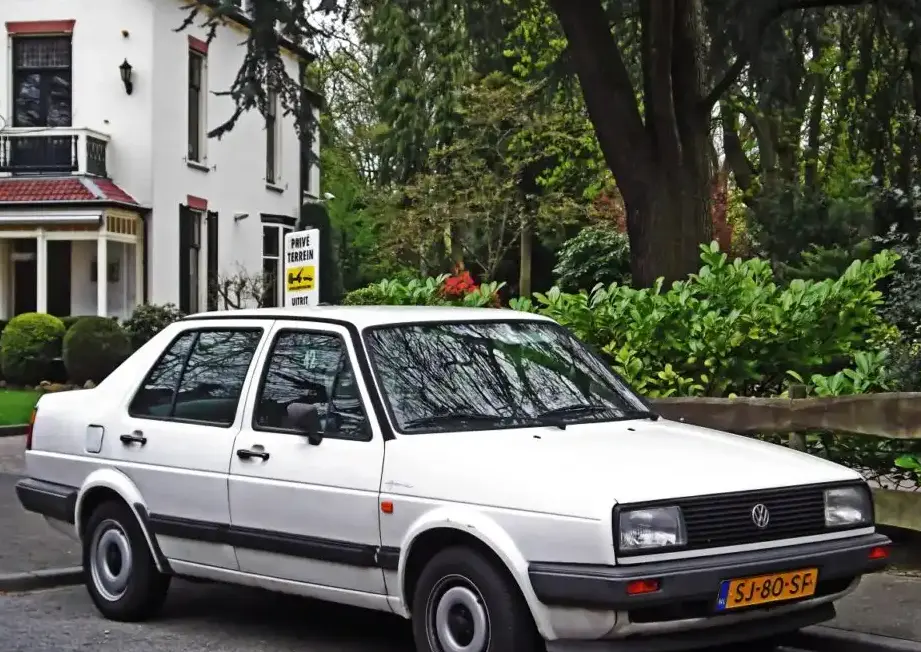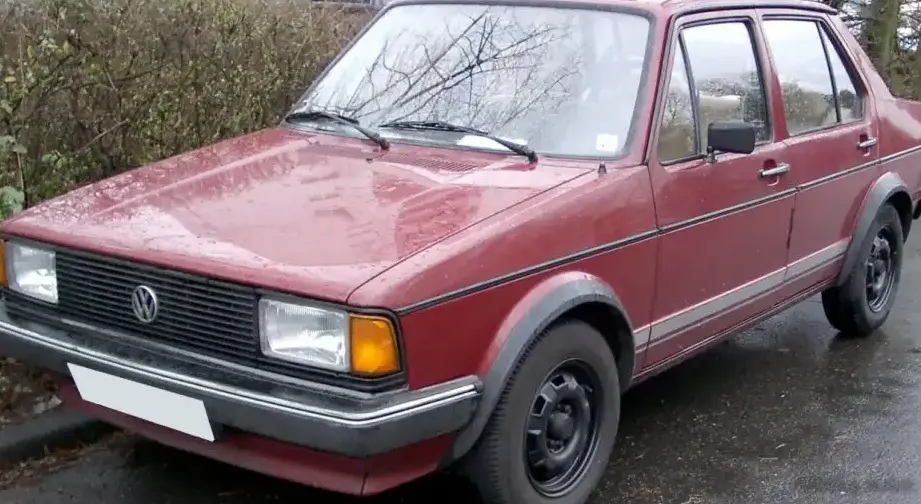
The Volkswagen Jetta I 1.5, producing 70 horsepower, was an entry-level variant of the first-generation Jetta (Typ 16) produced between 1979 and 1983. Positioned as the most affordable option in the Jetta lineup, it served as a practical and economical sedan aimed at buyers prioritizing fuel efficiency and basic transportation. The Jetta I itself was Volkswagen’s answer to the growing compact sedan market, building upon the success of the Golf (Rabbit in North America) but offering a more traditional three-box design with a separate trunk. This variant played a significant role in establishing the Jetta’s presence in markets like Europe and North America, offering a more mature alternative to the hatchback Golf.
Technical Specifications
| Brand | Volkswagen |
| Model | Jetta |
| Generation | Jetta I |
| Type (Engine) | 1.5 (70 Hp) |
| Start of production | 1979 |
| End of production | 1983 |
| Powertrain Architecture | Internal Combustion engine |
| Body type | Sedan |
| Seats | 5 |
| Doors | 4 |
| Fuel Type | Petrol (Gasoline) |
| Acceleration 0 – 60 mph | 13 sec |
| Maximum speed | 154 km/h (95.69 mph) |
| Weight-to-power ratio | 12 kg/Hp, 83.3 Hp/tonne |
| Weight-to-torque ratio | 7.6 kg/Nm, 131 Nm/tonne |
| Power | 70 Hp @ 5600 rpm |
| Power per litre | 48 Hp/l |
| Torque | 110 Nm @ 2500 rpm (81.13 lb.-ft. @ 2500 rpm) |
| Engine layout | Front, Transverse |
| Engine Model/Code | JB |
| Engine displacement | 1457 cm3 (88.91 cu. in.) |
| Number of cylinders | 4 |
| Engine configuration | Inline |
| Cylinder Bore | 79.5 mm (3.13 in.) |
| Piston Stroke | 73.4 mm (2.89 in.) |
| Compression ratio | 8.2:1 |
| Number of valves per cylinder | 2 |
| Fuel injection system | Carburettor |
| Engine aspiration | Naturally aspirated engine |
| Valvetrain | SOHC |
| Engine oil capacity | 3 l (3.17 US qt | 2.64 UK qt) |
| Coolant | 4.5 l (4.76 US qt | 3.96 UK qt) |
| Kerb Weight | 840 kg (1851.88 lbs.) |
| Max. weight | 1250 kg (2755.78 lbs.) |
| Max load | 410 kg (903.9 lbs.) |
| Permitted trailer load with brakes (12%) | 1000 kg (2204.62 lbs.) |
| Permitted trailer load without brakes | 400 kg (881.85 lbs.) |
| Length | 4190 mm (164.96 in.) |
| Width | 1630 mm (64.17 in.) |
| Height | 1410 mm (55.51 in.) |
| Wheelbase | 2398 mm (94.41 in.) |
| Front track | 1404 mm (55.28 in.) |
| Rear (Back) track | 1372 mm (54.02 in.) |
| Minimum turning circle (turning diameter) | 10.3 m (33.79 ft.) |
| Drivetrain Architecture | The Internal combustion engine (ICE) drives the front wheels of the vehicle. |
| Drive wheel | Front wheel drive |
| Number of gears and type of gearbox | 4 gears, manual transmission |
| Front suspension | Wishbone, Transverse stabilizer |
| Rear suspension | Trailing arm, Torsion |
| Front brakes | Disc |
| Rear brakes | Drum |
| Steering type | Steering rack and pinion |
| Tires size | Front wheel tires: 175/70 R13Rear wheel tires: 175/70 R13 |
| Wheel rims size | Front wheel rims: 5.5J x 13Rear wheel rims: 5.5J x 13 |
Powertrain & Engine Architecture
The heart of the Jetta I 1.5 was the JB engine, a 1.5-liter inline-four cylinder gasoline engine. This engine was a relatively simple design, utilizing a single overhead camshaft (SOHC) valvetrain with two valves per cylinder. Fuel delivery was managed by a single carburetor, a common setup for the era, prioritizing simplicity and cost-effectiveness over the more advanced fuel injection systems found in higher-spec models. The engine produced 70 horsepower at 5600 rpm and 81.13 lb-ft of torque at 2500 rpm. The engine was transversely mounted, a layout that maximized interior space and contributed to the Jetta’s front-wheel-drive configuration. The four-speed manual transmission was the standard offering, providing a direct and engaging driving experience, though an optional three-speed automatic transmission was available.
Driving Characteristics
The Jetta I 1.5 with the manual transmission offered a reasonably engaging driving experience for its class, though it was hardly a performance machine. Acceleration to 60 mph took around 13 seconds, and the top speed was approximately 95.69 mph. The 1.5-liter engine felt somewhat strained at higher speeds, requiring frequent downshifts to maintain momentum. Compared to the more powerful Jetta GL models with larger engines (like the 1.6 or 1.8), the 1.5 felt noticeably slower. The automatic transmission further diminished performance, resulting in even slower acceleration and a less responsive feel. However, the 1.5’s lighter weight and simpler mechanicals contributed to a nimble feel in city driving. The gear ratios in the four-speed manual were well-suited for everyday driving, providing adequate power for merging and overtaking.
Equipment & Trim Levels
The Jetta I 1.5 was typically offered with a fairly basic level of equipment. Standard features generally included cloth upholstery, vinyl floor covering, and a simple dashboard layout. Power steering and air conditioning were typically optional extras. The interior was functional and durable, prioritizing practicality over luxury. The Jetta 1.5 often featured smaller steel wheels with hubcaps, and chrome trim was kept to a minimum. Optional extras included upgraded audio systems, sunroofs, and more comfortable seating.
Chassis & Braking
The Jetta I utilized a MacPherson strut front suspension with a transverse stabilizer bar, providing a comfortable ride and decent handling. The rear suspension employed a torsion beam setup, which was cost-effective and space-efficient. Braking was accomplished via disc brakes on the front wheels and drum brakes on the rear. This configuration was typical for cars in this price range during the early 1980s. The braking performance was adequate for normal driving conditions, but lacked the stopping power of more modern systems. The Jetta I 1.5’s relatively light weight helped to compensate for the less sophisticated braking setup.
Market Reception & Comparison
The Jetta I 1.5 was generally well-received as an affordable and practical sedan. Critics praised its fuel efficiency and comfortable ride, but noted its lack of power and relatively basic interior. Compared to the more expensive Jetta GL models, the 1.5 offered a more accessible entry point into the Jetta range. The 1.6-liter and 1.8-liter Jetta variants provided significantly more performance, but at a higher price point. The 1.5’s fuel economy was a key selling point, making it an attractive option for budget-conscious buyers. Reliability was generally good, although the carburetor required periodic maintenance and adjustment.
Legacy
The Jetta I 1.5, while not a particularly exciting vehicle, played a crucial role in establishing the Jetta as a popular and respected sedan. The JB engine, while simple, proved to be reasonably durable and reliable. Today, Jetta I 1.5 models are relatively rare and sought after by classic Volkswagen enthusiasts. Parts availability can be a challenge, but the engine’s simplicity makes it relatively easy to repair and maintain. The Jetta I 1.5 represents a significant chapter in Volkswagen’s history, demonstrating the company’s commitment to providing affordable and practical transportation to a wide range of customers. Well-maintained examples are increasingly valued as nostalgic reminders of a simpler era in automotive design.