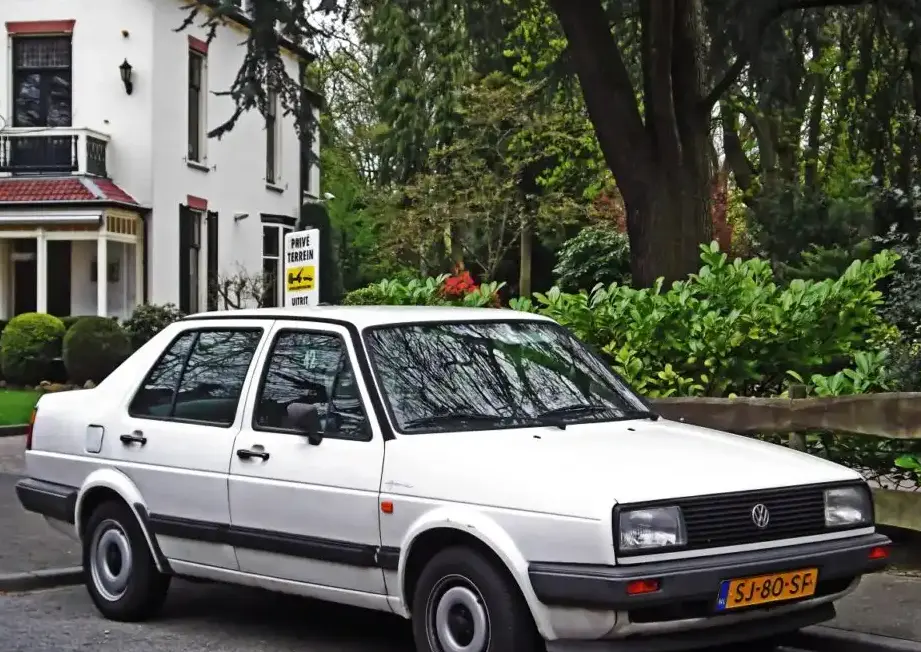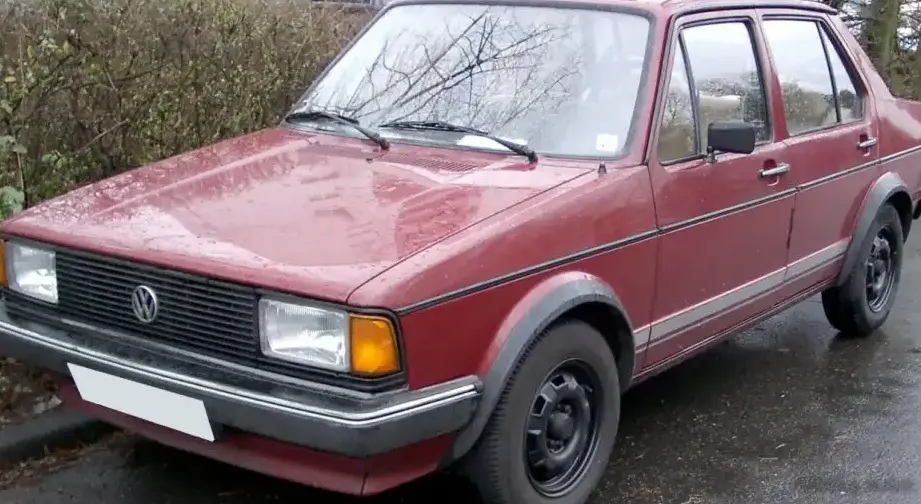
The Volkswagen Jetta I 1.6 GLI, produced between 1979 and 1982, represented a sporty iteration of Volkswagen’s first foray into the compact sedan market. Based on the A1 platform – shared with the Golf/Rabbit – the Jetta aimed to offer a more practical, four-door alternative while retaining the engaging driving experience that characterized the Volkswagen brand. The 1.6 GLI trim sat towards the upper end of the Jetta I range, offering increased performance and a more comprehensive equipment list compared to base models. It was positioned as a competitor to other European and emerging Japanese sedans, offering a blend of practicality, fuel efficiency, and a degree of sporting flair.
Technical Specifications
| Brand | Volkswagen |
| Model | Jetta |
| Generation | Jetta I |
| Type (Engine) | 1.6 GLI (110 Hp) |
| Start of production | 1979 |
| End of production | 1982 |
| Powertrain Architecture | Internal Combustion engine |
| Body type | Sedan |
| Seats | 5 |
| Doors | 2 |
| Fuel Type | Petrol (Gasoline) |
| Acceleration 0 – 60 mph | 9.5 sec |
| Maximum speed | 177 km/h (109.98 mph) |
| Weight-to-power ratio | 8.1 kg/Hp, 123 Hp/tonne |
| Weight-to-torque ratio | 6.4 kg/Nm, 156.6 Nm/tonne |
| Power | 110 Hp @ 6100 rpm |
| Power per litre | 69.3 Hp/l |
| Torque | 140 Nm @ 5000 rpm (103.26 lb.-ft. @ 5000 rpm) |
| Engine layout | Front, Transverse |
| Engine Model/Code | EG |
| Engine displacement | 1588 cm3 (96.91 cu. in.) |
| Number of cylinders | 4 |
| Engine configuration | Inline |
| Cylinder Bore | 79.5 mm (3.13 in.) |
| Piston Stroke | 80 mm (3.15 in.) |
| Compression ratio | 9.5:1 |
| Number of valves per cylinder | 2 |
| Fuel injection system | Multi-port manifold injection |
| Engine aspiration | Naturally aspirated engine |
| Valvetrain | SOHC |
| Engine oil capacity | 3 l (3.17 US qt | 2.64 UK qt) |
| Coolant | 4.5 l (4.76 US qt | 3.96 UK qt) |
| Kerb Weight | 894 kg (1970.93 lbs.) |
| Max. weight | 1280 kg (2821.92 lbs.) |
| Max load | 386 kg (850.98 lbs.) |
| Permitted trailer load with brakes (12%) | 1200 kg (2645.55 lbs.) |
| Permitted trailer load without brakes | 400 kg (881.85 lbs.) |
| Length | 4190 mm (164.96 in.) |
| Width | 1630 mm (64.17 in.) |
| Height | 1395 mm (54.92 in.) |
| Wheelbase | 2398 mm (94.41 in.) |
| Front track | 1405 mm (55.31 in.) |
| Rear (Back) track | 1372 mm (54.02 in.) |
| Minimum turning circle (turning diameter) | 10.3 m (33.79 ft.) |
| Drivetrain Architecture | The Internal combustion engine (ICE) drives the front wheels of the vehicle. |
| Drive wheel | Front wheel drive |
| Number of gears and type of gearbox | 5 gears, manual transmission |
| Front suspension | Wishbone, Transverse stabilizer |
| Rear suspension | Transverse stabilizer, Trailing arm, Torsion |
| Front brakes | Disc |
| Rear brakes | Drum |
| Steering type | Steering rack and pinion |
| Tires size | Front wheel tires: 175/70 R13Rear wheel tires: 175/70 R13 |
| Wheel rims size | Front wheel rims: 5.5J x 13Rear wheel rims: 5.5J x 13 |
Powertrain & Engine Architecture
The heart of the Jetta I 1.6 GLI was the Volkswagen EG engine, a 1.6-liter inline-four cylinder gasoline engine. This engine featured a single overhead camshaft (SOHC) valvetrain operating two valves per cylinder. Crucially, the GLI variant utilized Bosch K-Jetronic multi-port fuel injection, a significant upgrade over the carburetors found on base Jetta models. This system improved fuel atomization and delivery, contributing to the engine’s increased power output and smoother operation. The engine produced 110 horsepower at 6100 rpm and 140 Nm (103.26 lb-ft) of torque at 5000 rpm. The engine was transversely mounted, a common layout for front-wheel-drive vehicles, and paired exclusively with a five-speed manual transmission in the GLI trim.
Driving Characteristics
The 1.6 GLI offered a noticeable step up in performance compared to the standard Jetta 1.6. While not a sports car by any means, the 110 hp engine provided adequate power for spirited driving, with a 0-60 mph time of around 9.5 seconds. The five-speed manual transmission allowed drivers to keep the engine in its optimal power band. The gear ratios were relatively closely spaced, providing good acceleration in each gear. Compared to later, more powerful Jetta variants like the GTI, the 1.6 GLI felt less urgent, but it offered a more balanced and accessible driving experience. The lighter weight of the 1.6 engine also contributed to slightly better handling balance compared to the heavier, larger-displacement engines.
Equipment & Trim Levels
The GLI trim level added several features beyond the base Jetta. Standard equipment typically included upgraded cloth upholstery, a more comprehensive instrument cluster, and a leather-wrapped steering wheel. Exterior enhancements included body-colored bumpers and wheel arch extensions. Optional extras included a sunroof, upgraded stereo systems, and alloy wheels. The interior design was functional and typically German in its simplicity, prioritizing ergonomics and durability over lavishness. The GLI trim aimed to provide a comfortable and well-equipped environment without significantly increasing the price point.
Chassis & Braking
The Jetta I utilized a MacPherson strut front suspension with a transverse stabilizer bar, providing a comfortable ride and predictable handling. The rear suspension employed a torsion beam setup, which was relatively simple and cost-effective. Braking duties were handled by disc brakes at the front and drum brakes at the rear. While adequate for everyday driving, the braking system lacked the stopping power of more modern vehicles. The Jetta I’s chassis was relatively lightweight, contributing to its nimble handling characteristics. The steering was a rack-and-pinion system, providing precise and responsive steering feel.
Market Reception & Comparison
The Jetta I 1.6 GLI was generally well-received by automotive critics. It was praised for its practicality, fuel efficiency, and engaging driving experience. However, some critics noted that the engine lacked the outright power of competitors from brands like BMW and Alfa Romeo. Compared to the base Jetta 1.6, the GLI offered a significant improvement in performance and refinement. It also provided a more affordable alternative to the more expensive GTI model. Fuel economy was a strong point, with the 1.6-liter engine returning respectable mileage for its time. Reliability was generally good, although the K-Jetronic fuel injection system could require specialized maintenance.
Legacy
The Jetta I 1.6 GLI holds a nostalgic place in the hearts of many Volkswagen enthusiasts. While not as iconic as the GTI, it represented a well-rounded and enjoyable compact sedan. The EG engine, while not known for being particularly high-performance, proved to be relatively durable and reliable when properly maintained. Today, well-preserved examples of the Jetta I 1.6 GLI are becoming increasingly collectible. The K-Jetronic fuel injection system can present a challenge for modern mechanics, requiring specialized knowledge and parts. However, the Jetta I 1.6 GLI remains a testament to Volkswagen’s commitment to building practical, reliable, and engaging automobiles.