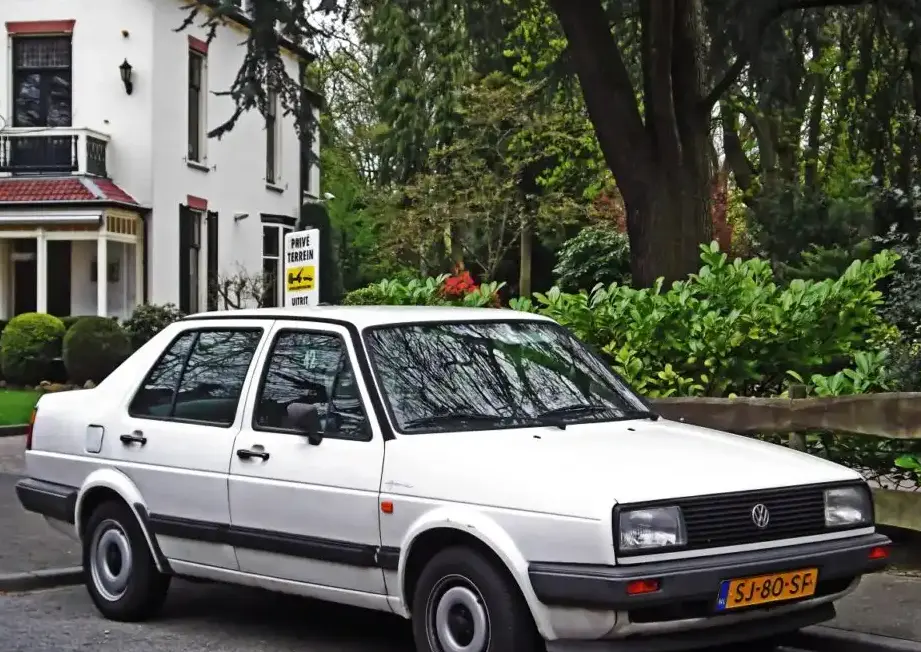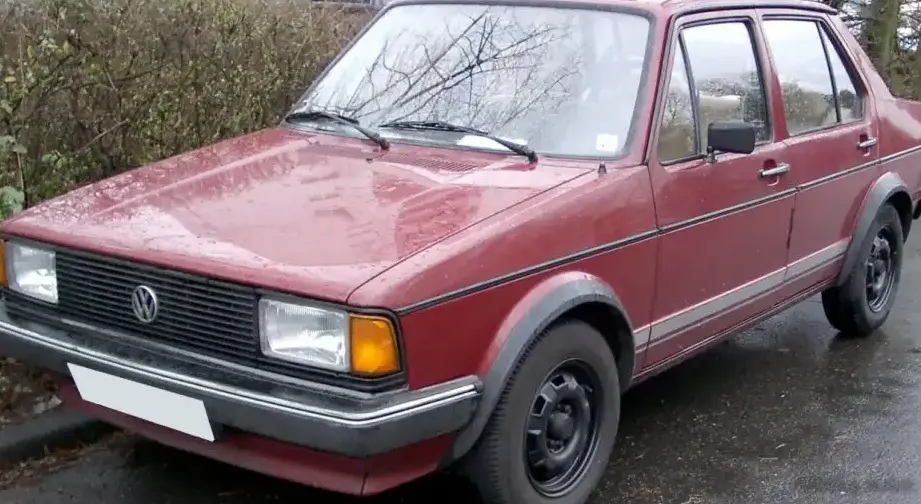
The Volkswagen Jetta I 1.8 (112 hp) represents an early and important iteration of Volkswagen’s successful entry into the North American compact sedan market. Produced from 1982 through 1983, this variant occupied a middle ground within the initial Jetta I lineup, offering a balance between affordability and acceptable performance. It was a key component of Volkswagen’s strategy to offer a modern, European-engineered alternative to domestic compacts like the Ford Escort and Chevrolet Cavalier. The Jetta I, based on the Golf Mk1 platform (internally designated 1HX0/A3), aimed to provide a more refined and practical option than the hatchback, particularly appealing to buyers seeking a traditional sedan body style. This 1.8-liter version, designated with the DX engine code, was a significant step up from the base 1.6-liter models, offering increased power and a more relaxed driving experience.
Technical Specifications
| Brand | Volkswagen |
| Model | Jetta |
| Generation | Jetta I |
| Type (Engine) | 1.8 (112 Hp) |
| Start of production | 1982 |
| End of production | 1983 |
| Powertrain Architecture | Internal Combustion engine |
| Body type | Sedan |
| Fuel Type | Petrol (Gasoline) |
| Power | 112 Hp |
| Engine Model/Code | DX |
| Engine aspiration | Naturally aspirated engine |
| Engine oil capacity | 3 l (3.17 US qt | 2.64 UK qt) |
| Coolant capacity | 4.5 l (4.76 US qt | 3.96 UK qt) |
Powertrain & Engine Architecture
The Jetta I 1.8 (112 hp) was powered by Volkswagen’s DX engine, a 1.8-liter inline-four cylinder gasoline engine. This engine was a naturally aspirated unit, meaning it did not employ forced induction like a turbocharger or supercharger. The DX code signifies a specific iteration of the EA827 engine family, a mainstay of Volkswagen production during the 1980s. It featured a single overhead camshaft (SOHC) valvetrain operating two valves per cylinder. Fuel delivery was managed by Bosch mechanical fuel injection – a system common for the era, offering a balance between cost and performance. While not as sophisticated as later electronic fuel injection systems, it provided a significant improvement over carburetors in terms of fuel efficiency and emissions control. The engine’s bore and stroke measured 82.8 mm x 86.4 mm, resulting in a displacement of 1781 cc. The compression ratio was typically around 8.5:1. The engine was paired with a three-speed automatic transmission, which, while providing convenience, did impact overall performance compared to the available five-speed manual. This automatic was a common three-speed unit of the period, prioritizing smooth shifts over aggressive downshifting.
Driving Characteristics
The 112 hp output of the 1.8-liter engine, coupled with the three-speed automatic transmission, resulted in a driving experience that prioritized comfort and ease of use over outright speed. Acceleration was adequate for everyday driving, but not particularly brisk. The automatic transmission’s gear ratios were geared towards fuel economy and smooth cruising, rather than aggressive acceleration. Zero to sixty mph times were estimated to be around 12-13 seconds, which was competitive for the time but slower than the manual transmission versions. The automatic transmission did diminish the engine’s potential, as the manual gearbox allowed the engine to rev more freely and maintain momentum on inclines. Handling was typical of front-wheel-drive cars of the era – predictable and safe, but not particularly sporty. The Jetta I’s suspension, consisting of MacPherson struts in the front and a twist-beam rear axle, provided a comfortable ride, absorbing bumps and imperfections in the road reasonably well. The steering, while not heavily weighted, offered decent feedback for the period.
Equipment & Trim Levels
The Jetta I 1.8 (112 hp) DX trim generally included features considered standard for the time. Interior upholstery was typically cloth, available in a range of colors, often featuring a patterned design. The dashboard featured a straightforward layout with analog gauges for speed, fuel level, coolant temperature, and a clock. Power steering was often included, though not always standard. Air conditioning was typically an optional extra, as were features like a sunroof and upgraded audio systems. The DX trim level represented a step up from the base “L” model, offering more convenience features and a slightly more refined interior. The Jetta I’s interior was relatively spacious for a compact sedan, offering comfortable seating for four adults. The trunk provided a reasonable amount of cargo space, approximately 12 cubic feet, making it suitable for family use. Options like rear window defroster and upgraded door panels were also available.
Chassis & Braking
The Jetta I utilized a unibody construction, providing a good balance of strength and weight. The front suspension employed MacPherson struts with a stabilizer bar, while the rear suspension utilized a torsion beam axle. This setup provided a comfortable ride and predictable handling. Braking duties were handled by disc brakes in the front and drum brakes in the rear. The braking system was adequate for normal driving conditions, but lacked the stopping power of more modern systems. The Jetta I’s steering was a rack-and-pinion system, providing precise and responsive steering feel. Tire size was typically 175/70R14, offering a good compromise between ride comfort and handling. The car’s relatively light weight helped to offset the limitations of the braking system.
Market Reception & Comparison
The Jetta I 1.8 (112 hp) was generally well-received by automotive critics. It was praised for its European engineering, comfortable ride, and relatively spacious interior. However, some critics noted that the automatic transmission diminished the engine’s performance and that the car lacked the sporty handling of some of its competitors. Compared to the base 1.6-liter Jetta I, the 1.8-liter version offered a noticeable improvement in performance and refinement. Compared to the higher-performance Jetta I GLI, which featured a more powerful engine and sportier suspension, the 1.8-liter version was less engaging to drive but more affordable and fuel-efficient. Fuel economy was a strong point for the 1.8-liter Jetta I, averaging around 25-30 mpg in combined driving. Reliability was generally good, though the Bosch mechanical fuel injection system could require occasional maintenance, such as adjustments to the fuel mixture.
Legacy
The Jetta I 1.8 (112 hp) played a significant role in establishing Volkswagen’s presence in the North American market. It demonstrated that Volkswagen could produce a well-engineered and reliable compact sedan that appealed to American buyers. While the Bosch mechanical fuel injection system can require periodic attention, the engine itself is generally durable and long-lasting. Today, the Jetta I 1.8 (112 hp) is a popular choice among classic car enthusiasts, particularly those seeking a relatively affordable and easy-to-maintain vintage Volkswagen. Parts availability is generally good, and a thriving community of Jetta I owners provides support and resources. The car’s simple design and robust construction contribute to its enduring appeal, making it a cherished example of 1980s automotive engineering. The DX automatic variant, while not the most sought-after version, represents a practical and accessible entry point into the world of classic Volkswagens.