Technical Specifications
| Brand | Volkswagen |
| Model | Jetta |
| Generation | Jetta II |
| Type (Engine) | 1.6 (70 Hp) |
| Start of production | 1983 |
| End of production | 1987 |
| Powertrain Architecture | Internal Combustion engine |
| Body type | Sedan |
| Seats | 5 |
| Doors | 4 |
| Fuel consumption (urban) | 9.7 l/100 km (24.2 US mpg) |
| Fuel consumption (extra urban) | 6 l/100 km (39.2 US mpg) |
| Fuel consumption (combined) | 8.2 l/100 km (28.7 US mpg) |
| Fuel Type | Petrol (Gasoline) |
| Acceleration 0 – 100 km/h | 14.4 sec |
| Acceleration 0 – 62 mph | 14.4 sec |
| Acceleration 0 – 60 mph | 13.7 sec |
| Maximum speed | 160 km/h (99.42 mph) |
| Weight-to-power ratio | 13.3 kg/Hp |
| Weight-to-torque ratio | 7.9 kg/Nm |
| Power | 70 Hp @ 5200 rpm |
| Torque | 118 Nm @ 2700 rpm (87.03 lb.-ft. @ 2700 rpm) |
| Engine layout | Front, Transverse |
| Engine Model/Code | PN |
| Engine displacement | 1595 cm3 (97.33 cu. in.) |
| Number of cylinders | 4 |
| Engine configuration | Inline |
| Cylinder Bore | 81 mm (3.19 in.) |
| Piston Stroke | 77.4 mm (3.05 in.) |
| Compression ratio | 9:1 |
| Number of valves per cylinder | 2 |
| Fuel injection system | Carburettor |
| Engine aspiration | Naturally aspirated |
| Engine oil capacity | 4 l (4.23 US qt | 3.52 UK qt) |
| Coolant capacity | 6.3 l (6.66 US qt | 5.54 UK qt) |
| Kerb Weight | 930 kg (2050.3 lbs.) |
| Max. weight | 1450 kg (3196.7 lbs.) |
| Max load | 520 kg (1146.4 lbs.) |
| Trunk (boot) space – minimum | 575 l (20.31 cu. ft.) |
| Fuel tank capacity | 55 l (14.53 US gal | 12.1 UK gal) |
| Length | 4385 mm (172.64 in.) |
| Width | 1675 mm (65.94 in.) |
| Height | 1415 mm (55.71 in.) |
| Wheelbase | 2475 mm (97.44 in.) |
| Front track | 1425 mm (56.1 in.) |
| Rear track | 1420 mm (55.91 in.) |
| Drag coefficient (Cd) | 0.36 |
| Drivetrain Architecture | Front wheel drive |
| Number of gears | 5 gears, manual transmission |
| Front suspension | Spring-loaded rack |
| Rear suspension | Spring-loaded rack |
| Front brakes | Disc |
| Rear brakes | Drum |
| Assisting systems | ABS (Anti-lock braking system) |
| Steering type | Steering rack and pinion |
| Power steering | Hydraulic |
| Tires size | 185/70 R14 |
| Wheel rims size | 14 |
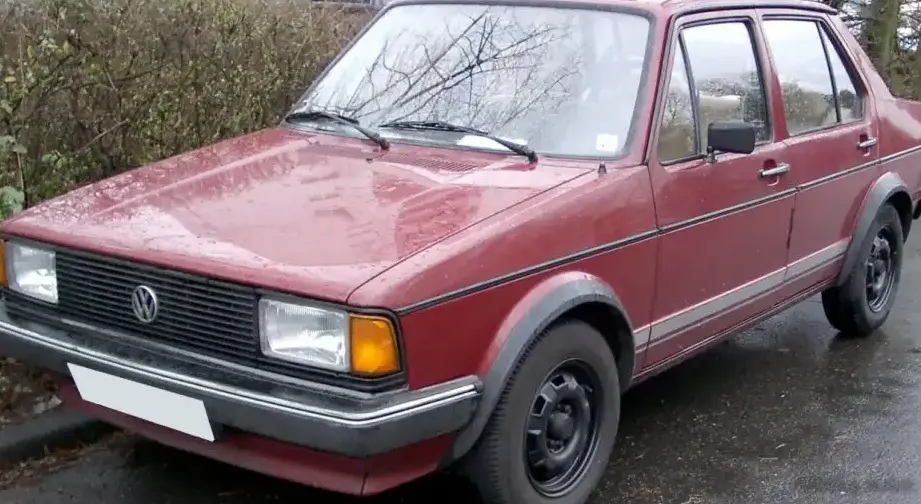
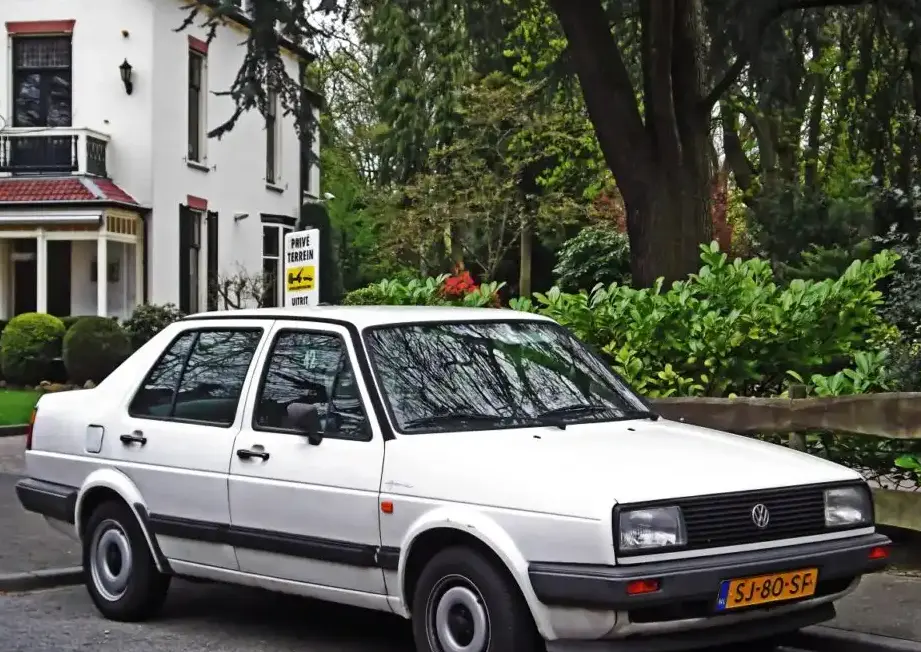
The Volkswagen Jetta II 1.6, producing 70 horsepower, was a cornerstone of the model’s second generation, manufactured between 1983 and 1987. Positioned as the entry-level offering in the Jetta II lineup, it provided affordable transportation within the compact sedan segment. This variant played a significant role in establishing the Jetta as a popular choice in both European and North American markets, offering a practical and economical alternative to domestic competitors. It was built on the A2 platform, shared with the Golf Mk2, Scirocco Mk2, and Passat B2.
Powertrain & Engine Architecture
The Jetta II 1.6 utilized Volkswagen’s PN engine code, a 1.6-liter inline four-cylinder engine. This engine was a relatively simple design, featuring a single overhead camshaft (SOHC) and two valves per cylinder. Fuel delivery was managed by a Solex carburetor, a common setup for the time, prioritizing simplicity and cost-effectiveness over the more advanced fuel injection systems found in higher-spec Jettas. The engine’s 9:1 compression ratio was typical for naturally aspirated gasoline engines of the era. The five-speed manual transmission was the standard offering, designed to maximize fuel efficiency and provide adequate acceleration for everyday driving. The transmission was a front-wheel-drive configuration, typical for European compact cars.
Driving Characteristics
The 70 horsepower output of the 1.6-liter engine translated to modest performance. Acceleration from 0 to 60 mph took approximately 13.7 seconds, and the top speed was around 99 mph. While not particularly quick, the engine provided sufficient power for comfortable cruising and city driving. The five-speed manual transmission allowed drivers to keep the engine in its optimal power band, but the carburetor could sometimes lead to a slight delay in throttle response. Compared to the more powerful 1.8-liter and GTI models, the 1.6 felt noticeably slower, but it offered a smoother and more relaxed driving experience. The gear ratios were tuned for economy, making it a good choice for long highway journeys.
Equipment & Trim Levels
The 1.6-liter Jetta II was typically offered in a base trim level, focusing on essential features. Standard equipment included cloth upholstery, a basic instrument cluster, and manual windows and door locks. Air conditioning, power windows, and upgraded audio systems were generally offered as optional extras. Interior plastics were durable but basic, reflecting the car’s affordable positioning. Exterior features typically included steel wheels with hubcaps, black plastic trim, and relatively simple bumpers. The emphasis was on practicality and value rather than luxury.
Chassis & Braking
The Jetta II featured a MacPherson strut front suspension and a torsion beam rear suspension. This setup provided a comfortable ride, although handling was not as sharp as some of its competitors. The front brakes were ventilated discs, while the rear brakes were drums. This configuration was common for cars in this price range during the 1980s. Power-assisted steering was standard, making the car easy to maneuver in tight spaces. The relatively light weight of the 1.6-liter model helped to compensate for the less powerful engine, contributing to reasonable braking performance.
Market Reception & Comparison
The Jetta II 1.6 was generally well-received as an affordable and reliable family sedan. Critics praised its fuel economy and practicality, but noted its lack of outright performance. Compared to the more expensive Jetta models with larger engines, the 1.6 offered a more economical option for buyers who prioritized fuel efficiency and low running costs. The 1.8-liter version offered a noticeable performance boost, while the GTI models provided a sportier driving experience. However, the 1.6 remained a popular choice for those seeking a sensible and dependable car.
Legacy
The Volkswagen Jetta II 1.6, while not the most powerful or technologically advanced version of the model, has proven to be a surprisingly durable and reliable car. Many examples are still on the road today, a testament to the quality of Volkswagen engineering. The PN engine, while simple, is relatively easy to maintain and repair. In the used car market, these Jettas are often sought after by enthusiasts looking for a classic Volkswagen that is affordable to own and operate. The 1.6-liter engine’s simplicity makes it a good candidate for restoration projects, and its fuel efficiency remains appealing even by modern standards.