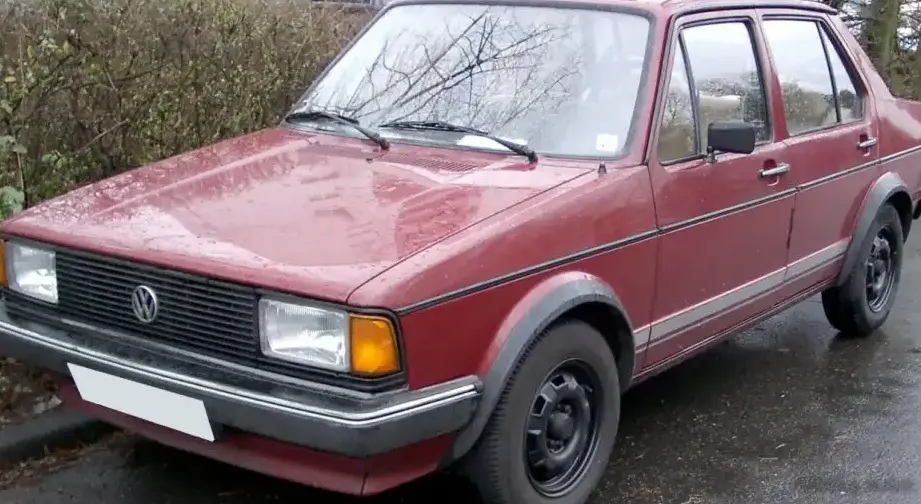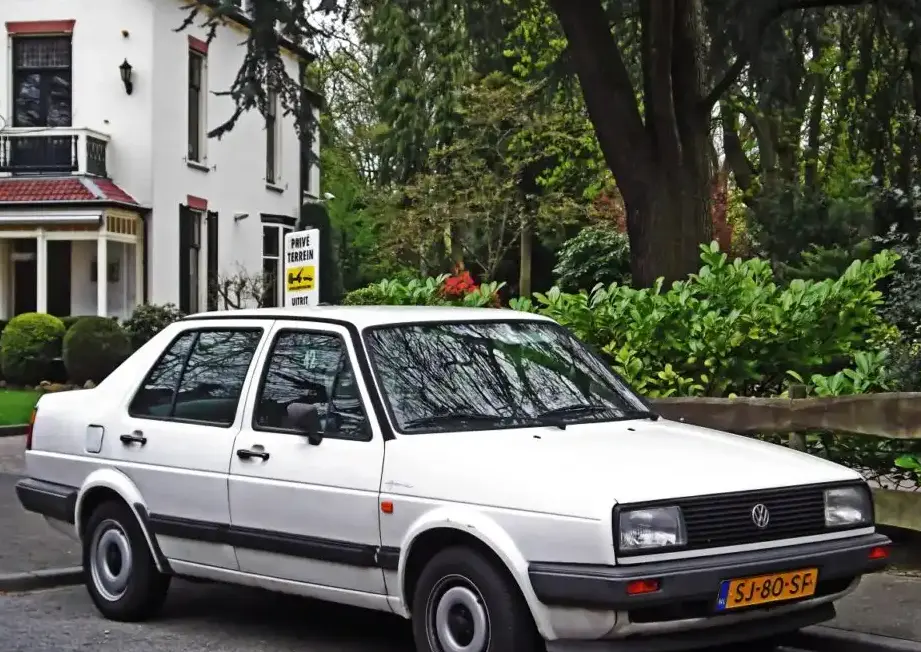
The Volkswagen Jetta II 1.8, produced between 1986 and 1987, represented a significant iteration of Volkswagen’s popular compact sedan. Falling within the A2 generation (1984-1991), this variant occupied a middle ground in the Jetta II lineup, offering a balance between affordability and acceptable performance. It was primarily marketed in Europe and North America as a practical and reliable family vehicle. This specific 1.8-liter, 107 horsepower configuration was a common sight, aiming to provide a more economical alternative to the higher-performance GTI models while offering more power than the base-level engines. The Jetta II, built on the A2 platform, was a crucial model for Volkswagen, solidifying its position in the competitive compact car segment.
Technical Specifications
| Brand | Volkswagen |
| Model | Jetta |
| Generation | Jetta II |
| Type (Engine) | 1.8 (107 Hp) |
| Start of production | 1986 |
| End of production | 1987 |
| Powertrain Architecture | Internal Combustion engine |
| Body type | Sedan |
| Seats | 5 |
| Doors | 4 |
| Fuel Type | Petrol (Gasoline) |
| Acceleration 0 – 100 km/h | 10.6 sec |
| Acceleration 0 – 62 mph | 10.6 sec |
| Acceleration 0 – 60 mph | 10.1 sec |
| Maximum speed | 184 km/h (114.33 mph) |
| Weight-to-power ratio | 9.3 kg/Hp, 108.1 Hp/tonne |
| Weight-to-torque ratio | 6.3 kg/Nm, 158.6 Nm/tonne |
| Power | 107 Hp @ 5400 rpm |
| Power per litre | 60.1 Hp/l |
| Torque | 157 Nm @ 3800 rpm (115.8 lb.-ft. @ 3800 rpm) |
| Engine layout | Front, Transverse |
| Engine Model/Code | RG |
| Engine displacement | 1781 cm3 (108.68 cu. in.) |
| Number of cylinders | 4 |
| Engine configuration | Inline |
| Cylinder Bore | 81 mm (3.19 in.) |
| Piston Stroke | 86.4 mm (3.4 in.) |
| Compression ratio | 10:1 |
| Number of valves per cylinder | 2 |
| Fuel injection system | Multi-port manifold injection |
| Engine aspiration | Naturally aspirated engine |
| Valvetrain | SOHC |
| Engine oil capacity | 4 l (4.23 US qt | 3.52 UK qt) |
| Coolant | 6.5 l (6.87 US qt | 5.72 UK qt) |
| Kerb Weight | 990 kg (2182.58 lbs.) |
| Max. weight | 1470 kg (3240.8 lbs.) |
| Max load | 480 kg (1058.22 lbs.) |
| Trunk (boot) space – minimum | 575 l (20.31 cu. ft.) |
| Fuel tank capacity | 55 l (14.53 US gal | 12.1 UK gal) |
| Length | 4385 mm (172.64 in.) |
| Width | 1675 mm (65.94 in.) |
| Height | 1415 mm (55.71 in.) |
| Wheelbase | 2475 mm (97.44 in.) |
| Front track | 1427 mm (56.18 in.) |
| Rear (Back) track | 1422 mm (55.98 in.) |
| Drag coefficient (Cd) | 0.36 |
| Drivetrain Architecture | The Internal combustion engine (ICE) drives the front wheels of the vehicle. |
| Drive wheel | Front wheel drive |
| Number of gears and type of gearbox | 5 gears, manual transmission |
| Front suspension | Independent type McPherson |
| Rear suspension | Coil spring |
| Front brakes | Disc |
| Rear brakes | Drum |
| Steering type | Steering rack and pinion |
| Tires size | 175/70 R13 |
| Wheel rims size | 13 |
Powertrain & Engine Architecture
The Jetta II 1.8 utilized the Volkswagen RG engine code, a 1.8-liter inline four-cylinder engine. This engine featured a single overhead camshaft (SOHC) valvetrain operating two valves per cylinder. Fuel delivery was managed by a multi-port fuel injection system, a significant improvement over earlier carbureted engines, contributing to better fuel efficiency and smoother operation. The RG engine was known for its relative simplicity and durability. The 107 horsepower output was achieved at 5400 rpm, with a torque peak of 115.8 lb.-ft. at 3800 rpm. The engine’s transverse mounting and front-wheel-drive configuration were standard for Volkswagen at the time, optimizing space utilization within the compact Jetta chassis. The five-speed manual transmission was the standard offering, providing a reasonable balance between fuel economy and performance.
Driving Characteristics
The 1.8-liter Jetta II, with its 107 horsepower, offered adequate, but not exhilarating, performance. Acceleration from 0-60 mph took approximately 10.1 seconds, and top speed was around 114 mph. Compared to the GTI models with their larger engines and higher outputs, the 1.8 felt noticeably less powerful. However, it provided sufficient power for everyday driving and highway cruising. The five-speed manual transmission allowed drivers to keep the engine in its optimal power band, while the gear ratios were tuned for fuel efficiency rather than outright acceleration. The handling was typical of front-wheel-drive cars of the era – predictable and safe, but lacking the dynamic finesse of rear-wheel-drive alternatives. The 1.8L engine was noticeably more refined and quieter than the smaller displacement engines available in the Jetta II range.
Equipment & Trim Levels
The 1.8-liter Jetta II typically came with a fairly basic level of equipment, positioning it as an entry-level or mid-range offering. Standard features generally included cloth upholstery, a basic AM/FM radio, and manual windows and locks. Air conditioning and a sunroof were often available as optional extras. Interior trim was functional and durable, prioritizing practicality over luxury. Higher trim levels, often denoted by additional badging, could include upgraded upholstery, more comprehensive instrumentation, and additional convenience features. The Jetta II’s interior design was clean and straightforward, reflecting the German emphasis on functionality.
Chassis & Braking
The Jetta II utilized an independent McPherson strut suspension in the front, providing a comfortable ride and reasonable handling. The rear suspension employed a coil spring setup. Braking duties were handled by disc brakes in the front and drum brakes in the rear – a common configuration for cars in this price range during the 1980s. The braking system was adequate for normal driving conditions, but lacked the stopping power of more advanced systems. Stabilizer bars were typically included to reduce body roll during cornering. The chassis was relatively lightweight, contributing to the car’s overall fuel efficiency and agility.
Market Reception & Comparison
The Jetta II 1.8 was generally well-received by automotive critics as a practical and reliable family sedan. It was praised for its fuel efficiency, comfortable ride, and spacious interior. However, some critics noted its lack of outright performance compared to sportier rivals. Compared to the Jetta II GTI, the 1.8 offered significantly less power and a less engaging driving experience, but it was also more affordable to purchase and operate. Against competitors like the Toyota Corolla and Honda Civic, the Jetta II 1.8 offered a similar level of practicality and reliability, with a slightly more European driving feel. Fuel economy was competitive for the era, typically achieving around 25-30 mpg in mixed driving conditions.
Legacy
The Volkswagen Jetta II 1.8, particularly the RG engine variant, has proven to be a relatively durable and reliable powertrain. Many examples are still on the road today, a testament to their build quality and engineering. The RG engine is known for its simplicity, making it relatively easy to maintain and repair. In the used car market, these Jettas are often sought after by enthusiasts and collectors looking for a classic 1980s German sedan. While not a high-performance machine, the Jetta II 1.8 represents a significant chapter in Volkswagen’s history, offering a blend of practicality, reliability, and affordability that resonated with buyers in Europe and North America.