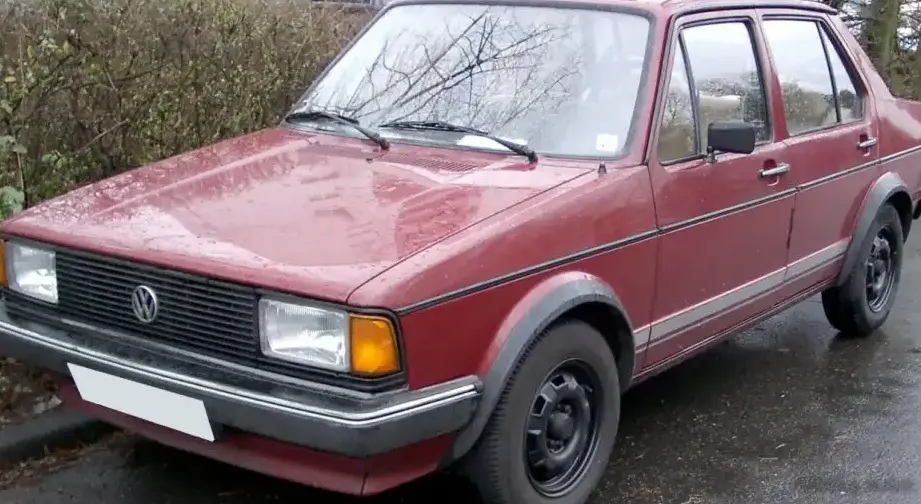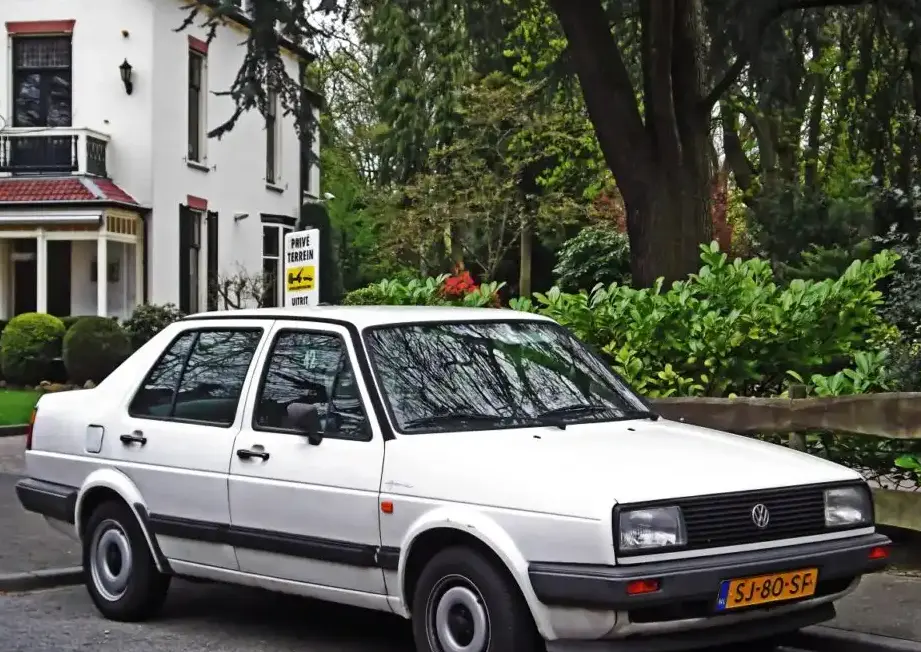
The Volkswagen Jetta II 1.8, produced between 1984 and 1987, represented a significant evolution of Volkswagen’s popular compact sedan. Positioned as a mid-range offering within the Jetta II lineup (the chassis code being 1HX0/A3), this variant aimed to balance affordability with a reasonable level of performance and comfort. It served as a key model in the North American market, where Volkswagen sought to establish a stronger foothold in the family car segment. The Jetta II, in general, was a crucial model for Volkswagen, building upon the success of the original Jetta (Vento in Europe) and offering a more refined and spacious alternative to the Golf.
Technical Specifications
| Brand | Volkswagen |
| Model | Jetta |
| Generation | Jetta II |
| Type (Engine) | 1.8 (112 Hp) |
| Start of production | 1984 |
| End of production | 1987 |
| Powertrain Architecture | Internal Combustion engine |
| Body type | Sedan |
| Seats | 5 |
| Doors | 4 |
| Fuel Type | Petrol (Gasoline) |
| Acceleration 0 – 100 km/h | 10 sec |
| Acceleration 0 – 62 mph | 10 sec |
| Acceleration 0 – 60 mph | 9.5 sec |
| Maximum speed | 189 km/h (117.44 mph) |
| Weight-to-power ratio | 8.8 kg/Hp, 113.1 Hp/tonne |
| Weight-to-torque ratio | 6.2 kg/Nm, 160.6 Nm/tonne |
| Power | 112 Hp @ 5400 rpm |
| Power per litre | 62.9 Hp/l |
| Torque | 159 Nm @ 4000 rpm (117.27 lb.-ft. @ 4000 rpm) |
| Engine layout | Front, Transverse |
| Engine Model/Code | EV |
| Engine displacement | 1781 cm3 (108.68 cu. in.) |
| Number of cylinders | 4 |
| Engine configuration | Inline |
| Cylinder Bore | 81 mm (3.19 in.) |
| Piston Stroke | 86.4 mm (3.4 in.) |
| Compression ratio | 10:1 |
| Number of valves per cylinder | 2 |
| Fuel injection system | Multi-port manifold injection |
| Engine aspiration | Naturally aspirated engine |
| Valvetrain | SOHC |
| Engine oil capacity | 4 l (4.23 US qt | 3.52 UK qt) |
| Coolant | 6.5 l (6.87 US qt | 5.72 UK qt) |
| Kerb Weight | 990 kg (2182.58 lbs) |
| Max. weight | 1470 kg (3240.8 lbs) |
| Max load | 480 kg (1058.22 lbs) |
| Trunk (boot) space – minimum | 575 l (20.31 cu. ft.) |
| Fuel tank capacity | 55 l (14.53 US gal | 12.1 UK gal) |
| Length | 4385 mm (172.64 in.) |
| Width | 1675 mm (65.94 in.) |
| Height | 1415 mm (55.71 in.) |
| Wheelbase | 2475 mm (97.44 in.) |
| Front track | 1427 mm (56.18 in.) |
| Rear (Back) track | 1422 mm (55.98 in.) |
| Drag coefficient (Cd) | 0.36 |
| Drivetrain Architecture | The Internal combustion engine (ICE) drives the front wheels of the vehicle. |
| Drive wheel | Front wheel drive |
| Number of gears and type of gearbox | 5 gears, manual transmission |
| Front suspension | Independent type McPherson |
| Rear suspension | Coil spring |
| Front brakes | Disc |
| Rear brakes | Drum |
| Steering type | Steering rack and pinion |
| Power steering | Hydraulic Steering |
| Tires size | 175/70 R13 |
| Wheel rims size | 13 |
Introduction
The Volkswagen Jetta II 1.8, manufactured from 1984 to 1987, was a key component of Volkswagen’s strategy to appeal to a broader North American audience. Building on the success of the first-generation Jetta, the II offered increased interior space, improved refinement, and a more modern aesthetic. The 1.8-liter engine, designated the EV code, was a popular choice, offering a balance between fuel economy and acceptable performance. This model occupied a middle ground in the Jetta II range, slotting below the more powerful GTI and VR6 variants, and above the base 1.6-liter models.
Powertrain & Engine Architecture
The heart of the Jetta II 1.8 was the Volkswagen EV engine, an inline four-cylinder unit displacing 1781cc. This engine featured a single overhead camshaft (SOHC) valvetrain with two valves per cylinder. Fuel delivery was handled by a Bosch multi-port fuel injection system, a significant upgrade over the carbureted engines found in earlier models. The EV engine produced 112 horsepower at 5400 rpm and 159 Nm (117.27 lb-ft) of torque at 4000 rpm. The engine’s relatively simple design contributed to its reliability, but also limited its ultimate performance potential. The Jetta II 1.8 was exclusively offered with a five-speed manual transmission, providing drivers with full control over the engine’s power band. The transmission was known for its smooth shifting action and durability.
Driving Characteristics
The Jetta II 1.8 with a manual transmission offered a reasonably engaging driving experience. Acceleration from 0 to 60 mph took approximately 9.5 seconds, and top speed was around 117 mph. While not particularly quick by modern standards, the Jetta II 1.8 provided sufficient power for everyday driving and highway cruising. The engine’s torque curve was relatively flat, making it easy to drive in a variety of conditions. Compared to the more powerful GTI or VR6 models, the 1.8 felt less responsive, particularly at higher speeds. However, it offered a more fuel-efficient and affordable alternative. The five-speed manual transmission allowed drivers to keep the engine in its optimal power range, maximizing performance and fuel economy.
Equipment & Trim Levels
The Jetta II 1.8 typically came with a fairly basic level of standard equipment. This included cloth upholstery, a four-spoke steering wheel, and a basic AM/FM radio. Optional extras included power windows and locks, a sunroof, and upgraded audio systems. The interior design was functional and straightforward, prioritizing practicality over luxury. Trim levels varied depending on the market, but generally, the 1.8-liter model was positioned as a mid-range offering, with more luxurious features available on higher-spec models like the GTI.
Chassis & Braking
The Jetta II utilized a front-wheel-drive layout with an independent McPherson strut suspension at the front and a coil spring rear suspension. This setup provided a comfortable ride and predictable handling. The front brakes were ventilated discs, while the rear brakes were drums. The braking system was adequate for everyday driving, but lacked the stopping power of more modern systems. The Jetta II’s chassis was relatively lightweight, contributing to its nimble handling characteristics. Stabilizer bars were fitted to both the front and rear axles to reduce body roll during cornering.
Market Reception & Comparison
The Jetta II 1.8 was generally well-received by automotive critics. It was praised for its comfortable ride, spacious interior, and fuel efficiency. However, some critics noted that the engine lacked the power and refinement of its competitors. Compared to the GTI, the 1.8 offered a more affordable and practical option, but at the expense of performance. Compared to the base 1.6-liter models, the 1.8 provided a noticeable improvement in power and acceleration. Fuel economy was a strong point for the Jetta II 1.8, averaging around 28 mpg in combined driving.
Legacy
The Volkswagen Jetta II 1.8, while not the most powerful or technologically advanced model in the lineup, remains a popular choice among classic Volkswagen enthusiasts. The EV engine is known for its reliability and relatively simple maintenance requirements. Parts availability is generally good, making it relatively easy to keep these cars on the road. Today, well-maintained examples of the Jetta II 1.8 can be found in the used car market, offering a nostalgic and affordable driving experience. The Jetta II, and specifically the 1.8 variant, helped solidify Volkswagen’s reputation as a manufacturer of practical, reliable, and well-engineered automobiles in the United States.