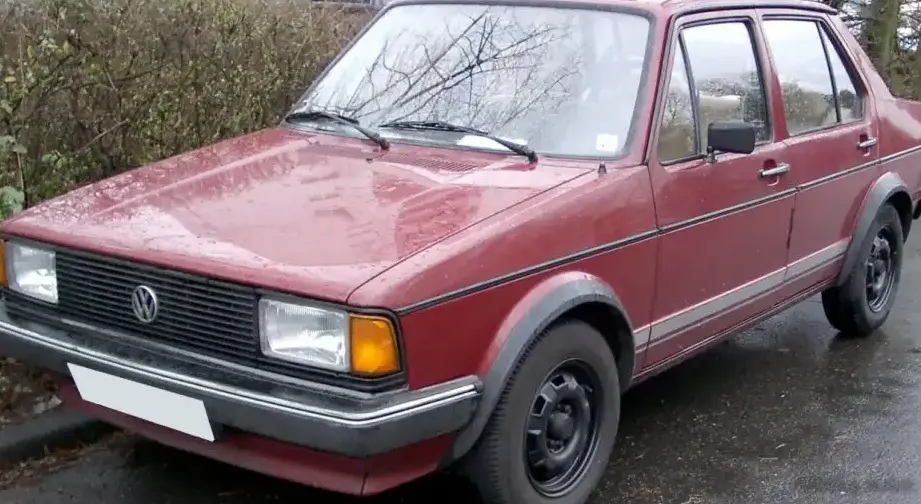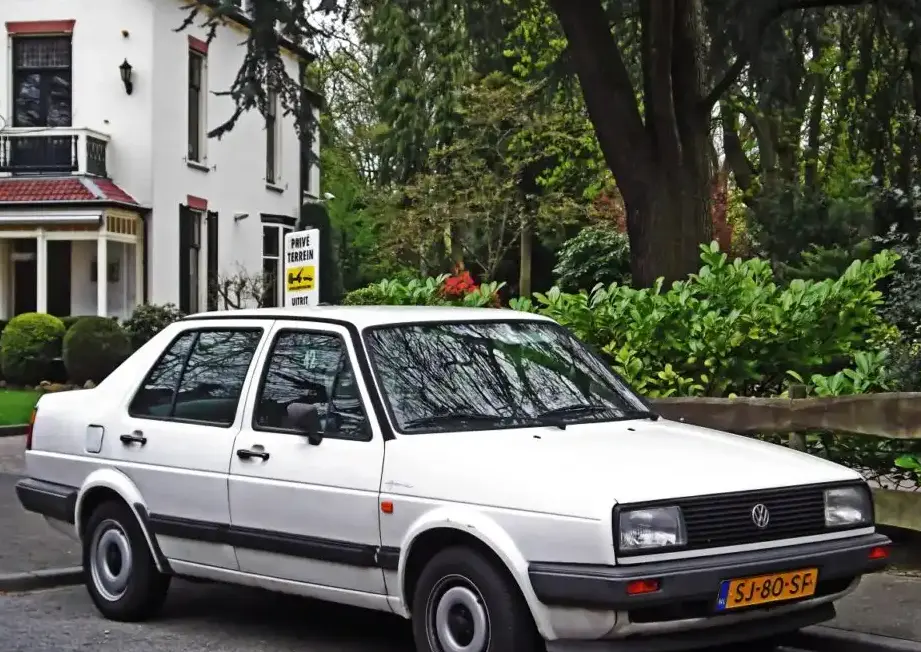
The Volkswagen Jetta II 1.8 16V, produced between 1983 and 1987, represented a significant step forward for Volkswagen’s popular compact sedan. Part of the A2 generation (internally known as the 1HX0/A3 platform), this variant offered a blend of performance and practicality aimed at buyers seeking a more engaging driving experience than the base models. Positioned as a mid-range offering, the 1.8 16V slotted between the more economical base engines and the higher-performance GTI models. It was primarily sold in Europe and other international markets, establishing a reputation for reliability and a relatively sporty character within its class.
Technical Specifications
| Brand | Volkswagen |
| Model | Jetta |
| Generation | Jetta II |
| Engine Type | 1.8 16V (129 Hp) |
| Start of production | 1983 |
| End of production | 1987 |
| Powertrain Architecture | Internal Combustion engine |
| Body type | Sedan |
| Seats | 5 |
| Doors | 4 |
| Fuel consumption (urban) | 11.3 l/100 km (20.8 US mpg) |
| Fuel consumption (extra urban) | 7.1 l/100 km (33.1 US mpg) |
| Fuel consumption (combined) | 9.1 l/100 km (25.8 US mpg) |
| Fuel Type | Petrol (Gasoline) |
| Acceleration 0 – 100 km/h | 9.3 sec |
| Acceleration 0 – 62 mph | 9.3 sec |
| Acceleration 0 – 60 mph | 8.8 sec |
| Maximum speed | 196 km/h (121.79 mph) |
| Weight-to-power ratio | 8 kg/Hp |
| Weight-to-torque ratio | 6.2 kg/Nm |
| Power | 129 Hp @ 5800 rpm |
| Torque | 168 Nm @ 4250 rpm (123.91 lb.-ft. @ 4250 rpm) |
| Engine layout | Front, Transverse |
| Engine Model/Code | PL |
| Engine displacement | 1781 cm3 (108.68 cu. in.) |
| Number of cylinders | 4 |
| Engine configuration | Inline |
| Cylinder Bore | 81 mm (3.19 in.) |
| Piston Stroke | 86.4 mm (3.4 in.) |
| Compression ratio | 10:1 |
| Number of valves per cylinder | 4 |
| Fuel injection system | Multi-port manifold injection |
| Engine aspiration | Naturally aspirated engine |
| Valvetrain | DOHC |
| Engine oil capacity | 4 l (4.23 US qt | 3.52 UK qt) |
| Coolant capacity | 6.5 l (6.87 US qt | 5.72 UK qt) |
| Kerb Weight | 1035 kg (2281.78 lbs.) |
| Max. weight | 1495 kg (3295.91 lbs.) |
| Max load | 460 kg (1014.13 lbs.) |
| Trunk (boot) space – minimum | 575 l (20.31 cu. ft.) |
| Fuel tank capacity | 55 l (14.53 US gal | 12.1 UK gal) |
| Length | 4385 mm (172.64 in.) |
| Width | 1675 mm (65.94 in.) |
| Height | 1415 mm (55.71 in.) |
| Wheelbase | 2475 mm (97.44 in.) |
| Front track | 1425 mm (56.1 in.) |
| Rear (Back) track | 1420 mm (55.91 in.) |
| Drag coefficient (Cd) | 0.36 |
| Drivetrain Architecture | The Internal combustion engine (ICE) drives the front wheels of the vehicle. |
| Drive wheel | Front wheel drive |
| Number of gears and type of gearbox | 5 gears, manual transmission |
| Front suspension | Spring-loaded rack |
| Rear suspension | Spring-loaded rack |
| Front brakes | Ventilated discs |
| Rear brakes | Disc |
| Assisting systems | ABS (Anti-lock braking system) |
| Steering type | Steering rack and pinion |
| Power steering | Hydraulic Steering |
| Tires size | 185/70 R14 |
| Wheel rims size | 14 |
Powertrain & Engine Architecture
The heart of the Jetta II 1.8 16V was the PL-code engine, a 1781cc inline-four cylinder powerplant. This engine featured a dual overhead camshaft (DOHC) valvetrain operating four valves per cylinder, a significant upgrade over the earlier single overhead cam designs. This 16-valve configuration allowed for improved breathing and higher engine speeds, contributing to the increased horsepower output. Fuel delivery was handled by Bosch multi-port fuel injection, providing precise fuel metering for optimal combustion. The engine’s 10:1 compression ratio further enhanced performance. The engine was transversely mounted, driving the front wheels. The standard transmission was a five-speed manual, although a three-speed automatic transmission was also available, albeit less common and impacting performance.
Driving Characteristics
The 1.8 16V Jetta offered a noticeable improvement in driving dynamics compared to the base 1.6L models. With 129 horsepower, acceleration to 60 mph took around 8.8-9.3 seconds, making it a reasonably quick car for its time. The five-speed manual transmission allowed drivers to fully exploit the engine’s powerband, while the optional automatic, while offering convenience, resulted in a more subdued driving experience. Gear ratios were tuned for a balance between acceleration and fuel economy. The engine felt responsive and willing to rev, providing a more engaging experience than the lower-powered variants. However, it lacked the outright punch of the GTI models with their larger displacement engines.
Equipment & Trim Levels
The Jetta II 1.8 16V typically came equipped with features considered fairly standard for the time, including cloth upholstery, a basic stereo system, and manual windows and locks. Power steering was often included, but air conditioning was usually an optional extra. Higher trim levels offered upgrades such as upgraded interior fabrics, alloy wheels, and a sunroof. The dashboard layout was functional and straightforward, with clearly marked gauges. The overall interior design prioritized practicality over luxury.
Chassis & Braking
The Jetta II utilized a MacPherson strut front suspension and a torsion beam rear suspension. This setup provided a good balance of ride comfort and handling. The 1.8 16V models generally featured ventilated disc brakes on the front wheels and disc brakes on the rear, providing adequate stopping power. ABS (Anti-lock Braking System) was available as an option, enhancing safety. Stabilizer bars were fitted to both the front and rear axles to reduce body roll during cornering.
Market Reception & Comparison
The Jetta II 1.8 16V was generally well-received by automotive critics. It was praised for its responsive engine, improved handling, and overall refinement compared to the base models. However, some reviewers noted that it didn’t quite match the performance of the GTI. Fuel economy was respectable for the time, averaging around 25.8 US mpg in combined driving. Compared to the 1.6L Jetta, the 1.8 16V offered a significant performance boost, while the GTI provided even more power but at a higher price point. The 1.6L diesel models offered superior fuel economy but lacked the 1.8’s spirited performance.
Legacy
The Volkswagen Jetta II 1.8 16V has proven to be a relatively reliable car over the long term, particularly when properly maintained. The PL engine is known for its durability, although regular servicing is essential. Today, these cars are becoming increasingly sought after by classic car enthusiasts. Parts availability is generally good, although some specific trim pieces may be difficult to find. The Jetta II 1.8 16V represents a sweet spot in the Jetta lineage, offering a blend of performance, practicality, and affordability that continues to appeal to drivers today. Well-maintained examples command a reasonable price in the used car market, reflecting their enduring appeal and solid engineering.