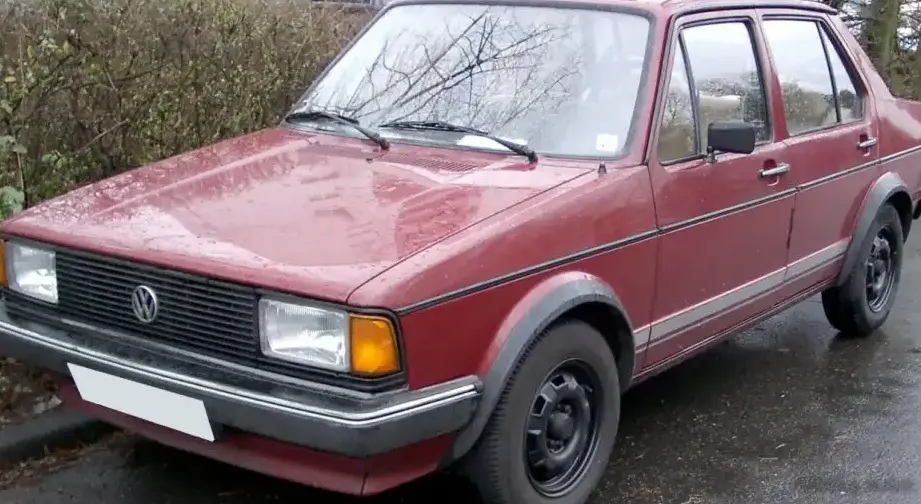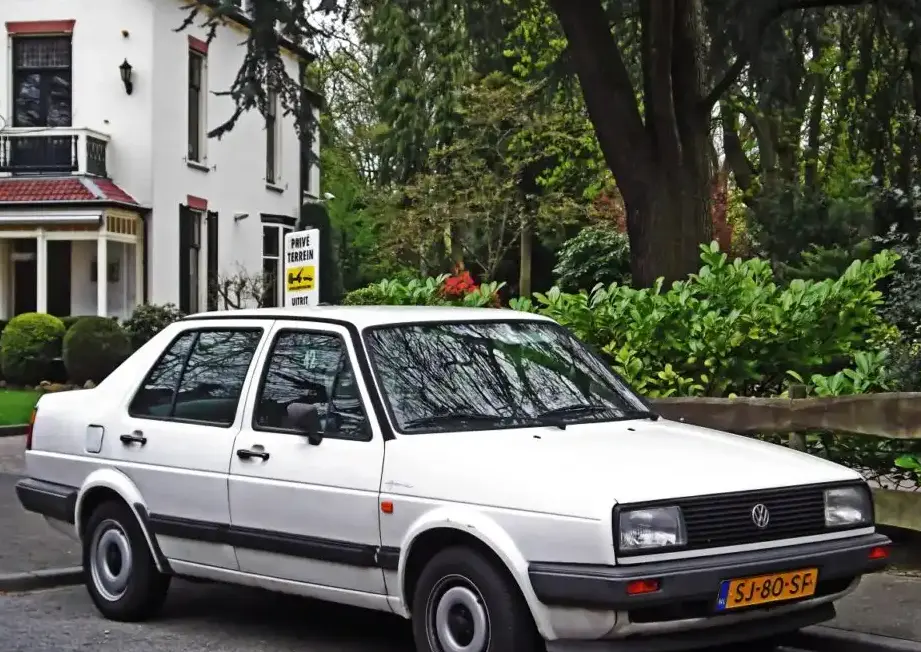
The Volkswagen Jetta II 1.8 16V, produced from 1986 to 1987, represented a significant step forward in the second generation of Volkswagen’s popular compact sedan. Positioned as a performance-oriented variant within the Jetta II range, it offered a more engaging driving experience than the base models. This model was built on the A2 platform (internally designated 1HX0), sharing its underpinnings with the Golf Mk2, Scirocco Mk2, and the Audi 80. The 16-valve engine was a key differentiator, appealing to drivers seeking a blend of practicality and spirited performance in a front-wheel-drive package. It was primarily sold in the European market, where it competed with other compact sedans like the Ford Escort and Opel Kadett.
Technical Specifications
| Brand | Volkswagen |
| Model | Jetta |
| Generation | Jetta II |
| Type (Engine) | 1.8 16V (139 Hp) |
| Start of production | 1986 |
| End of production | 1987 |
| Powertrain Architecture | Internal Combustion engine |
| Body type | Sedan |
| Seats | 5 |
| Doors | 4 |
| Fuel Type | Petrol (Gasoline) |
| Acceleration 0 – 100 km/h | 8.8 sec |
| Acceleration 0 – 62 mph | 8.8 sec |
| Acceleration 0 – 60 mph | 8.4 sec |
| Maximum speed | 204 km/h (126.76 mph) |
| Weight-to-power ratio | 7.3 kg/Hp, 137.6 Hp/tonne |
| Weight-to-torque ratio | 6 kg/Nm, 166.3 Nm/tonne |
| Power | 139 Hp @ 6100 rpm |
| Power per litre | 78 Hp/l |
| Torque | 168 Nm @ 4600 rpm (123.91 lb.-ft. @ 4600 rpm) |
| Engine layout | Front, Transverse |
| Engine Model/Code | KR |
| Engine displacement | 1781 cm3 (108.68 cu. in.) |
| Number of cylinders | 4 |
| Engine configuration | Inline |
| Cylinder Bore | 81 mm (3.19 in.) |
| Piston Stroke | 86.4 mm (3.4 in.) |
| Compression ratio | 10:1 |
| Number of valves per cylinder | 4 |
| Fuel injection system | Multi-port manifold injection |
| Engine aspiration | Naturally aspirated engine |
| Valvetrain | DOHC |
| Engine oil capacity | 4 l (4.23 US qt | 3.52 UK qt) |
| Coolant | 6.5 l (6.87 US qt | 5.72 UK qt) |
| Kerb Weight | 1010 kg (2226.67 lbs.) |
| Max. weight | 1470 kg (3240.8 lbs.) |
| Max load | 460 kg (1014.13 lbs.) |
| Trunk (boot) space – minimum | 575 l (20.31 cu. ft.) |
| Fuel tank capacity | 55 l (14.53 US gal | 12.1 UK gal) |
| Length | 4385 mm (172.64 in.) |
| Width | 1675 mm (65.94 in.) |
| Height | 1415 mm (55.71 in.) |
| Wheelbase | 2475 mm (97.44 in.) |
| Front track | 1427 mm (56.18 in.) |
| Rear (Back) track | 1422 mm (55.98 in.) |
| Drag coefficient (Cd) | 0.36 |
| Drivetrain Architecture | The Internal combustion engine (ICE) drives the front wheels of the vehicle. |
| Drive wheel | Front wheel drive |
| Number of gears and type of gearbox | 5 gears, manual transmission |
| Front suspension | Independent type McPherson |
| Rear suspension | Coil spring |
| Front brakes | Ventilated discs |
| Rear brakes | Disc |
| Steering type | Steering rack and pinion |
| Power steering | Hydraulic Steering |
| Tires size | 185/60 R14 |
| Wheel rims size | 14 |
Powertrain & Engine Architecture
The heart of the Jetta II 1.8 16V was the KR engine, a 1.8-liter inline-four cylinder powerplant. This engine was a significant upgrade over the earlier 8-valve versions, featuring a dual overhead camshaft (DOHC) design and four valves per cylinder. This configuration allowed for improved breathing and higher engine speeds, resulting in the 139 horsepower output. The engine utilized Bosch Motronic fuel injection, a sophisticated system for its time, which precisely controlled fuel delivery based on various sensor inputs. The KR engine was known for its relatively smooth operation and willingness to rev. The five-speed manual transmission was standard, providing precise gear changes and contributing to the car’s sporty feel.
Driving Characteristics
The 1.8 16V Jetta II offered a noticeably more engaging driving experience compared to the base models. The increased horsepower and improved torque delivery made it feel quicker and more responsive. While not a sports car, it provided ample power for everyday driving and confident overtaking maneuvers. The five-speed manual transmission allowed drivers to keep the engine in its optimal power band. The gear ratios were well-chosen, providing good acceleration in each gear. Compared to the later 1.9 TDI diesel versions, the 1.8 16V prioritized performance over fuel economy, though it still offered reasonable efficiency for its time. The handling was typical of front-wheel-drive cars of the era – safe and predictable, but not particularly sporty.
Equipment & Trim Levels
The Jetta II 1.8 16V typically came with a reasonably well-equipped interior for the mid-1980s. Standard features included cloth upholstery, a basic stereo system, and manual windows and locks. Optional extras included power windows, central locking, a sunroof, and upgraded audio systems. The dashboard layout was functional and straightforward, with clearly marked gauges. The interior trim was generally durable, though materials were typical of the period – primarily plastics and cloth. The 16V models often featured slightly sportier interior trim details, such as a leather-wrapped steering wheel and sport seats.
Chassis & Braking
The Jetta II utilized a McPherson strut front suspension and a coil spring rear suspension. This setup provided a comfortable ride while maintaining reasonable handling characteristics. The front brakes were ventilated discs, offering good stopping power, while the rear brakes were solid discs. The steering was a rack-and-pinion system with hydraulic power assistance, providing light and precise steering feel. The suspension was tuned for a balance between comfort and handling, leaning towards the comfort side. Stabilizer bars were fitted to both the front and rear axles to reduce body roll during cornering.
Market Reception & Comparison
The Jetta II 1.8 16V was generally well-received by automotive critics. It was praised for its lively engine, responsive handling, and overall practicality. However, some critics noted that the interior was somewhat basic compared to some of its competitors. Compared to the base 1.6-liter Jetta II, the 1.8 16V offered a significant performance upgrade, but at a higher price point. The 1.9 TDI diesel version, introduced later, offered superior fuel economy but lacked the 16V’s performance. The 16V model appealed to drivers who prioritized driving enjoyment over outright fuel efficiency.
Legacy
The Volkswagen Jetta II 1.8 16V remains a popular choice among classic car enthusiasts. The KR engine is known for its reliability, provided it is properly maintained. Parts availability is generally good, although some specific trim pieces may be difficult to find. Today, these cars are often sought after for their classic styling, engaging driving experience, and relatively simple mechanicals. The 16-valve engine is considered a highlight, and well-maintained examples command a premium in the used car market. The Jetta II 1.8 16V represents a sweet spot in the Jetta lineage, offering a blend of performance, practicality, and classic Volkswagen charm.